




The Undeniable Power of the Line
At its core, minimalism is about stripping away the non-essential to create a serene, uncluttered environment. But sometimes, in the pursuit of simplicity, a room can lose its personality and become visually 'flat'. This is where stripes come in. A stripe is simply
a line, and in design, lines are powerful tools. They create movement, direct the eye, and introduce a sense of rhythm and structure. Unlike a complex floral or geometric pattern, which can feel busy, stripes offer visual interest while maintaining a clean, graphic quality. They add a layer of sophistication and intentionality, preventing a room from feeling empty and instead making it feel curated and complete.
Vertical vs. Horizontal: Directing the Eye
The orientation of your stripes has a significant psychological impact on how a space is perceived. It’s a classic interior design trick for a reason. Vertical stripes draw the eye upward, creating an illusion of height. This makes them perfect for rooms with lower ceilings, as a striped wallpaper or tall, slender striped curtains can make the space feel more grand and airy. Conversely, horizontal stripes guide the eye from side to side, making a room feel wider and more expansive. This is a great strategy for narrow rooms or long hallways. A horizontally striped rug, for example, can visually 'stretch' the floor space, making the room feel more generous and balanced.
Start Small with Textiles and Rugs
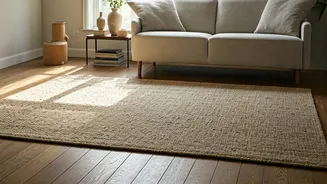
If you're hesitant to commit to a bold pattern, textiles are the perfect starting point. They are low-commitment, easily swapped, and can have a huge impact. A classic striped area rug can anchor a minimalist living room, defining the space and adding a dose of texture and pattern underfoot. Look for a rug with a neutral base and a simple stripe in a contrasting colour like black, navy, or grey to maintain the serene vibe. Cushions and throws are even easier. A pair of striped cushions on a solid-coloured sofa or a single striped throw draped over an armchair is enough to break up the monotony and introduce a focal point without overwhelming the senses. This approach allows you to experiment with stripes before making a more permanent decision.
Make a Calculated Statement on Walls
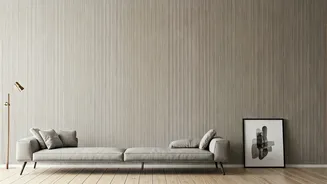
For a more dramatic effect, consider bringing stripes to your walls. In a minimalist setting, this should be done with care. An entire room of bold, high-contrast stripes can quickly feel chaotic and claustrophobic, defeating the purpose of a calm space. Instead, focus on an accent wall. The wall behind a bed or a sofa is a prime candidate. A subtle, tone-on-tone striped wallpaper—think light grey on white—can add texture and depth without shouting for attention. Alternatively, painted stripes offer full control over colour and scale. For a modern, architectural feel, consider vertical wood panelling or 'board and batten' painted in a single colour, which creates a sophisticated striped effect through shadow and light.
Incorporate Stripes Through Furniture and Art
Don't forget the power of striped objects. An accent chair upholstered in a classic pinstripe or a bold cabana stripe can become a piece of functional art in a room of solid colours. It provides a destination for the eye and injects a dose of personality. If striped furniture feels too bold, look to smaller decorative items. A set of striped ceramic vases on a console table, a single piece of abstract art dominated by linear forms, or even a stack of artfully arranged books with striped spines can provide that necessary graphic punch. The key is to treat these items as deliberate accents that complement the room's clean lines rather than compete with them.