


A Cosmic Backyard Beyond Neptune
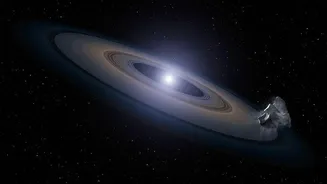
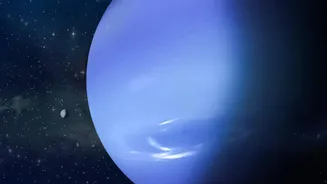
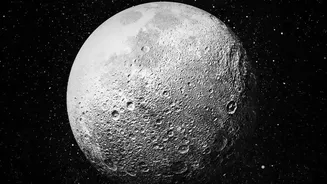
Far beyond the orbit of the eighth planet, Neptune, lies a vast, doughnut-shaped region of icy bodies known as the Kuiper Belt. Think of it as a cosmic deep freeze, home to dwarf planets like Pluto and countless smaller objects that are pristine leftovers
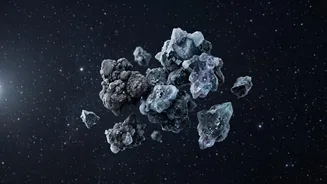
from the formation of our solar system over 4.5 billion years ago. These objects occasionally collide, creating a fine cloud of dust. For decades, scientists have theorized that some of this ancient dust drifts inward toward the Sun, but directly sampling it from such an immense distance has been a monumental challenge. At least, until NASA's New Horizons spacecraft flew through the neighborhood.
The Little Instrument That Could
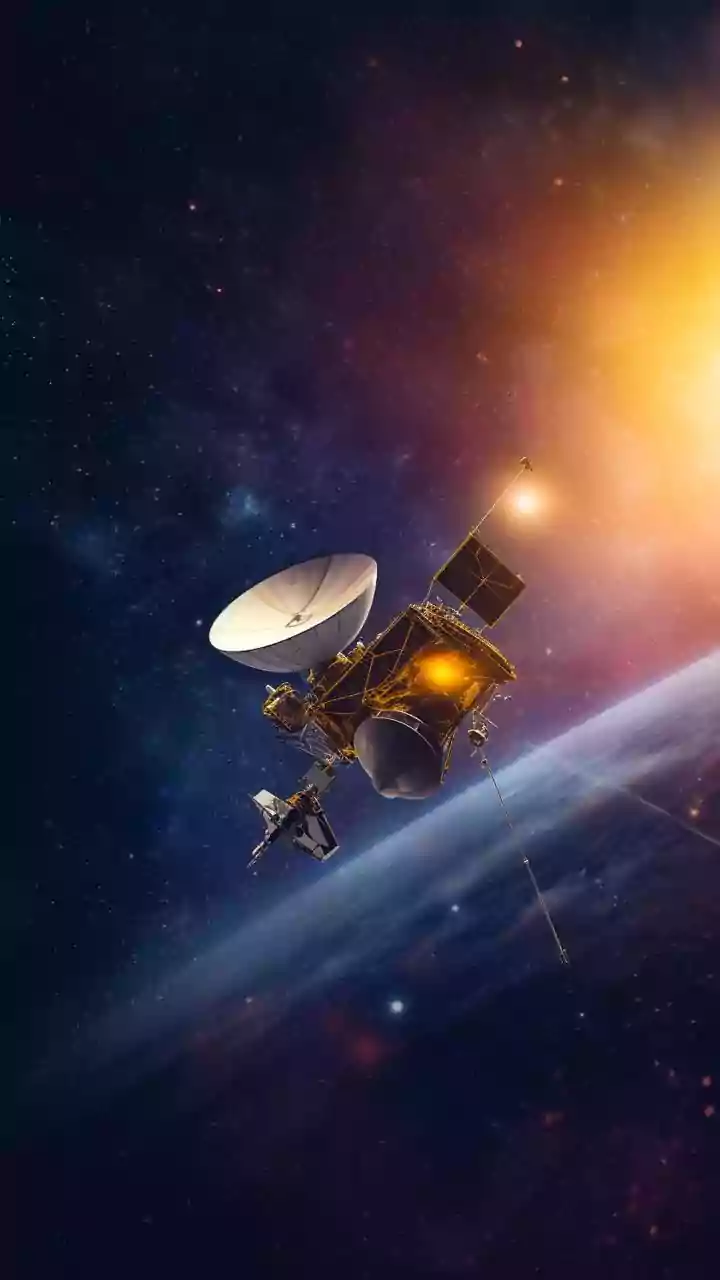
The star of this dust-up is the Venetia Burney Student Dust Counter (SDC), an instrument aboard the New Horizons probe. Designed and built by students, this remarkable device is essentially a high-tech dust detector. It consists of a set of detectors mounted on the spacecraft's exterior, recording tiny impacts as New Horizons speeds through space at over 50,000 kilometres per hour. By measuring the frequency and size of these dust particles, scientists can create a map of the dust environment. As the first instrument to directly measure dust beyond Neptune and Pluto, every reading it takes is groundbreaking.
More Dust Than Expected
As New Horizons ventured past 45 astronomical units (AU) from the Sun—one AU is the distance from Earth to the Sun—it started detecting something puzzling. The amount of dust was significantly higher than scientific models predicted. According to theory, the density of objects in the Kuiper Belt, and therefore the dust they create, should begin to decrease around 50 AU. However, the SDC's readings showed a persistent, elevated level of dust, challenging long-held assumptions. This unexpected finding suggests that something more is happening at the solar system's edge.
An Extended Belt or a Second One?
The surprising data has led scientists to two major possibilities. The first is that the main Kuiper Belt is simply much larger than we thought, possibly extending as far out as 80 AU or more. If there are more objects out there, it would stand to reason they are colliding and generating the extra dust New Horizons is seeing. A second, even more tantalizing theory is that there could be a second, separate Kuiper Belt beyond the main one. Alan Stern, the principal investigator for New Horizons, noted that the mission may be the first to discover a new population of bodies in our solar system. While less likely, other theories include the way radiation pressure pushes icy dust particles outward.
Why This Cosmic Dust Matters
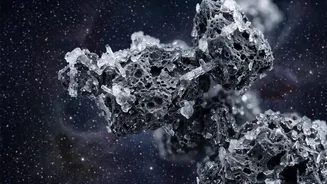
Studying this primordial dust does more than just redraw the map of our solar system; it provides a direct line to its ancient past. These dust grains are the fundamental building blocks of planets. By analyzing them, we can learn about the materials and conditions that existed billions of years ago. Recent analysis of interplanetary dust particles collected in Earth's stratosphere, believed to have originated from the Kuiper Belt, even suggests the presence of water rich in 'heavy' oxygen. This discovery offers compelling evidence for a vast reservoir of a unique type of water in the outer solar system, which could have been delivered to a young Earth by dust and comets. Each grain of dust is a tiny time capsule, holding clues to the formation of the planets, including our own.