
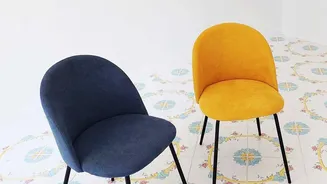
The Undeniable Allure of Curves
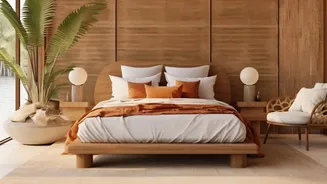
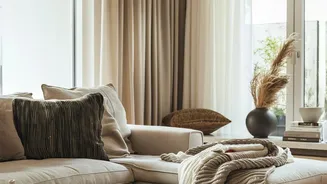
After years dominated by sharp, minimalist lines, interior design is embracing a softer, more organic aesthetic. Curved sofas, rounded armchairs, and circular coffee tables have become the statement pieces of choice for creating warm and inviting spaces.
This isn’t just a fleeting trend; it’s a shift towards comfort and a connection to nature. Inspired by the gentle shapes found in the natural world, these pieces bring a sense of fluidity and calm into our homes. Psychologically, curves are associated with comfort and relaxation, helping to create a welcoming atmosphere that feels less rigid and more dynamic. They offer ergonomic support, encourage conversation by their very shape, and introduce a sculptural quality that can make a piece of furniture feel like a work of art.
The Box We Live In
Herein lies the central challenge for most homeowners: our homes are overwhelmingly rectangular. We live and decorate within boxes, with their straight walls, sharp corners, and linear layouts. Placing a curvaceous, free-flowing sofa into a rigid, rectangular room can feel counterintuitive, and if done incorrectly, can look awkward and unbalanced. Many people make the mistake of pushing a curved sofa flat against a wall, which negates its sculptural beauty and creates dead space. The very nature of a curve fights against the straight lines of a typical room, creating a design problem that needs a thoughtful solution. The rebalance mentioned in the trend isn’t just about adding curves; it's about making those curves live in harmony with the angular architecture that defines our living spaces.
Creating Harmony Through Contrast
The secret to success is not to fight the room's shape, but to work with it by creating a deliberate and balanced contrast. The interplay between the straight lines of the room and the soft lines of the furniture is what creates visual interest and sophistication. A curved sofa, for example, should be treated as a focal point. Floating it away from the walls allows its shape to be fully appreciated and improves the room's overall flow by creating natural pathways. This strategy breaks up the monotony of a boxy room, giving the eye a soft place to land. You can anchor the curved piece with strong geometric elements. A large, rectangular rug placed under a curved sectional defines the seating area and provides a stable visual base. Pairing a round dining table with a linear sideboard achieves a similar effect, allowing both shapes to shine.
Practical Ways to Achieve Balance
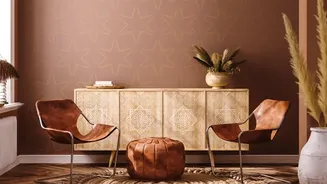
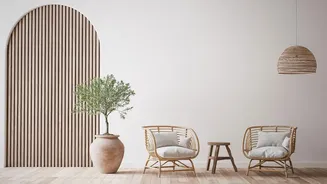
Integrating this trend doesn't require a complete overhaul. The key is balance and proportion. If you have a large curved sectional, keep other elements more linear to avoid a cluttered, directionless feel. A straight-lined console table behind a curved sofa, for instance, adds structure. Conversely, in a room filled with straight-lined furniture, adding a single curved piece, like a round ottoman or a pair of sculptural armchairs, can introduce much-needed softness and prevent the space from feeling too severe. Consider the negative space—the empty areas around the furniture. A curved piece can cleverly manage this space, fitting into awkward corners or defining zones in an open-plan layout without blocking sightlines. In smaller Indian apartments, a round dining table can often seat more people and improve flow compared to a rectangular one.
The Biophilic Connection
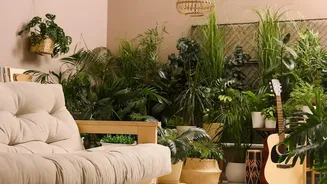
This trend is deeply connected to the principles of biophilic design, which is about incorporating natural elements and forms into our interiors to improve well-being. Nature rarely produces perfect straight lines; it is defined by organic curves found in hills, rivers, and plants. By bringing these shapes indoors, we create spaces that feel more instinctively calming and harmonious. The balance between the man-made structure of our homes and the organic forms of our furniture taps into our innate affinity for nature, creating environments that are not just stylish, but also restorative.