





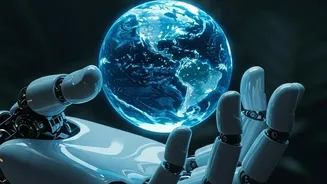

The architects of our AI future are now being told to hide in plain sight. As artificial intelligence reshapes our world, the people building it are facing a new, tangible risk, forcing top labs to take unprecedented security measures for staff.
From Company Swag to Cloak and Dagger
In the
tech corridors of San Francisco, wearing a company hoodie used to be a badge of honour. Today, for employees at leading artificial intelligence labs like OpenAI and Anthropic, it could make them a target. Recent reports indicate these pioneering companies are advising staff to conceal their corporate identities in public. Employees have been instructed not to wear clothing with company logos and to hide their work badges once they step outside the office. This marks a significant cultural shift away from the proud, open culture that has long defined Silicon Valley. The new guidance is part of a broader tightening of security precautions that extend beyond just apparel. Staff at OpenAI are also reportedly being told to use privacy screens on their devices while on public transport and to be wary of discussing sensitive work in cafes or other public spaces. These measures reflect a new reality where the creators of world-changing technology are themselves feeling increasingly vulnerable.
The Incidents Fueling the Fear
These precautions are not emerging from a vacuum. They are a direct response to a growing number of hostile incidents targeting AI companies and their personnel. The aggression has ranged from protests to direct, physical threats. In March, for instance, activists scrawled messages outside OpenAI's headquarters, urging employees to quit over the company's work with the Pentagon. The hostility has also become dangerously personal. According to reports, OpenAI's CEO Sam Altman's home was targeted in two separate alarming incidents in April 2026; one involving a suspect throwing a Molotov cocktail at the property and another where a shot was allegedly fired outside the residence. Meanwhile, Anthropic has reported people attempting to photograph its offices, raising concerns about the ease with which its employees could be identified and tracked.
Espionage and Unwanted Approaches
Beyond public hostility, there is a growing concern over espionage. The intellectual property being developed within these labs is considered among the most valuable in the world, making employees attractive targets for spies seeking confidential information. OpenAI's security training now reportedly includes explicit warnings that foreign agents might use various tactics to extract secrets, including offering money, feigning friendship, or even initiating romantic relationships. One reported incident involved a stranger approaching an OpenAI employee at a playground and attempting to steer the conversation toward their work. The father of an Anthropic employee shared that his son and his colleagues now avoid discussing their jobs in social settings, wary that new acquaintances may be more interested in their employer than in them as individuals. This dual threat of physical hostility and covert intelligence gathering has created a climate of caution and secrecy.
A Consequence of Public Anxiety
The tension directed at AI employees is a physical manifestation of the widespread public anxiety surrounding artificial intelligence. Debates that were once confined to academic papers and tech forums—about mass job displacement, the spread of misinformation, and longterm existential risks—are now part of the mainstream conversation. As AI's capabilities grow exponentially, so does the public's apprehension. The individuals building these powerful systems have become the human faces of a technological revolution that many find unsettling and opaque. The hostility may stem from a feeling of powerlessness, with some viewing AI developers as architects of a future they neither asked for nor control. This environment turns employees into lightning rods for a complex mix of fear, anger, and misunderstanding about the technology they are creating.
Implications for India's AI Ambitions
While these incidents are currently centred in San Francisco, they serve as a crucial lesson for India's rapidly expanding technology sector. India is a global AI powerhouse in the making, with a vast talent pool and a government pushing for innovation. As Indian companies and research institutions delve deeper into developing foundational AI models, they may eventually face similar societal frictions. The experiences of OpenAI and Anthropic underscore the importance of proactive public engagement and transparency. For India's tech leaders, the key takeaway is that building AI is not just a technical challenge; it is also a social one. Fostering public trust and ensuring that the debate around AI is inclusive and accessible will be just as critical as writing the code itself. The safety of a company's workforce may very well depend on it.