


Planets On Evening And Morning Display
September is a fantastic month for planet-spotting across India. The real showstopper is Venus, which will be blazing in the evening sky. On September 22, it reaches its maximum brightness, making it an unmissable, brilliant white beacon in the west after
sunset. Early in the month, on September 2, Venus will have a close encounter with the bright star Spica, a beautiful sight for the naked eye. Keep an eye on the Moon as it dances with several planets. From September 6 to 14, the Moon will pass near Mars, Jupiter, Mercury, and Venus, offering a series of lovely photo opportunities. Towards the end of the month, Neptune reaches opposition on September 26. This is when the distant ice giant is at its closest and brightest for the year. While you'll need a telescope to spot its tiny blue-green disk, it's a rewarding challenge for dedicated observers.
Constellations: Summer's Swan, Autumn's Pegasus
As darkness falls in September, the grand constellations of summer are still prominent. Look high overhead for the Summer Triangle, an asterism formed by three bright stars: Vega, Deneb, and Altair. Deneb is the brightest star in the constellation Cygnus, the Swan, whose cross-like shape can be seen flying down the faint, misty band of the Milky Way on a clear, dark night. Low in the south, the classic shapes of Scorpius and Sagittarius are beginning to set, taking the brightest part of the Milky Way with them. As the night progresses, the vanguard of the autumn sky begins to rise in the east. Look for the Great Square of Pegasus, which marks the body of the celestial winged horse. This large, easily recognisable square of four stars is a hallmark of the autumn nights. Near it, you can find the much fainter zodiac constellation Capricornus, the Sea-Goat.
The Full Corn Moon
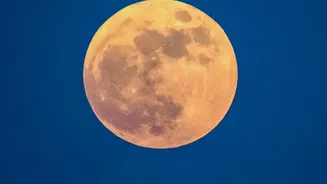
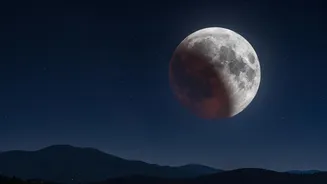
This month’s full moon falls on September 26 and is traditionally known as the Corn Moon. This name, originating from Native American traditions, marks the time of year when the corn harvest would typically take place under the light of the late summer moon. In India, you can see it reach its peak fullness late in the evening. According to calendars, the exact time of the full moon is 10:19 PM IST. As always, a full moon brightens the entire night sky, making it a poor time for spotting faint stars and galaxies but a beautiful spectacle in its own right.
September Equinox: A Change of Seasons
On September 23, the September equinox occurs. This is the astronomical marker for the beginning of autumn in the Northern Hemisphere. On this day, the Sun shines directly on the equator, and day and night are of approximately equal length across the globe. For us in India, it signals the gradual transition away from the heat and rain of summer towards the cooler, clearer skies of autumn and winter, which are often the best seasons for stargazing.
Tips for Indian Stargazers
Monsoon cloud cover can still be a challenge in many parts of India in September. Be patient and take advantage of any clear breaks in the weather. If you live in a big city like Delhi, Mumbai, or Bangalore, light pollution will hide all but the brightest stars and planets. Try to get to a darker location on the outskirts of the city, a local park, or a rooftop with an unobstructed view. Stargazing apps on your smartphone are invaluable tools for identifying what you're looking at. For the best experience, find a spot away from direct streetlights, let your eyes adjust to the darkness for at least 15 minutes, and bring a comfortable chair to avoid neck strain.