





The Modern Trekker's Dilemma
Trekking used to be about escaping technology. Today, it’s a bit more complicated. Our smartphones are our cameras, our GPS devices are our maps, and our smartwatches track our progress. This digital reliance has a physical cost: the need for power. For
years, the default solution has been the power bank—a dense, lithium-ion battery that promises multiple charges. But on a multi-day trek where every gram counts, a 10,000mAh or 20,000mAh power bank, weighing anywhere from 200 to 500 grams, is a significant burden. It's dead weight that, once depleted, becomes utterly useless until you find a wall socket, something you won't see for days in the remote Zanskar Valley or the meadows of Roopkund.
Enter the Solar Sheet
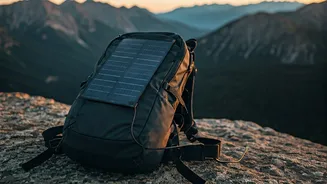
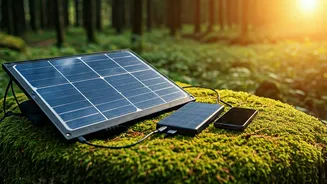
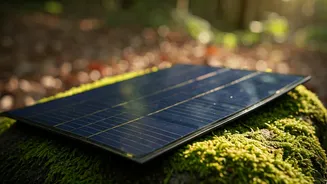
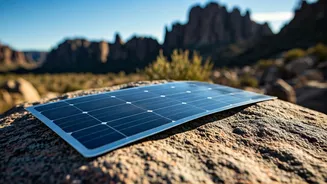
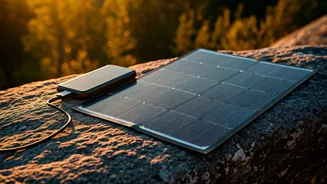
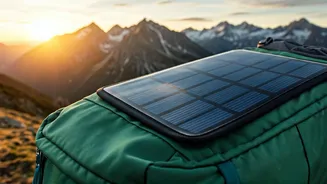
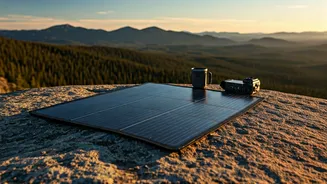
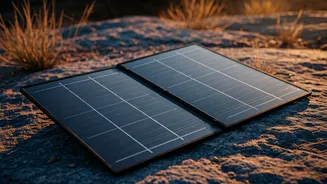
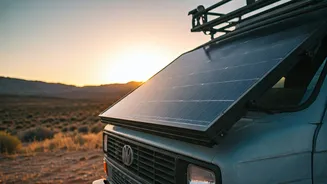
This is where a new generation of solar technology comes in. Forget the bulky, rigid solar panels of the past. We’re talking about ultra-thin, flexible solar sheets. These are portable photovoltaic panels designed to be folded or rolled up and tucked into your backpack. Made from lightweight materials, they can be unfurled and strapped to the top of your rucksack, passively soaking up sunlight and generating electricity as you walk. They don’t store power themselves; instead, they act as a portable charging station, directly powering your device or, more commonly, topping up a small, lightweight power bank. The core idea is to shift from carrying stored energy to generating it on the fly.
The Weight and Portability Game
The most compelling argument for solar sheets is the weight savings, especially on long expeditions. A high-capacity power bank offers a finite amount of energy for its weight. A solar panel offers potentially infinite energy (sunlight permitting) for a similar, or often lighter, weight. A typical 15-watt foldable solar panel, capable of charging a smartphone in a few hours of direct sun, can weigh between 300-400 grams. While this might be heavier than a small power bank, it can replace the need to carry two or three for a week-long trek. For trips longer than three days, the weight advantage of a solar panel system becomes undeniable. It represents freedom from rationing your battery usage.
The Reality Check: Sun, Speed, and Sense
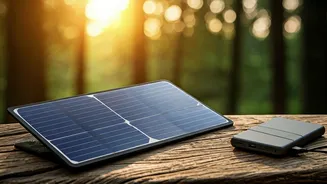
However, ditching your power bank entirely for a solar sheet is not a decision to be taken lightly. The biggest limitation is obvious: it needs sun. And not just any light—strong, direct sunlight. On an overcast day, during a monsoon trek in the Western Ghats, or while hiking through dense forests, its output will drop dramatically, becoming a frustratingly useless piece of gear. Power banks, in contrast, work anytime, anywhere. Charging speed is another factor. A solar panel won't charge your phone as quickly as a wall outlet. You need patience and a realistic understanding of its capabilities. The smartest approach, therefore, is not an either/or but a hybrid system: a lightweight solar sheet paired with a small, 5,000mAh power bank to store the generated energy for use at night or in bad weather.
What to Look For in a Solar Sheet
If you're ready to embrace the sun, here’s what to consider. First, look at the wattage. A 5-watt panel is barely enough to trickle-charge a phone, while a 15-25 watt panel provides a more practical charging speed. Second, check for durability. Look for panels that are waterproof (or at least water-resistant) and built to withstand the bumps and scrapes of the trail. Third, consider the design. Does it have robust grommets or loops to easily attach to your backpack? How many devices can it charge at once? Finally, look at the weight and folded size. The whole point is to save weight and space, so compare models to find the best power-to-weight ratio you can afford.