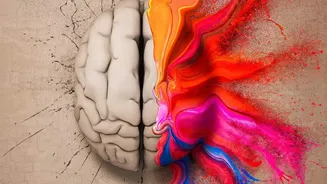







The End of the 'Either/Or' Mindset
For years, career advice often split professionals into two camps: the tech-savvy coders and data analysts on one side, and the people-focused communicators and leaders on the other. In 2026, that division has become obsolete. The modern workplace, heavily
influenced by the integration of Artificial Intelligence and widespread automation, demands professionals who can bridge that gap. According to recent reports on workforce trends, companies are no longer hiring for technical skills in a vacuum. They are actively seeking individuals who can pair their digital expertise with strong interpersonal abilities. The new baseline for a successful professional isn't just knowing how to do a technical task; it's about being able to collaborate, communicate, and adapt while doing it.
Why Technical Skills Need a Human Touch
Technical proficiency is the foundation of many modern roles, from software development to data analytics. However, these hard skills reach their full potential only when combined with soft skills. A programmer who can write flawless code but struggles to explain their work to non-technical team members creates bottlenecks. A data analyst who can uncover brilliant insights but cannot tell a compelling story with that data will see their findings ignored. This is where skills like communication, teamwork, and empathy become critical. In a world where AI can automate routine tasks, the uniquely human ability to understand context, build relationships, and explain complex ideas clearly is what creates true value. Employers are increasingly recognizing that this combination leads to better project outcomes, smoother workflows, and stronger teams.
How Soft Skills Amplify Technical Impact
Conversely, soft skills without technical grounding can lack impact in many of today's roles. Strong leadership is essential, but a leader in a tech company who doesn't grasp the fundamentals of the technology their team is building will struggle to make informed decisions. Effective communication is powerful, but it's most effective when used to translate complex technical realities to business stakeholders, a task that requires both skill sets. Professionals who successfully blend these abilities are better positioned for advancement. They are the ones who can step into management roles, lead complex cross-functional projects, and earn the trust of leadership. As AI handles more execution-based work, the demand for human judgment, critical thinking, and strategic oversight—all functions that require a blend of technical understanding and sharp soft skills—is rising.
A Practical Guide to Integrated Skill Building
Developing this hybrid skill set requires a conscious effort that goes beyond traditional training. Instead of learning skills in isolation, seek opportunities to practice them together. If you're a technical professional, volunteer to present your team's project to another department to practice communication. Seek feedback not just on your code, but on how you collaborate. If you are stronger in soft skills, take an introductory course in a relevant technical area like data literacy, AI fundamentals, or cloud computing. Engage in cross-functional projects that force you to work with people outside your area of expertise. This kind of hands-on, integrated learning is far more effective than trying to bolt on one skill set to the other. The goal is to make them work in harmony, so your technical work is informed by your communication skills, and your leadership is grounded in real-world technical understanding.