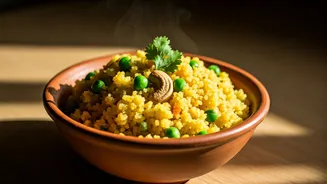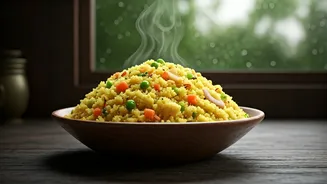








The Soul of Simplicity
Upma is, by all accounts, a humble dish. Made from semolina (rava), it’s a quick-fix breakfast, a light evening tiffin, or even a saviour when you’re out of elaborate meal ideas. Its beauty lies in its lack of pretension. It doesn’t demand exotic ingredients
or complex techniques. Yet, in its simplicity, it achieves a level of comfort that few other dishes can match. It’s the taste of home, of a mother’s hurried but loving hand in the morning, of lazy weekend breakfasts when there’s nowhere to be. In a world of culinary complexity, upma is a reminder that sometimes, the most satisfying things are the most straightforward. It’s a culinary hug in a bowl, warm, nourishing, and profoundly familiar.
A Perfect Match for the Monsoon
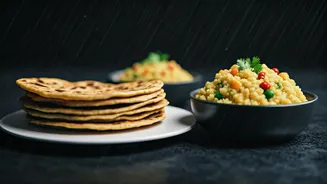
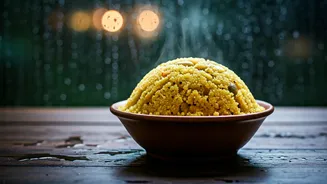
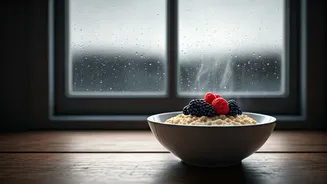
Why does upma taste even better during the monsoon? The connection is deeply sensory. Imagine a grey, rain-soaked day. The air is cool and damp, carrying the petrichor, the earthy scent of the first rain. Inside, the kitchen offers a warm counterpoint. The sound of mustard seeds crackling in hot oil, the fragrant sizzle of curry leaves and onions, and the nutty aroma of roasting rava create an atmosphere of pure comfort. A steaming bowl of upma warms your hands and your insides, chasing away the monsoon chill. It’s a perfect textural and thermal contrast to the world outside—soft and warm against the cold and wet. This seasonal craving isn't just about hunger; it’s about seeking warmth, nostalgia, and a feeling of being cared for.
The Anatomy of a Great Upma
The magic of upma lies in the balance of its core components. It starts with the rava. Roasting the semolina until it’s fragrant is a non-negotiable step; it prevents lumpiness and imparts a deep, nutty flavour. Then comes the tadka, or tempering, which forms the flavour base. Mustard seeds, urad dal, and chana dal provide crunch and earthiness, while curry leaves and green chillies add fragrance and a gentle heat. Onions, cooked until soft and translucent, bring a subtle sweetness that rounds out the savoury notes. Finally, the hot water, added in the correct proportion, is what transforms the granular rava into a soft, fluffy porridge. Each element is simple, but together, they create a symphony of flavour and texture.
Your Recipe for Monsoon Bliss
Ready to create your own bowl of happiness? Here’s a simple, classic recipe. First, dry roast 1 cup of rava (semolina) in a pan on low heat until it's fragrant, about 4-5 minutes. Set it aside. Now, heat 2 tablespoons of oil or ghee in the same pan. Add 1 teaspoon of mustard seeds and let them splutter. Add 1 teaspoon of urad dal and 1 teaspoon of chana dal, and sauté until they turn golden. Add a sprig of curry leaves, 1-2 slit green chillies, and a pinch of asafoetida (hing). Sauté for a few seconds. Next, add 1 finely chopped onion and sauté until translucent. You can also add chopped vegetables like carrots and peas at this stage. Pour in 2.5 cups of hot water, add salt to taste, and bring it to a rolling boil. Slowly, add the roasted rava while stirring continuously to avoid lumps. Keep stirring as the mixture thickens. Once all the water is absorbed, cover the pan and cook on the lowest heat for 2-3 minutes. Turn off the heat, let it rest for a couple of minutes, and then fluff it up with a fork. Your perfect upma is ready.
Make It Your Own
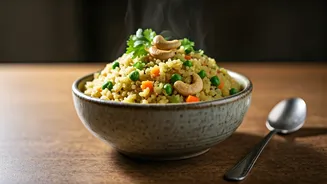
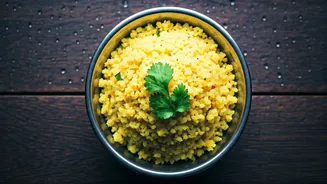
While this classic recipe is a winner, upma is incredibly forgiving and adaptable. A generous dollop of ghee on top just before serving adds richness and a wonderful aroma. A squeeze of fresh lemon or lime juice at the end brightens up all the flavours. You can garnish it with freshly chopped coriander leaves for a burst of freshness or some roasted cashews for a bit of crunch. Some households even add a pinch of sugar to the water to balance the flavours. Don’t be afraid to experiment and find the version that spells ‘comfort’ for you.