





Beyond the Scale: A Holistic View
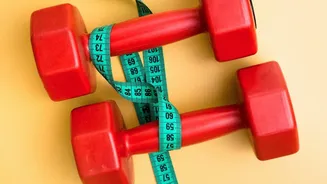
Relying solely on your body weight to track progress can be misleading and discouraging. Daily fluctuations due to water, hormones, or what you ate are normal and don't reflect genuine changes in your fitness. Moreover, as you build lean muscle, which
is denser than fat, the number on the scale might stay the same or even increase, even as your body composition improves and your clothes start to fit better. A more empowering approach is to focus on performance metrics and how you feel, which provide a clearer picture of your body's transformation. This involves tracking three key pillars: strength, stamina, and everyday function.
Tracking Your Strength Gains
Strength is a clear indicator of progress. Getting stronger means you are building and preserving muscle, which boosts your metabolism and makes your body more resilient. A simple way to measure this is by keeping a training log. Note the exercises you do, the weight you lift, and the number of sets and reps you complete. Seeing those numbers climb over weeks is concrete proof that you are improving. You can also track progress with bodyweight exercises. For example, time how long you can hold a plank or count how many push-ups you can do before needing a rest. If you could do five push-ups last month and can now do ten, your strength has doubled, regardless of what the scale says.
Measuring Your Stamina (Cardiovascular Fitness)
Stamina, or cardiovascular endurance, is about how efficiently your heart and lungs supply oxygen to your muscles during sustained activity. Improvements here often show up as a lower resting heart rate, which you can check first thing in the morning. As you get fitter, your heart doesn't have to work as hard. Another key metric is heart rate recovery—how quickly your pulse drops after exercise. For a practical test, try the YMCA 3-Minute Step Test. Step up and down on a 12-inch step for three minutes, then immediately sit and count your pulse for a full minute. A lower heart rate indicates better recovery and improved fitness. Alternatively, time yourself running or walking a set distance, like one mile. As your pace improves over time, you have a clear sign your stamina is increasing.
Assessing Everyday Functional Fitness
Perhaps the most meaningful measure of progress is functional fitness—your ability to perform daily tasks with ease and without injury. This type of fitness trains your muscles to work together, mimicking real-life movements like lifting, bending, and twisting. The benefits here aren't found in a logbook but in your daily life. Pay attention to the 'non-scale victories'. Are you carrying all the grocery bags in one trip without struggling? Can you climb several flights of stairs without getting winded? Do you have more energy to play with your kids or get through a busy day without feeling exhausted? These improvements in your quality of life are direct results of your hard work and a powerful indicator that your fitness is enhancing your overall well-being.