








The Limits of a Traditional Resume
For decades, the resume has been the undisputed king of the job application. It’s a concise, standardised document that outlines your work history, education, and skills. But in many creative, technical, and strategy-driven fields, it has a glaring weakness:
it tells, but it doesn’t show. A resume can state that you are a “skilled graphic designer” or an “expert Python developer,” but it offers no immediate proof. It forces a recruiter to take your word for it, hoping your claims will be validated later in a lengthy hiring process. In competitive fields where the quality of your work is the ultimate differentiator, a piece of paper summarizing your experience is simply no longer enough to capture attention.
Enter the Digital Portfolio
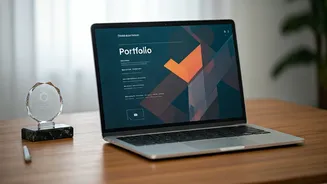
A digital portfolio is more than just an online resume. It’s a curated, living collection of your best work designed to tell a compelling story about your capabilities. Think of it as a personal museum where you are the curator, showcasing not just the final product but also the thinking, process, and results behind it. For a writer, it could be a collection of articles with links to the published pieces. For a developer, it could be links to GitHub repositories with well-documented code and live demos. For a marketing professional, it might be case studies detailing a campaign’s strategy, execution, and a clear breakdown of the metrics and ROI. It’s a space you own and control, allowing you to present your professional identity on your own terms.
The Power of 'Show, Don't Tell'
The single greatest advantage of a portfolio is its ability to demonstrate competence. Anyone can list “Project Management” as a skill. But a portfolio can feature a detailed case study of a complex project you managed from start to finish. You can include project goals, your specific role, challenges you overcame, and the final, measurable outcome. This tangible proof is infinitely more persuasive than a bullet point on a resume. It shifts the conversation from “what you say you can do” to “what you have already done.” This is crucial for building trust and credibility with potential employers or clients before you even speak to them.
Leveraging Niche Professional Forums
This is where the magic happens. A great portfolio is useless if no one sees it. Niche professional forums—platforms like Behance and Dribbble for designers, GitHub for programmers, or even specialised LinkedIn groups and Subreddits for various industries—are the perfect distribution channels. These aren't just job boards; they are communities where experts and hiring managers gather to discuss trends, share work, and spot talent. When you participate in these communities and share a link to your portfolio in your profile or in relevant discussions, you are not just applying for a job; you are engaging in peer-level conversation. Your work is seen in context by people who understand its value, creating organic opportunities for collaboration and employment.
How to Build an Effective Portfolio
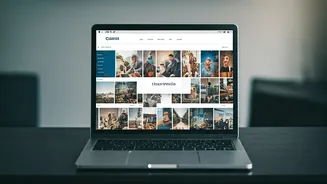
Starting a portfolio can feel daunting, but the key is to start simple and focus on quality over quantity. Select three to five of your best projects. For each one, write a brief case study: What was the problem or goal? What was your process? What was the outcome? Use high-quality visuals—screenshots, videos, or professional graphics—to make your work engaging. Ensure your contact information is prominent and your navigation is simple. You don’t need to be a web developer; platforms like Carrd, Adobe Portfolio, or even a well-designed Notion page can serve as excellent, easy-to-build portfolio sites. The goal is a clean, professional, and compelling presentation of your best self.