



What Ignited the Controversy?
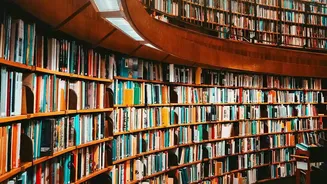
The issue exploded in early November 2026 when acclaimed Tamil writer Perumal Murugan raised alarms about nearly 1,800 questionable books at the newly opened Periyar Arivulagam library in Coimbatore. He pointed out unfamiliar author names, dubious ISBNs,
factual inaccuracies, and inflated prices. For instance, one book incorrectly identified the classical Tamil work 'Naladiyar' as a poet, while another falsely attributed a famous poem to the wrong author. The situation escalated when renowned economist Jean Drèze publicly disowned a book that listed him as the author. These revelations suggested a large-scale problem, with officials later identifying around 71,000 suspect books across the state library system.
The High Court's Decisive Intervention
This wasn't the first time the court had dealt with the issue. In June 2024, a bench including Justice G.R. Swaminathan had already issued detailed directions for a transparent book procurement policy to address a 'scam' involving the repackaging of old books. When the new scandal broke, revealing the 2024 orders had been 'brazenly breached', the court took up the matter again through a contempt petition. A bench of Justices G.R. Swaminathan and M.D. Sumathi took a firm stance, stating, 'Actors change, actions do not', referring to the recurring problem across different political administrations. The court ordered the Directorate of Vigilance and Anti-Corruption (DVAC) to register an FIR and directed the government to suspend the officials involved.
AI and the 'Doubtful Taste' Standard
The term 'AI-generated' became a centrepiece of the controversy, with the School Education Minister calling it potentially 'India's first AI scam'. While it is not yet definitively proven that AI was used, the court addressed the possibility head-on. The judges referenced the Tamil Nadu Public Libraries Rules, 1950, which state that books procured must not be of 'doubtful taste'. They expanded this definition to include not just fiction but also non-fiction works that are plagiarised, contain false narratives, or are AI-generated without authenticity. The court's stance is that public libraries have a duty to provide authentic information, and stocking bogus books by phantom authors violates this core principle.
Cracking Down on the System
The High Court's directives have been swift and specific. It ordered the freezing of bank accounts linked to the publishers in question, including Agal Vilakku Pathippagam, which allegedly supplied around 1,700 questionable titles to one library alone. The court demanded that 'heads must roll', insisting on accountability from the top down and directing the Director of Public Libraries to identify every official involved in the procurement process. Following the court's orders, the state government on November 15 suspended five senior library officials, including members of the Book Procurement Negotiation Committee.
What Happens Next?
The DVAC has begun its investigation, and an FIR has been ordered. The court is actively monitoring compliance, demanding detailed affidavits and pulling up officials for delays in identifying culprits. Hundreds of questionable books have already been withdrawn from library shelves in Chennai and Coimbatore. This case has triggered a full-scale review of the procurement process, with a special committee being formed to examine acquisitions across Tamil Nadu's vast network of over 5,000 libraries. The scandal has also ignited a political blame game between the current and previous state administrations.