
An Enduring Cosmic Mystery
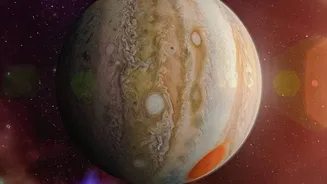
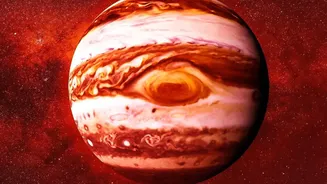
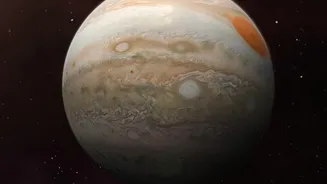
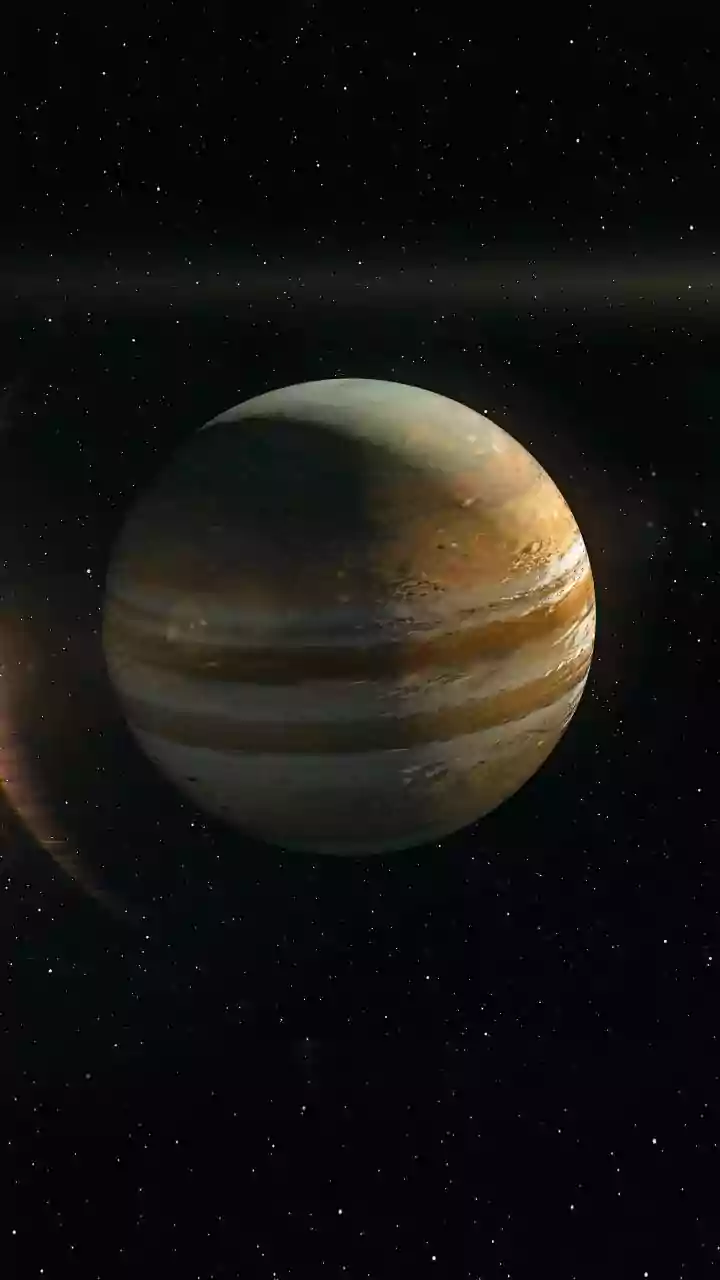
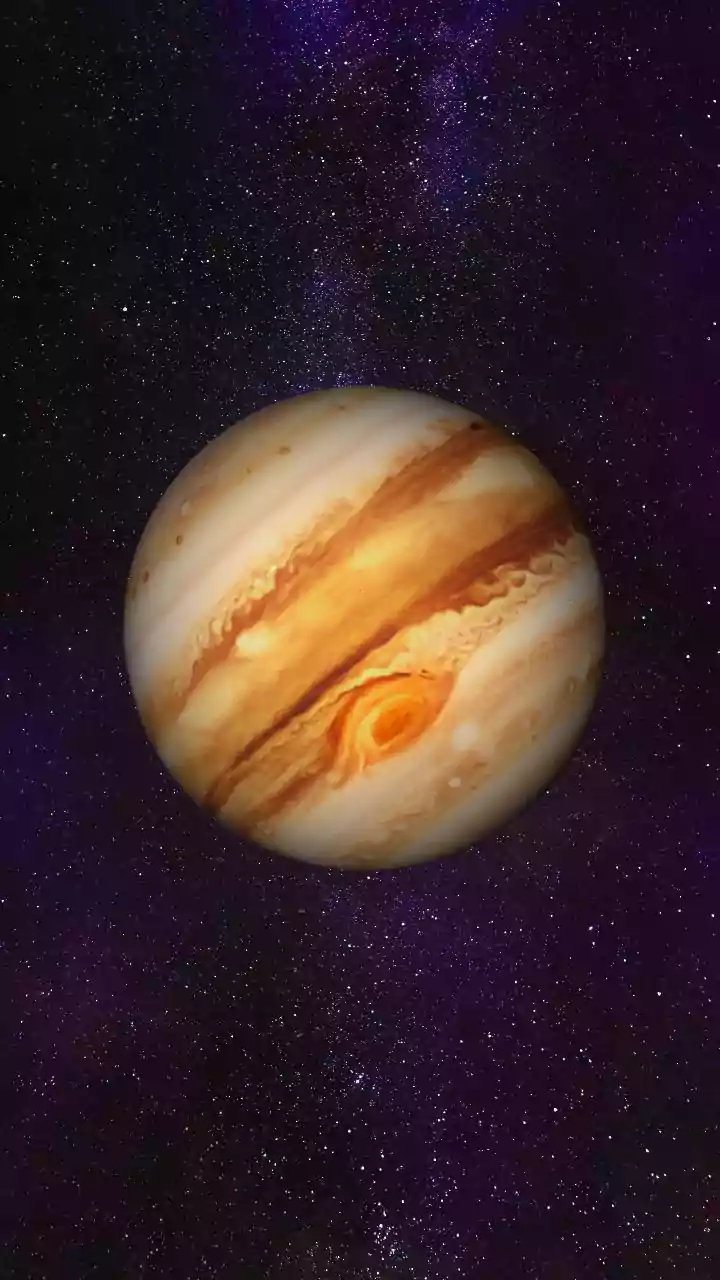
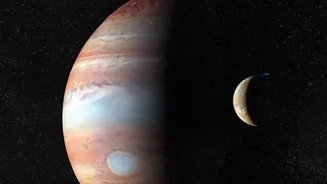
For at least 150 years, and possibly much longer, astronomers have gazed at Jupiter’s most famous feature: the Great Red Spot. This colossal anticyclone, a storm so vast it could comfortably swallow Earth, churns endlessly in the planet's southern hemisphere.
For generations, it has been a symbol of stability in a turbulent atmosphere. While we have known for decades that the storm is shrinking, its overall behaviour was considered relatively predictable. However, recent findings are painting a new picture of this gas giant’s most recognizable landmark, suggesting it is far more dynamic and mysterious than previously believed.
A New Eye on an Old Giant
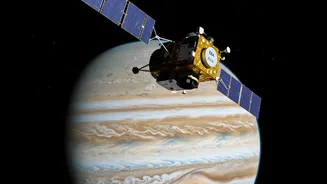
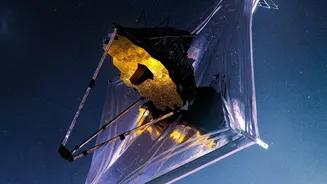
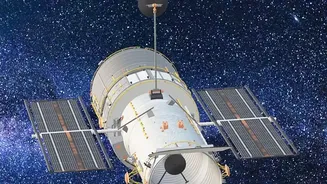
The latest insights come from the powerful optics of space telescopes like the Hubble Space Telescope. While the headline mentions 'new space telescope cameras', much of the recent detailed study on the storm's shifts specifically comes from dedicated observation programs using the veteran Hubble. These telescopes can capture images with incredible resolution, allowing scientists to monitor the planet’s atmosphere with unprecedented clarity. One such program, called the Outer Planet Atmospheres Legacy (OPAL), annually checks in on our solar system's gas giants. But a separate, dedicated 90-day study focusing solely on the Great Red Spot has yielded the most surprising results about its dynamic nature.
Decoding the Storm’s Dance
So what exactly are these shifts? The new data, collected between late 2023 and early 2024, reveals that the Great Red Spot isn't just shrinking; it's actively wobbling and changing shape over short periods. Astronomers describe the motion as oscillating, as if the storm is being squeezed in and out like a stress ball. During an observation period of about 90 days, the storm was seen to expand and contract periodically. At the same time, its movement speed would accelerate and decelerate. Amy Simon of NASA's Goddard Space Flight Center, a lead researcher on the project, expressed surprise at the findings, noting that while slight variations in its position were known, the oscillation in its size was a new and unexpected discovery.
The Science Behind the Swirl
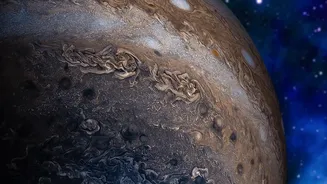
The long-term trend of the Great Red Spot shrinking is well-documented. In the late 1800s, it was estimated to be over 40,000 kilometres wide, but by 1979, Voyager flybys measured it at 23,335 kilometres across. More recent Hubble observations confirm it continues to get smaller and more circular. But this new oscillating behaviour is different. Scientists currently have no definitive hydrodynamic explanations for why the storm is 'jiggling' in this way. One hypothesis for its long-term shrinking is that smaller eddies and storms are feeding into the main vortex, altering its internal dynamics. It is possible this newly observed oscillation is related to these complex interactions within Jupiter’s turbulent atmosphere, but more research is needed to understand the underlying cause. Researchers hope to use other instruments, like the James Webb Space Telescope, to probe deeper into the storm at different wavelengths to see if wind velocities are also changing in sync with the wobbles.
What This Means for Planetary Science
Understanding the mechanics of Jupiter's massive storms helps scientists create a broader context for meteorology, both on Earth and on distant exoplanets. The Great Red Spot is a natural laboratory for studying atmospheric dynamics under extreme conditions not found on our planet. The fact that it is behaving in unexpected ways highlights how much we still have to learn about the gas giants in our own cosmic backyard. These detailed observations challenge existing models and will push theorists to develop new explanations for how such massive, long-lived storms evolve. The 'permanent spot' that early astronomers saw centuries ago may not even be the same storm we see today, as some research suggests it may have disappeared and reformed in the past.