
Understanding the 'Second Summer'
October heat is a known phenomenon in Mumbai. It marks the transition period after the southwest monsoon withdraws. During the monsoon, heavy cloud cover and strong westerly winds from the Arabian Sea keep temperatures in check. As the monsoon retreats,
the skies clear, allowing for more direct and intense sunlight. This, combined with high humidity left over from the rainy season, creates a stifling, sauna-like condition often referred to as Mumbai’s ‘second summer’. Recent data from early October 2026 confirms this pattern, with the India Meteorological Department (IMD) recording temperatures soaring over 5°C above normal, hitting 38.2°C and making it the hottest October in over a decade.
The City That Never Cools Down
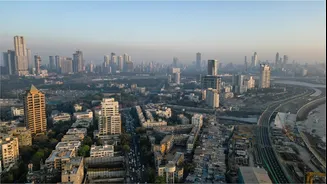
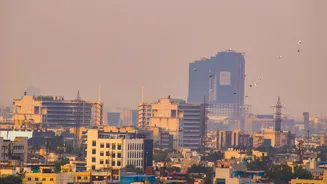
While a seasonal temperature spike is normal, the growing intensity and frequency of these heat events are not. The real story is how Mumbai's urban landscape is amplifying this natural weather pattern. This is due to a phenomenon called the Urban Heat Island (UHI) effect. Materials like concrete and asphalt—used for roads, buildings, and pavements—absorb and retain significantly more solar radiation than natural surfaces like soil and vegetation. This stored heat is then slowly released, especially after sunset, preventing the city from cooling down at night. A recent 25-year study found that nighttime temperatures in some densely built-up parts of Mumbai have risen steadily, now standing over 5°C higher than in surrounding greener areas.
A Concrete Jungle's Microclimate
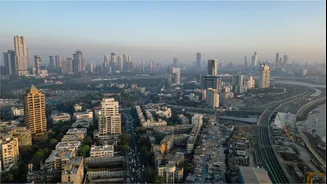
Mumbai’s relentless urban expansion is the primary driver of its intensifying UHI effect. Studies have documented a staggering loss of the city's natural buffers against heat. Between 1991 and 2018, Mumbai lost 81% of its open spaces and 40% of its green cover, while the built-up area increased by 66%. This rapid replacement of heat-mitigating green and blue spaces (like forests, parks, and water bodies) with heat-absorbing concrete has fundamentally altered the city's microclimate. One analysis highlighted a startling 13.1°C temperature difference between the suburb of Vasai West and the greener area of Powai during the same period, underscoring the creation of distinct temperature zones within the city itself.
Losing the Sea Breeze
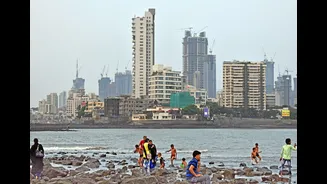
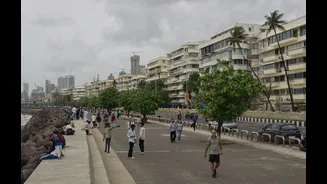
For a coastal city, the sea breeze is a vital natural air conditioner. However, Mumbai's changing skyline is putting this relief at risk. The proliferation of high-rise buildings, especially along the coast, can create physical barriers that block or weaken the inland flow of cooler air from the sea. Meteorologists have noted that recent heatwaves were exacerbated by anticyclonic circulations that delayed the onset of the sea breeze, allowing land temperatures to spike unchecked. This combination of weaker natural cooling and amplified urban heating creates a potent recipe for extreme heat events.
The Human and Environmental Cost
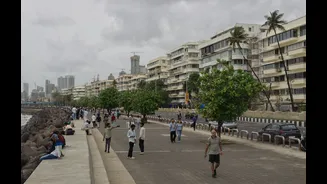
The consequences of this altered microclimate are far-reaching. The most direct impact is on public health, with increased risks of dehydration, heat exhaustion, and heatstroke, particularly for vulnerable populations like senior citizens and outdoor workers. Higher temperatures also lead to greater energy consumption as the demand for air conditioning rises, which in turn contributes to greenhouse gas emissions. Furthermore, the loss of green cover, including vital mangroves for projects like the Coastal Road, degrades natural ecosystems and reduces the city's overall climate resilience. Studies show that on a majority of days, human activity is already influencing local weather patterns in Mumbai.