



More Than Just Too Much Water
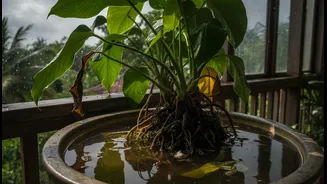
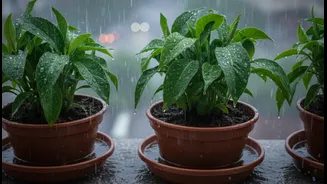
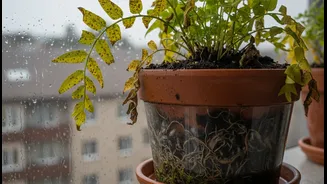
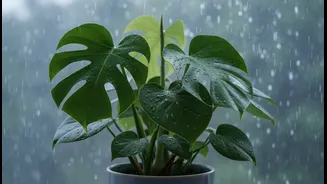
The primary cause of root rot isn't overwatering itself, but the consequences of it. Plant roots need both water and oxygen to survive. When soil in a pot becomes waterlogged, which happens easily during continuous rain, the tiny air pockets in the soil fill
with water. This suffocates the roots, depriving them of the oxygen they need to function. These weakened, oxygen-starved roots become vulnerable and begin to decay, creating the perfect breeding ground for disease. Ironically, a plant with rotting roots will often wilt as if it's thirsty, because its damaged root system can no longer absorb water effectively.
Meet the Fungal Culprits
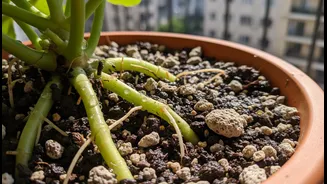
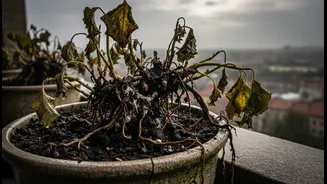
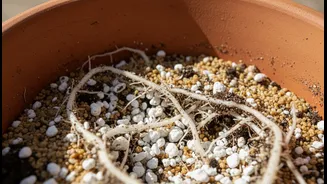
The actual rot is caused by opportunistic fungal pathogens like Pythium, Phytophthora, and Fusarium. These fungi are naturally present and often dormant in most soils and potting mixes. They are typically harmless. However, when the soil becomes a swampy, low-oxygen environment, these fungi activate and multiply rapidly, attacking the weakened roots. The rot spreads from the delicate feeder roots to the main root system, turning healthy, firm white roots into a brown or black mushy mess. This decay often produces a distinct, unpleasant sour or musty smell from the soil.
Why Dark, Rainy Weeks Weaken Plants
Extended periods of dark, overcast weather add another layer of stress. With reduced sunlight, plants cannot photosynthesize efficiently. Photosynthesis is how plants create energy to fuel their growth and maintain their defenses. Lower light means less energy, making the plant weaker overall and less capable of fighting off a fungal attack on its roots. This combination of waterlogged soil and a weakened plant creates a perfect storm where root rot can take hold and spread with alarming speed.
The Balcony Pot Is a Perfect Trap
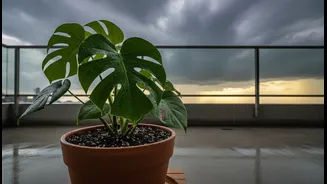
Balcony pots are uniquely susceptible to root rot. Unlike garden beds where excess water has more room to disperse, a pot is a closed system. The risk is highest when pots have blocked or insufficient drainage holes. Using heavy garden soil instead of a proper potting mix is another common mistake; it compacts easily, squeezing out air and holding onto water. Even the pot's size matters. A small plant in an overly large pot is a major risk, as the unused soil volume stays wet for too long, creating the anaerobic conditions that fungi love.
How to Rot-Proof Your Balcony Garden
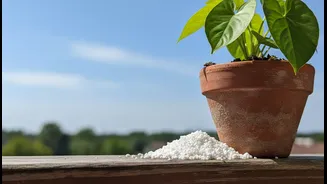
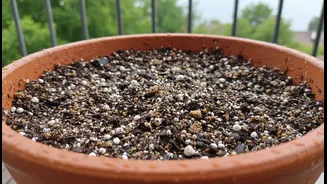
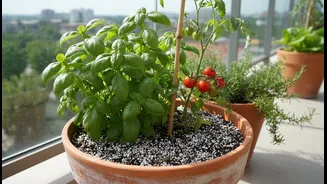
Prevention is your best defence. First, ensure every pot has adequate drainage holes and is not sitting in a saucer full of water. Elevating pots on feet or bricks can also improve airflow and drainage. Use a light, well-draining potting mix. The best mixes for containers contain ingredients like cocopeat, perlite, or sand, which create air pockets and allow water to pass through freely. Avoid using dense garden soil. During monsoon, water only when necessary. Check the soil a few inches down; if it's still damp, wait. Good air circulation around your pots also helps the soil dry out more evenly.
Emergency Rescue: Can This Plant Be Saved?
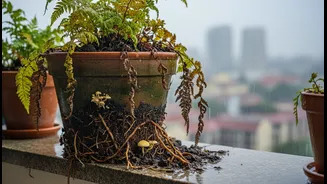
If you suspect root rot, you must act fast. Gently remove the plant from its pot and inspect the roots. Healthy roots are firm and white or tan, while rotten ones will be dark, mushy, and may fall apart when touched. Using clean, sterilized scissors, trim away every single piece of rotten root until only healthy tissue remains. Gently rinse the remaining healthy roots under lukewarm water. It's crucial to discard the old, contaminated soil and disinfect the pot with a bleach solution before repotting. Repot the plant in fresh, well-draining potting mix. Wait a few days before watering sparingly to allow the cut roots to heal.