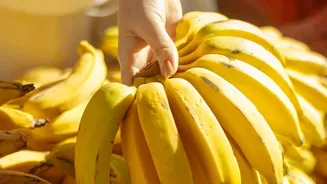

It’s a daily kitchen story: a bunch of bananas, once perfectly yellow, are now freckled with brown spots. Before you toss them, what if you saw them not as overripe, but as perfectly ready for their next delicious chapter?
The Green, Unripe Stage
A green or 'raw' banana is more
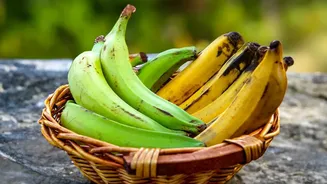
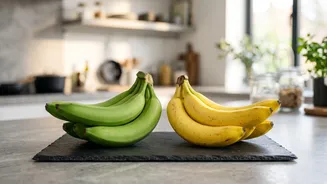
than just an impatient snack. Its nutritional profile is remarkably different from its ripe counterpart. Green bananas are packed with resistant starch, a type of carbohydrate that resists digestion in the small intestine. Instead, it functions like dietary fibre, travelling to the gut where it feeds beneficial bacteria. This high fibre content helps you feel fuller for longer and has a lower glycaemic index, meaning it leads to a slower, more gradual rise in blood sugar levels. However, the texture is firm and the taste is less sweet, which some people may find less enjoyable for snacking.
The Yellow, Ripe Transformation
As a banana ripens and turns yellow, a fascinating transformation occurs. The resistant starches that were so prominent in its green stage begin to convert into simple sugars like sucrose, glucose, and fructose. This is why ripe bananas are significantly sweeter and have a softer, creamier texture. While the total fibre content decreases, they become easier to digest for many people. The ripening process also increases the levels of antioxidants, which are beneficial compounds that help protect the body from damage. A medium-sized ripe banana remains a great source of essential nutrients like potassium, vital for heart health, and vitamin B6, which supports brain function.
Nutritional Showdown: Which is Better?
So, which banana is the superior choice? The answer truly depends on your personal health goals and preferences. If you're focused on managing blood sugar, improving gut health, or seeking a snack that keeps you full, the resistant starch in a greener banana is your ally. On the other hand, if you need a quick source of energy, such as before a workout, or have a more sensitive digestive system, a ripe banana is the ideal option. Ripe bananas provide readily available energy from their natural sugars and are generally gentler on the stomach. Neither is inherently 'bad'; they simply offer different benefits at different stages of their life.
Ripe Bananas: The Snack Superstar
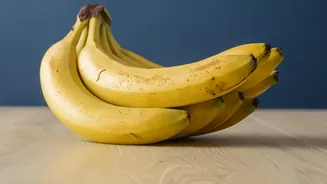
When it comes to creating flavourful and naturally sweet snacks, ripe and even overripe bananas are culinary gold. Their high sugar content means you can reduce or eliminate added sugars in recipes. The soft, mashable texture makes them a perfect binder in baked goods and a creamy base for smoothies and desserts. Those brown spots you see are actually a sign that even more starch has converted to sugar, making the banana even sweeter and more aromatic — perfect for infusing snacks with that classic banana flavour.
Simple Snacks with Ripe Bananas
Putting your ripe bananas to good use is easy and delicious. For a simple, healthy treat, blend a frozen ripe banana into a creamy, one-ingredient 'nice cream'. You can also mash a banana and mix it with oats and a little cinnamon to create simple, no-bake energy bites. Another quick option is to mash a banana and mix it with an egg or two to make simple, two-ingredient pancakes, perfect for a quick breakfast or snack. Slicing them onto peanut butter toast or mixing them into a bowl of chia pudding are also fantastic ways to use their natural sweetness.
Beyond the Snack: The Baking Champion
Of course, the most famous use for overripe bananas is banana bread. The fruit's moisture and intense sweetness are the secrets to a perfect loaf. But don't stop there. Ripe bananas are incredibly versatile in baking. They can be used to make moist muffins, soft cookies, and even brownies, often allowing you to cut back on both sugar and fat in the recipe. By seeing those browning bananas as an ingredient rather than waste, you unlock a world of delicious, resourceful, and healthier homemade treats.