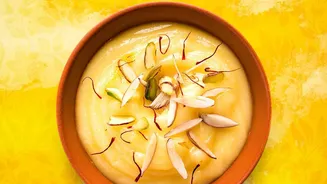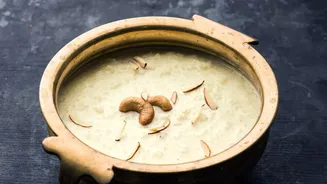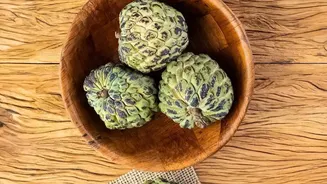







As the weather cools, the arrival of sitaphal, or custard apple, signals a time for unique seasonal treats. This creamy, sweet fruit finds its perfect expression in Phirni, a classic rice pudding that is both comforting and royally delicious.
Celebrating the Seasonal Star: Sitaphal
The custard
apple, with its bumpy green skin and fragrant, creamy-white flesh, is a beloved fruit in India. Its season, which typically runs from the monsoon months through early winter (around August to November), is eagerly awaited. While delicious on its one, the fruit's natural sweetness and custardy texture make it an exceptional ingredient for desserts. The main challenge, however, is separating the sweet pulp from its numerous black seeds. A popular and easy method involves scooping the flesh into a food chopper and pulsing it for just a few seconds; the seeds separate cleanly without being crushed. Another simple trick is to press the pulp through a large-meshed strainer with the back of a spoon.
What Makes Phirni Special?
Phirni is a traditional North Indian dessert that holds a special place in the culinary landscape. While often compared to kheer, it has a distinct character. The key difference lies in the rice: kheer is typically made with whole rice grains, while phirni uses coarsely ground rice. This ground rice cooks down into a smoother, creamier, and thicker pudding-like consistency. It is traditionally set and served chilled in shallow earthenware bowls called 'sakoras' or 'matkas', which absorb excess moisture and impart a subtle, earthy aroma to the dessert. Its delicate flavour profile makes it an excellent canvas for additions like fruits and nuts.
Gathering Your Ingredients
This recipe yields a rich and creamy phirni. Here is what you will need:
Full-Fat Milk (1 litre): For the creamiest texture, full-fat milk is essential.
Basmati Rice (¼ cup): A fragrant rice like Basmati adds a wonderful aroma, but any short-grain rice will work. It needs to be soaked for at least 30 minutes.
Sugar (½ cup, or to taste): Adjust the quantity based on the sweetness of your custard apples.
Custard Apple Pulp (1 cup): Use ripe, sweet sitaphal. This will be about 3-4 medium-sized fruits.
Cardamom Powder (½ tsp): For that classic, warm fragrance.
Nuts (Pistachios, Almonds for garnish): Sliced or chopped, these add a lovely crunch and colour.
* Saffron (a few strands, optional): Soaked in a little warm milk, this adds a beautiful hue and luxurious flavour.
A Step-by-Step Guide to Perfection
1. Prepare the Rice: After soaking the rice for 30 minutes, drain it completely. Transfer it to a grinder and blend it into a coarse, semolina-like texture. Do not make a fine powder. You can add a few tablespoons of the cold milk to help it grind into a paste.
2. Cook the Milk Base: In a heavy bottomed pan, bring the milk to a boil. Once it boils, reduce the heat to low. Add the ground rice paste, stirring continuously to prevent any lumps from forming. This is a crucial step for a smooth phirni.
3. Thicken the Phirni: Cook the mixture on low to medium heat for about 15–20 minutes, stirring frequently to prevent it from sticking to the bottom. The mixture will slowly thicken as the rice cooks. Scrape the sides of the pan as you go.
4. Add Sweetness and Flavour: Once the rice is fully cooked and the mixture has a thick, porridge–like consistency, add the sugar and the optional saffron–infused milk. Stir well and cook for another 5 minutes until the sugar has completely dissolved and the phirni is thick and creamy.
5. Cool it Down: Turn off the heat and let the phirni cool down. It's important to stir it occasionally as it cools to prevent a skin from forming on top. The phirni must be warm, not hot, before adding the fruit pulp.
6. The Final Touch: Once the phirni has cooled to a warm temperature, gently fold in the fresh custard apple pulp and the cardamom powder. Mix until just combined to retain the texture of the fruit.
7. Chill and Serve: Pour the Sitaphal Phirni into your serving bowls. Garnish with sliced pistachios and almonds. Refrigerate for at least 4 hours, or preferably overnight. Phirni tastes best when served thoroughly chilled, as it allows the flavours to meld and the texture to set perfectly.