

The Kayaker's Stroke: Power in the Pull
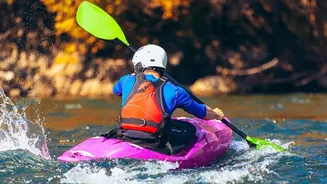
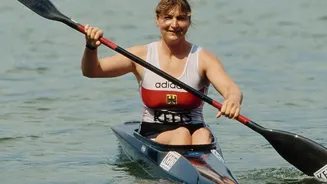
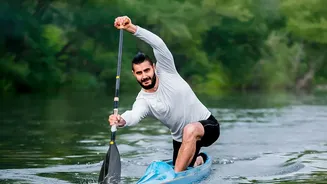
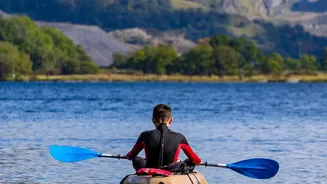
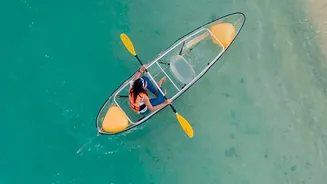
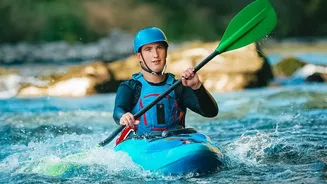
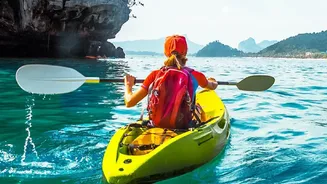
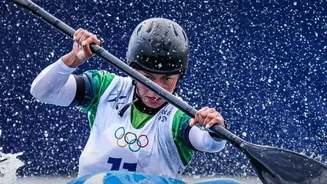
At first glance, kayaking seems like it's all about arm strength. While your arms are certainly involved, a proper kayaking stroke is a powerhouse move that originates from your core and back. The primary movement is a pull, engaging the large latissimus
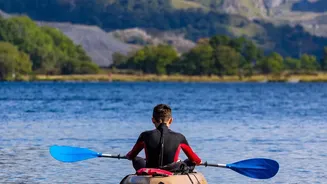
dorsi muscles (your lats) in your back with every stroke. As you pull the paddle blade through the water, your biceps and the deltoid muscles in your shoulders are activated. Think of it as a continuous series of rows. This repetitive pulling motion is excellent for building upper-body endurance and strength, particularly in the back and biceps. However, the key to an efficient and powerful stroke is torso rotation. By twisting your core, you use your body's largest muscle groups to do the heavy lifting, taking the strain off your smaller arm and shoulder muscles and allowing you to paddle for longer without fatigue.
The Paddleboarder's Reach: A Study in Stability
Stand-up paddleboarding offers a different kind of upper-body challenge that is intrinsically linked to balance and core stability. Because you're standing on an unstable surface, your entire body is constantly working to keep you upright. While the upper body is still working, the nature of the stroke is different. It involves a longer, more vertical 'reach and plant' motion. You reach forward, plant the paddle, and then pull your body past it. This movement heavily engages the shoulders for stabilization, particularly the rotator cuff muscles. Your triceps and biceps also work to control the paddle, but the overall experience is less about isolated arm pulling and more about integrating the upper body into a full-body movement. Your core, back, and even your legs are fundamental to generating power and maintaining your balance on the board.
Shoulder and Arm Work: A Direct Comparison
So, which is a 'better' arm and shoulder workout? It depends entirely on your fitness goals. Kayaking provides a more targeted upper-body strength and endurance workout, focused on the pulling muscles. The consistent, rhythmic motion is fantastic for building strength in your back, biceps, and shoulders. If your goal is to develop that V-shape torso and build arm endurance through repetitive motion, kayaking is an excellent choice. Paddleboarding, on the other hand, provides a more holistic workout where the arm and shoulder engagement is part of a larger system of balance and core power. It excels at developing shoulder stability and functional strength, as your muscles must work to control the paddle from an upright, unstable position. While it still works your arms, the intensity on those specific muscles may feel less direct than in kayaking because the effort is distributed more widely across the entire body.
Why Your Technique Matters Most
It's crucial to understand that proper form dictates the effectiveness of the workout and helps prevent injury in both sports. Many beginners make the mistake of relying solely on their arms when kayaking, leading to quick fatigue and potential shoulder strain. Effective kayaking technique emphasizes core rotation to power the stroke. Similarly, while paddleboarding, if you rely only on your arms to pull through the water, you'll miss out on the incredible core workout and put unnecessary stress on your shoulder joints. The power in an SUP stroke comes from the hips and core, using the paddle to transfer that energy to the water. An efficient stroke in either activity should feel like a full-body movement, even if the muscular emphasis is different.
Making Your Choice Based on Fitness Goals
To choose between the two, consider what you want to achieve. Are you looking for a focused upper-body session that builds pulling strength and endurance? Kayaking might be your answer. The seated position allows you to isolate and intensely work your back, shoulders, and arms over long distances. Are you more interested in a total-body workout that enhances balance, core stability, and functional shoulder strength? Then stand-up paddleboarding is likely the better fit. It challenges your body from head to toe, with the upper-body work being one component of an integrated system of movement and stabilization. Ultimately, both activities offer significant cardiovascular benefits and are a fantastic way to enjoy the outdoors.