

The Science of Crunch: Hot Air vs. Hot Oil
An air fryer isn’t actually a fryer at all; it’s a powerful countertop convection oven. Instead of submerging food in hot oil, it uses a heating element and a strong fan to circulate hot air at high speed. This rapid circulation of air is what cooks the
food and, crucially, removes moisture from the surface, creating a crispy exterior. Deep frying achieves its signature crunch because the hot oil envelops the food, quickly sealing the outside and trapping moisture inside. An air fryer mimics this process by blasting the food with dry heat from all angles, achieving a similar browning and crisping effect known as the Maillard reaction. The result is a texture that is remarkably close to fried, but with up to 80% less oil.
Perfecting the Air-Fried Pakora
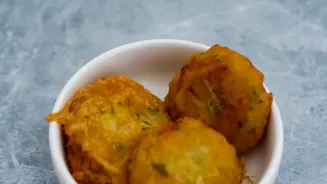
Making pakoras in an air fryer requires a small but vital adjustment to the batter. For deep frying, a slightly thinner, looser batter works because the hot oil instantly encases and sets it. In an air fryer, a wet batter can drip through the basket grate. The key is to make the besan (gram flour) batter thicker, so it clings firmly to the vegetables. Adding a tablespoon of rice flour can also enhance crispiness. Instead of dropping loose dollops, it's better to form slightly flattened patties that won't fall apart. Don't overcrowd the basket, as this will cause the pakoras to steam rather than fry. Place them in a single layer, spray lightly with oil, and air fry at around 190-200°C for 12-15 minutes, flipping them halfway through to ensure an even, golden-brown finish on all sides.
Crafting the Ideal Air-Fried Samosa
Samosas are wonderfully suited for the air fryer, especially since their filling is neatly contained. Whether you're using homemade pastry or store-bought sheets, the goal is a flaky, non-leathery crust. The secret is a light but thorough coating of oil. Before placing them in the air fryer, brush or spray the samosas on all sides. This helps the pastry blister and turn golden brown, mimicking the effect of deep frying. It's important to not overcrowd the basket, allowing hot air to circulate freely around each samosa. A typical setting is around 180-190°C for 15-20 minutes. Flipping them halfway through the cooking time is essential for achieving an even colour and crunch. Using a cooled filling is also a crucial tip; a warm filling can make the pastry soggy from the inside before it has a chance to crisp up.
The Verdict: Is It Really the Same?
Let's be honest: an air-fried pakora or samosa will not taste identical to its deep-fried cousin, and that's okay. Deep frying imparts a unique richness and a denser crunch because the food absorbs some of the oil. Air-fried versions, by contrast, have a lighter, often crispier texture and the flavour of the ingredients themselves is more pronounced. They are significantly less greasy and come without the heavy feeling that can follow a deep-fried snack session. Think of it not as a direct replacement, but as a fantastic, healthier alternative that allows you to enjoy your favourite snacks more often. You get all the satisfying crunch and flavour, with a fraction of the fat and none of the mess.