


The First Decision: To Travel or Not?
The safest journey during a downpour is often the one you don't take. Before heading out, check weather forecasts and traffic advisories from reliable sources like the India Meteorological Department (IMD) and local traffic police. If a 'red alert' is issued
or authorities advise against non-essential travel, it's wisest to stay put. Many companies are now more flexible with work-from-home (WFH) policies during severe weather, a safer and more practical option than navigating treacherous roads. If you must travel, consider public transport like elevated metro systems, which are often more reliable than road transport during floods. Inform your family or colleagues of your route and estimated travel time.
Vehicle Readiness: Your Pre-Monsoon Checklist
A well-maintained vehicle is crucial for monsoon safety. Before the rains intensify, ensure your car is prepared. Check that your tyres have adequate tread depth—at least 2-3 mm is recommended to prevent skidding on slick roads. Properly functioning brakes are non-negotiable, as stopping distances increase significantly on wet surfaces. Replace worn-out wiper blades that leave streaks, and top up your windshield washer fluid. Finally, test all your lights: headlights, taillights, and indicators. Clean lights are essential for you to see and for others to see you in low visibility conditions.
On the Road: Navigating a Wet Commute
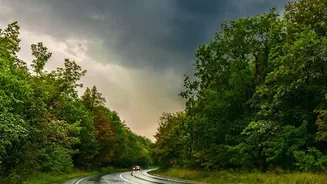
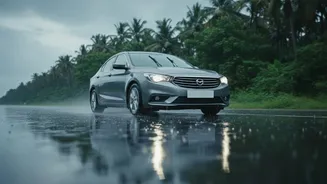
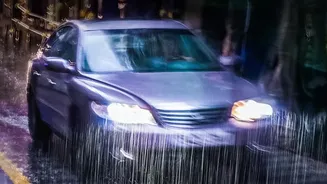
Once you are on the road, your driving style needs to adapt. The most important rule is to slow down. Reducing your speed gives you more time to react and helps prevent hydroplaning, where your tyres lose contact with the road. Turn on your low-beam headlights, even during the day, to increase your visibility to other drivers. Avoid using high beams, which can reflect off the rain and impair vision. Double the usual following distance between you and the vehicle in front to allow for longer braking times. Be extra cautious of pedestrians and two-wheelers, who are more vulnerable in the rain. Avoid sudden braking or sharp turns, as these manoeuvres can easily lead to a skid on wet roads.
The Danger of Waterlogged Roads
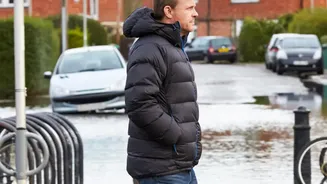
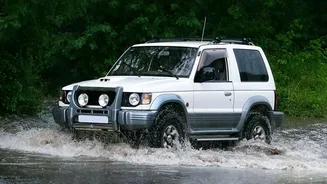
Driving through waterlogged streets is one of the biggest risks during a downpour. It is incredibly difficult to judge the depth of standing water, which can conceal open manholes, deep potholes, or other debris. As a rule, if you cannot see the road beneath the water, do not attempt to drive through it. It takes just six inches of water to cause a loss of vehicle control or stall an engine. A foot of water can float most cars, and two feet of rushing water can carry away even SUVs and trucks. The mantra to remember is: Turn Around, Don't Drown. Find an alternative route or wait for the water to recede. The delay is a small price to pay for your safety.
In Case of Emergency: If You Get Stuck
If you misjudge the water's depth and your car stalls, do not attempt to restart the engine. This can draw water into the engine and cause catastrophic, expensive damage known as hydrostatic lock. If the water around your car is not moving, the safest option is to abandon the vehicle and move to higher ground. If the water is rising and moving quickly, it may be safer to stay in your vehicle and call for emergency services. If you must exit, do so cautiously and move to a stable, higher location immediately. If you are simply stuck in heavy rain with near-zero visibility, pull over to a safe location away from the flow of traffic, turn on your hazard lights, and wait for the intensity of the rain to lessen.