

Anatomy of a Hypothetical Crisis
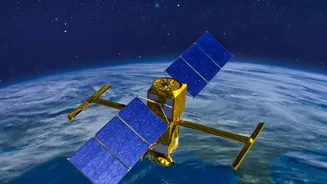
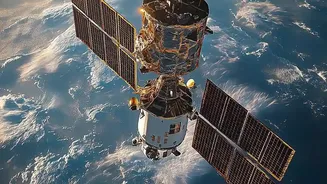
Recent academic studies have renewed focus on the vulnerability of satellites in low Earth orbit (LEO). One such preprint paper explored a dramatic hypothetical: the detonation of a nuclear device in space. The simulation wasn't a prediction, but a stress
test to understand cascading consequences. The model suggested that such an event could create an artificial radiation belt, trapping electrons in the Earth's magnetic field. Satellites passing repeatedly through this belt could suffer severe electronic damage, with the study's simulation finding that 98% of satellites in the modeled LEO fleet could become inoperable within a week. While this scenario is extreme, it highlights a broader concern about the resilience of the satellite constellations that modern economies depend on.
A Domino Effect in Orbit
The greater, more persistent threat modelled in such scenarios is known as the 'Kessler Syndrome'. First proposed by NASA scientist Donald J. Kessler in 1978, it describes a runaway chain reaction of collisions. When one satellite breaks up, it creates a cloud of debris. Each piece of shrapnel, travelling at tremendous speeds, can then strike other satellites, creating even more debris. This cascade could eventually make entire orbital altitudes so cluttered with junk that they become impassable for decades, or even centuries. The 2009 collision between a defunct Russian Cosmos satellite and an active Iridium communications satellite is often cited as a real-world example of this mechanism, having generated thousands of new debris fragments.
When the Digital Sky Goes Dark
The consequences of a large-scale satellite failure would be immediate and far-reaching. A study by London Economics for the European Space Agency estimated that a one-week outage of satellite communications could result in economic losses of up to €20 billion. The aviation and maritime sectors would be hit hardest, accounting for over 90% of the impact. Thousands of transatlantic flights could be cancelled or delayed, and global supply chains would face critical disruption as shipping logistics break down. Beyond big industry, millions of individuals in remote areas would lose internet access, affecting everything from remote work and education to emergency messaging services. While financial payment systems might not be directly impacted on a large scale, remote communities reliant on satellite connectivity for banking could be cut off.
A Crowded Cosmic Highway
The risk of orbital collisions is no longer a distant, theoretical problem. The number of objects tracked in orbit has more than doubled since 2007, now standing at over 32,000. The rise of 'megaconstellations' from companies like SpaceX's Starlink, which operates thousands of satellites, has dramatically increased traffic density. As of 2026, satellite operators receive dozens of collision alerts daily. Worryingly, models suggest there could be over 140 million pieces of debris smaller than one centimeter that are too small to be tracked but are still capable of causing catastrophic damage upon impact. Some long-term models show that even if all space launches stopped today, the amount of debris in the most congested orbits, between 700 and 1,000 km altitude, would continue to increase due to collisions among objects already there.
Building a More Resilient Future
For nations like India, with a growing digital economy and strategic interests in space, ensuring orbital resilience is paramount. India's reliance on satellite services for everything from telecommunications and navigation via its NavIC system to financial transactions via UPI is immense. Recognising this, India is fostering a domestic satellite broadband market, with companies like Reliance and OneWeb (backed by Bharti) entering the fray alongside global players. The goal is to build sovereign capability and reduce reliance on foreign operators, whose services can become entangled in geopolitical issues. On a global scale, solutions range from developing on-orbit servicing and refuelling to extend satellite lifespans, to creating 'reactive removal services' to actively clean up large pieces of space junk. These hypothetical studies serve as a crucial, if stark, reminder that the sustainability of space is not guaranteed and requires active management.