



What the New Study Reveals
An international team of researchers has quantified for the first time on a global scale how soil degradation directly impacts agricultural productivity. Using high-resolution data on soil quality, land degradation, and crop harvests, the study found
a clear and troubling link: for every 10% increase in land degradation, the gap between potential and actual crop yields widens by about 2%. This isn't a future problem; it's happening now. The research estimates that soil degradation is already responsible for an annual loss of about 20 million tonnes of crops globally. That's enough food to feed over 70 million people for a year, with an associated economic loss of around US$4 billion annually.
Decoding the 'Yield Gap'
The term 'yield gap' sounds technical, but it's a simple and crucial concept. It represents the difference between the maximum possible crop yield under ideal conditions and the actual yield a farmer achieves. Think of it as the untapped potential of our farmland. This gap is influenced by many factors, including pests, water availability, and farming practices. The new study confirms that soil health is a major, and previously unquantified, piece of this puzzle. When soil quality declines, its ability to support crops diminishes, making it harder for farmers to achieve the high yields that modern crop varieties promise.
The Silent Crisis of Soil Decline
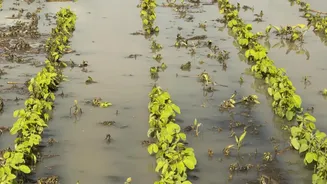
Soil degradation isn't a single event but a slow decline in the physical, chemical, and biological quality of the soil. This includes processes like soil erosion from wind and water, the loss of essential nutrients and organic matter, and soil compaction from heavy machinery. Human activities are the primary drivers. Unsustainable agricultural practices like monocropping (planting the same crop year after year), excessive use of chemical fertilizers, deforestation, and overgrazing all strip the soil of its vitality. In India, this is a particularly acute problem. It's estimated that nearly a third of the country's land is affected by degradation, with more than half of its soils deficient in the organic carbon that is essential for fertility.
The Indian Context: A Looming Challenge
For India, where agriculture supports over half the population, the study's findings are a stark warning. The nation is already grappling with a soil health crisis. Decades of intensive farming, aimed at ensuring food security, have taken a toll. A significant portion of Indian soil samples show deficiencies in key nutrients like nitrogen. The indiscriminate use of pesticides and a decline in organic matter have created a situation where fertilizer efficiency is dropping, meaning more inputs are needed for the same output. This not only raises costs for farmers but also makes agriculture less resilient to climate change, as degraded soil holds less moisture.
From the Farm to Your Plate
The consequences of widening yield gaps and poor soil health extend far beyond the farm. For the average citizen, this translates into a threat to long-term food security and affordability. Lower productivity can lead to higher food prices and increased reliance on imports. It also jeopardizes the livelihoods of millions of small and marginal farmers who are the backbone of Indian agriculture. Furthermore, unhealthy soil grows less nutritious food, contributing to micronutrient deficiencies in the population. The health of our soil is directly linked to the health of our people and our economy.
The Path to Healthier Soil
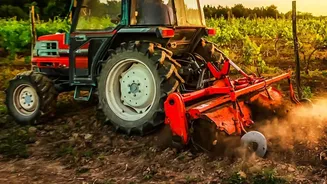
The situation, while serious, is not irreversible. The solution lies in shifting towards more sustainable and regenerative agricultural practices. Techniques like conservation tillage (reducing ploughing), planting cover crops during the off-season to protect the soil, crop rotation, and integrated nutrient management can help rebuild soil health. These methods aim to restore the soil's natural structure and biodiversity, increase organic matter, and improve its ability to retain water. By investing in soil health, we are not just correcting an environmental problem; we are investing in a more productive, resilient, and secure food future for all.