





A New Lunar Gold Rush
For decades, going to the Moon was a feat reserved for the world’s wealthiest governments. Today, that is rapidly changing. We are in the midst of a new lunar era, driven less by Cold War rivalry and more by commercial ambition. Private companies worldwide
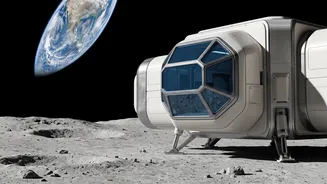
are now developing landers, rovers, and infrastructure to support a budding lunar economy. The goals are audacious: mining for rare minerals and water ice, setting up communication networks, and establishing a permanent human presence. This shift from state-funded exploration to a private-led market has created a massive opportunity. And it’s a race where speed, reliability, and, most importantly, cost-effectiveness will determine the winners.
The 'Chandrayaan' Effect on Private Ambition
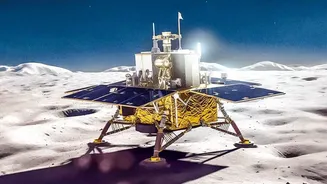
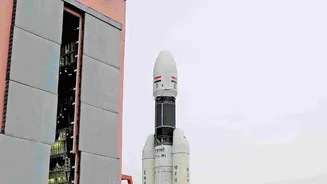
India’s journey into this commercial space race didn't happen overnight. It was built on the foundation laid by the Indian Space Research Organisation (ISRO). The historic success of missions like Chandrayaan-3, which landed a rover near the Moon's south pole for approximately $75 million, showcased India's mastery of 'frugal innovation'. This feat sent a clear signal to the world: India can achieve incredible space milestones at a fraction of the traditional cost. Sensing this potential, the Indian government formally opened the space sector to private enterprise in 2020, establishing IN-SPACe as a regulatory body to support and authorise private missions. This policy shift, combined with ISRO’s willingness to mentor and share its facilities, has uncorked a wave of entrepreneurial energy across the country.
From Prize Contenders to Key Partners
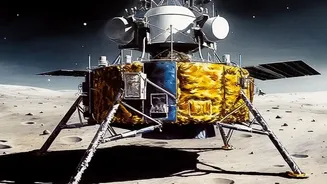
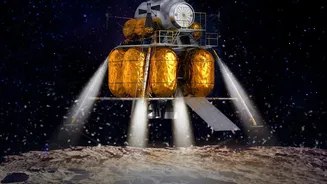
A prime example of this new wave is Bengaluru-based Axiom Research Labs, the company that began as TeamIndus. Initially formed to compete for the Google Lunar X Prize, the team developed a lunar lander and a rover named ECA, an acronym for 'Ek Choti Si Asha' (A Small Hope). While the competition ended in 2018 without a winner, the company’s expertise did not go to waste. Instead of folding, Axiom Research Labs pivoted. It has since evolved into a critical technology partner for international lunar missions. The company has collaborated on developing AI-powered software to enhance the autonomy of micro-rovers and has contributed to projects linked with NASA's ambitious Artemis program, which aims to return humans to the Moon. Their journey shows a remarkable resilience and a strategic shift from leading a solo mission to becoming an indispensable part of the global lunar supply chain.
Building the Lunar Supply Chain in India
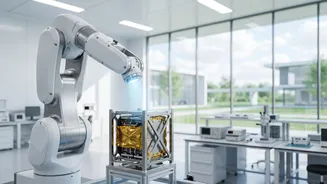
It’s not just about one company. An entire ecosystem is taking shape. For instance, ORBITBeyond is setting up a global space systems centre in Odisha, with plans to design and manufacture lunar landers, rovers, and satellite payloads right here in India. The company explicitly notes that its program draws on the deep experience of the engineering community behind ISRO’s Chandrayaan missions, blending it with international expertise. Other startups, while not exclusively focused on the Moon, are building crucial adjacent technologies. Companies like Skyroot Aerospace and Agnikul Cosmos are developing low-cost launch vehicles, while Dhruva Space focuses on satellites. Together, they are creating a vertically integrated space ecosystem within India, capable of handling everything from launch to landing and surface operations.
The Frugal Innovation Advantage
What makes these Indian startups so competitive? The answer lies in a culture of cost-conscious engineering. It’s not about cutting corners, but about smart design and efficient processes. This 'frugal innovation' mindset involves reusing proven designs, disciplined mission scoping, and leveraging India’s vast pool of skilled, cost-effective engineering talent. By keeping development and operational overheads low, these firms can offer payloads and rover technologies at prices that are highly attractive to global partners. They are turning a national philosophy of resourcefulness into a powerful business advantage, democratizing access to the Moon for countries and companies that previously found it prohibitively expensive.