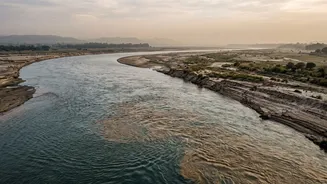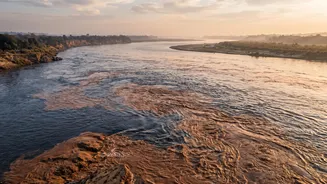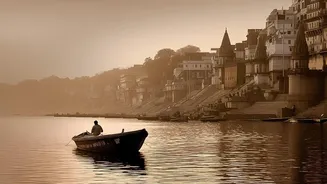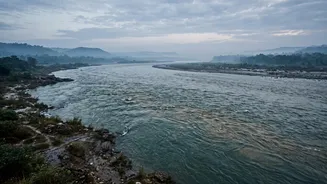




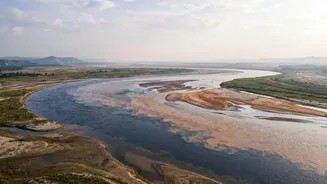
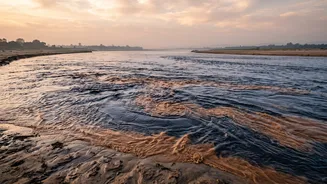
A landmark treaty governing one of South Asia's most vital water sources is set to expire. The 1996 Ganges Water Treaty between India and Bangladesh, a cornerstone of bilateral relations, ends in December 2026, forcing a critical re-evaluation.
A Treaty Born from Necessity
Signed
on December 12, 1996, the Ganges Water Treaty was a diplomatic breakthrough designed to end decades of dispute. The core issue was the Farakka Barrage, built by India in 1975 just 20 kilometres upstream from the Bangladeshi border. Its purpose was to divert water from the Ganges into the Hooghly River to flush out silt and maintain the navigability of Kolkata's port. However, this diversion drastically reduced the downstream flow into Bangladesh, particularly during the critical dry season from January to May, impacting agriculture, fisheries, and environmental stability. The 1996 treaty, signed for a 30-year period, established a water-sharing formula for this lean season. It specified how water would be divided in 10-day periods based on the flow available at Farakka, aiming to provide predictability for both nations.
Successes and Shortcomings of the Accord
For three decades, the treaty has been a pillar of India-Bangladesh relations, ensuring a baseline of cooperation and preventing the water dispute from spiralling out of control. It created a structured mechanism for dialogue through the Joint Rivers Commission. However, the framework has faced criticism. Experts and officials in Bangladesh have long argued that the treaty is flawed because it lacks a 'minimum guarantee' clause that was present in a previous 1977 agreement. That clause ensured Bangladesh received a protected amount of water even in years of exceptionally low flow. Furthermore, studies have shown that even with the treaty, Bangladesh has struggled with desertification, salinity intrusion in its southwestern regions, and reduced freshwater availability. On the Indian side, the Farakka Barrage itself has created problems, including recurrent floods and heavy siltation in states like Bihar and West Bengal.
A River Transformed by Climate Change
The world in which the treaty was signed is not the world of today. The most significant new challenge is climate change. The Himalayan glaciers that feed the Ganges are retreating at an alarming rate. While this may cause a shortterm increase in water flow and flooding, the longterm prognosis is dwindling reserves and reduced dryseason flows. Scientific models predict that winter flows in the Ganges could be significantly reduced over the next 50 years. The original treaty was based on historical flow data from 1949 to 1988 and did not account for such drastic environmental shifts. Any new or renewed agreement will have to grapple with the reality of a river system under immense stress from both unpredictable monsoons and increasing droughts, which have become more frequent and severe in recent decades.
The Diplomatic Path to Renewal
With the December 2026 expiration date looming, both nations are preparing their positions. India's Parliamentary Standing Committee on External Affairs has urged the government to begin renewal discussions without delay, based on updated hydrological data. New Delhi has formed an internal committee to review the treaty, taking inputs from stakeholders including West Bengal and Bihar, who have their own rising demands for water. Meanwhile, Bangladesh has also formed a technical committee to frame its negotiating stance. Officials in Dhaka have expressed a desire for a revised agreement that possibly restores a guarantee clause and takes a broader, basinwide management approach. However, formal bilateral talks have yet to commence, and the current political climate between the two countries adds a layer of complexity to the negotiations. Some reports suggest India is unlikely to agree to an automatic renewal, with potential changes to the treaty's duration being considered.