




The Promise of Habitable Worlds
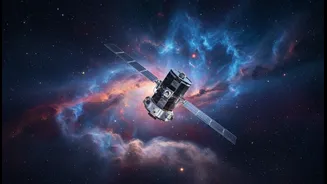
Set to launch in the 2040s, the Habitable Worlds Observatory (HWO) is NASA's designated successor to the James Webb Space Telescope (JWST). Its primary mission is one of the most profound in science: to directly image Earth-like planets orbiting stars
similar to our sun and scan their atmospheres for chemical hints of life, such as oxygen and methane. This $11 billion instrument will be the most complex observatory ever built, requiring unprecedented stability to block the light of a star and capture the faint reflection from a planet. The goal is to survey at least 25 potentially habitable worlds, moving humanity closer than ever to answering the question, "Are we alone?"
A Tale of Two Telescopes
To understand the challenge facing HWO, we must look at its predecessors. The Hubble Space Telescope, launched in 1990 into low-Earth orbit, was famously saved from a flawed mirror by astronauts on a Space Shuttle mission. Its design, which allowed for five servicing missions, meant it could be repaired, upgraded, and fitted with new instruments, dramatically extending its life and scientific power. In contrast, the JWST was sent to a point one million miles from Earth, known as Lagrange Point 2 (L2), a location far too distant for astronaut repairs. It was designed with a fixed, single-lifecycle philosophy: it had to work perfectly from the start because there was no plan B. HWO is planned for the same distant L2 location, but its complexity makes a no-servicing approach a dangerous gamble.
The Robotic Servicing Mandate
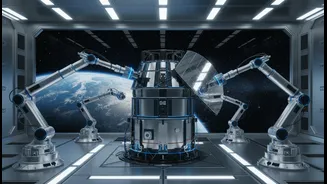
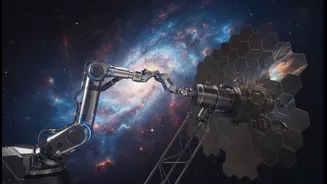
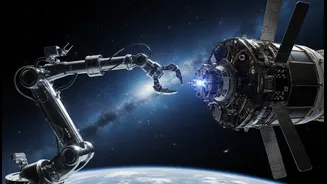
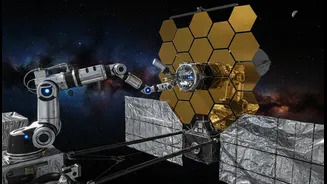
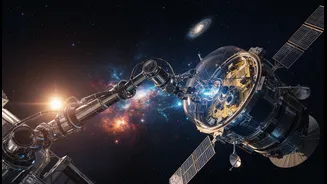
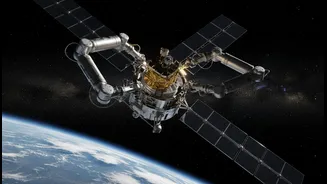
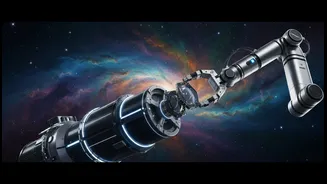
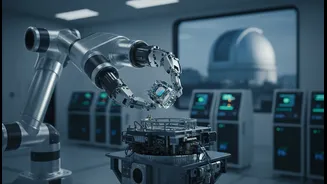
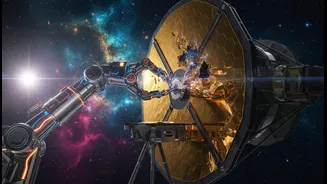
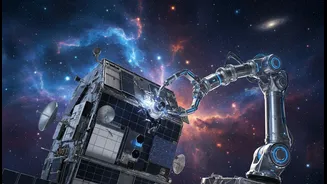
Recognizing the lessons from both Hubble and Webb, NASA has made a pivotal decision: the Habitable Worlds Observatory must be serviceable. Speaking at the American Astronomical Society's meeting in July 2026, NASA officials confirmed that the telescope is being engineered from its inception to accommodate robotic in-space servicing, assembly, and maintenance (ISAM). This is a fundamental shift. Instead of astronauts, the plan envisions robotic spacecraft capable of docking with the observatory to replace aging science instruments, fix broken components, or even perform initial assembly in orbit if the telescope is too large to launch in one piece. All critical systems will be designed as modular, line-replaceable units that a robot can handle.
Engineering Before Exoplanets
This is where engineering must precede the discovery headlines. While the search for life provides a powerful narrative, the unglamorous work of designing for repair is what will make it possible. Building a modular telescope that can be serviced by robots 1.5 million kilometers from home is an immense technical challenge. It requires developing new robotic systems, standardizing interfaces, and creating autonomous navigation that can perform delicate operations without human intervention. These are not optional extras to be figured out later; they are foundational requirements that dictate the telescope's core architecture. As one expert noted, now is the time to have this discussion, while the observatory is still on the drawing board. Investing in this capability from day one mitigates the risk of a catastrophic single-point failure that could doom the entire mission.
The Cost of Not Planning Ahead
The JWST has been a spectacular success, but it serves as a cautionary tale. Scientists have noted that micrometeoroid impacts have caused more degradation than initially expected, a type of wear-and-tear that servicing could potentially address. For a generational asset like HWO, which will cost over $11 billion, launching it without a viable plan for repairs and upgrades would be fiscally irresponsible. A serviceable design not only ensures a longer operational life but also allows for future-proofing. Twenty years after launch, new sensor technology could exist that would revolutionize HWO's capabilities. Robotic servicing means these next-generation instruments could be installed, transforming the observatory and maximizing the return on investment. By mandating a serviceable architecture, NASA is also helping to jump-start a commercial industry for in-space servicing, creating an economic driver from a scientific need.