





The Good Intentions of Connection
Initiatives that foster social connections for people with disabilities are born from a place of deep empathy. Loneliness is a significant battle, and platforms that help build a community and find shared interests are undeniably valuable. They address
a crucial human need for belonging that is often overlooked. In a society where social exclusion can be as debilitating as any physical barrier, these friendship programmes offer a vital lifeline. They create safe spaces for individuals to be themselves, share experiences, and build relationships that enrich their lives. This social and emotional support is not trivial; it is a fundamental component of a person's well-being. However, we must be careful not to mistake a solution for social isolation as a solution for systemic exclusion.
The Harsh Reality of Our Public Spaces
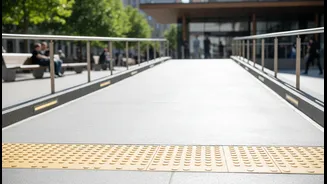
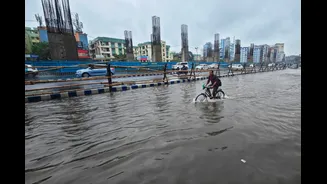
The problem is that friendship, no matter how strong, cannot build a ramp, pave a broken footpath, or redesign an inaccessible bus stop. For millions of Indians with disabilities, the public realm is a daily obstacle course. Reports and lived experiences paint a stark picture: footpaths, where they exist, are often uneven, encroached upon, or abruptly end. Public buildings, transport hubs, and recreational areas frequently lack basic accessibility features like ramps, tactile paving, or accessible toilets. The Rights of Persons with Disabilities (RPwD) Act of 2016 was a landmark piece of legislation that shifted the narrative from charity to rights, mandating accessible infrastructure. Yet, a staggering gap between law and reality persists. This isn't an inconvenience; it is a denial of the fundamental right to move freely and participate in society.
Accessibility is a Right, Not a Favour
Relying on a friend or a volunteer to navigate an inaccessible city outsources a state responsibility to private individuals. It perpetuates a narrative of dependency, where a person with a disability requires an able-bodied companion to simply leave their home. This thinking runs contrary to the rights-based approach enshrined in law. The Accessible India Campaign (Sugamya Bharat Abhiyan), launched in 2015, was a nationwide push to create a barrier-free environment. Its goals were clear: make public transport, buildings, and information accessible to all. While a commendable initiative, its implementation has been inconsistent, hampered by weak enforcement and a lack of universal standards. True inclusion means a person with a disability can independently decide to go to a shop, a park, or a government office, without needing to coordinate a helper. Friendship should be about companionship, not functional assistance.
What Real Change Looks Like
Fixing this requires moving beyond well-meaning but limited solutions. The focus must shift to a principle known as 'Universal Design'. This means designing and building environments to be usable by all people, to the greatest extent possible, without the need for specialised adaptations. Instead of retrofitting a ramp onto a building as an afterthought, the building should be designed with a level entrance from the start. Instead of special buses, the entire public transport fleet should be accessible. This requires a non-negotiable commitment from urban planners, architects, and policymakers. It means strict enforcement of accessibility standards in all new construction and a funded, time-bound plan to retrofit existing public infrastructure. It means moving from a mindset of 'special features' for some to one of inclusive design for all.