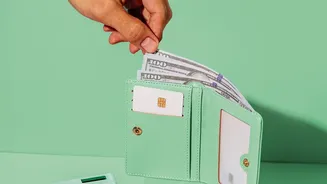







Use UPI Lite for Petty Cash
Think of UPI Lite as your digital pocket money. It’s on-device wallet feature within your main UPI app where you can load a small amount, like ₹2,000. Use this for all your small, daily expenses like tea, snacks, or auto rides. Payments under ₹500 or ₹1,000,
depending on your app, are instant and don't require a PIN. The biggest benefit is that these tiny transactions don’t clutter your main bank statement, making it much easier to track your major expenses. It creates a psychological boundary, separating your main funds from your daily discretionary spending.
Create a Dedicated 'Spending' Account
This is perhaps the most powerful budgeting hack in the digital age. Instead of linking your primary salary account to UPI apps, open a secondary, zero-balance savings account. At the start of each month, transfer your allocated budget for all variable spending—groceries, entertainment, shopping—into this account. Link PhonePe, Google Pay, and others only to this account. When the balance runs low, you have a clear, unmissable signal to stop spending. Your salary and savings account remain untouched and safe from impulse purchases.
Become a Transaction History Detective
Your bank statement is not your friend when it comes to tracking UPI spends; it often just labels everything as a generic 'UPI' transaction. Instead, make it a weekly habit to open your UPI app and scroll through the transaction history. The app provides a detailed, itemised record with the merchant's name, date, and amount for every single payment. This simple 10-minute review is the fastest way to see where your money is really going. You might be shocked to discover how much those daily food orders or cab rides are actually adding up to.
Audit Your AutoPay Mandates Ruthlessly
UPI AutoPay for subscriptions and bills is incredibly convenient, but it's also a breeding ground for 'financial leakage'. That free trial you forgot to cancel, or the streaming service you no longer use, could be silently debiting your account every month. Once every couple of months, go to the 'Mandates' or 'AutoPay' section in your UPI app. Review every active recurring payment. If you don't recognise it or no longer need the service, cancel it immediately. This simple clean-up can often save you hundreds of rupees a month.
Set Custom Spending Limits
To add some much-needed friction back into spending, you can manually set your own limits. While most UPI apps don't offer this feature directly, many bank-specific mobile apps do. Log into your bank’s official app and look for an option to modify your daily UPI transaction limit. The default is often ₹1 lakh. By lowering this to a more reasonable amount, you create a hard stop that can prevent you from making large, impulsive purchases. It forces a moment of pause, which is often all you need to reconsider a non-essential expense.
Try a Hybrid Cash-and-UPI Model
If you find digital spending too abstract, reintroduce the tangible feeling of spending money. Adopt a hybrid approach: continue using UPI for essential 'needs' like rent, utility bills, and core groceries. For all your discretionary 'wants'—eating out, movies, shopping—withdraw a fixed amount of cash at the beginning of the week. When you have to physically hand over notes, you become more mindful of the expense. When the cash in your wallet is gone, your fun spending for the week is over. This old-school method is surprisingly effective at curbing mindless consumption.