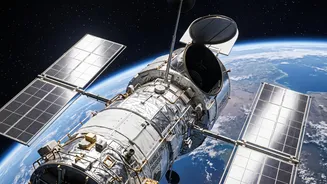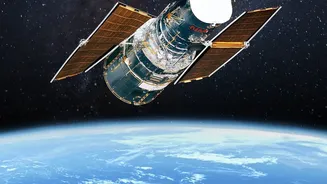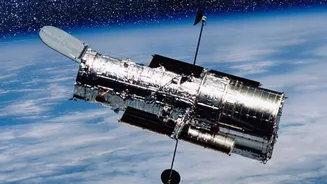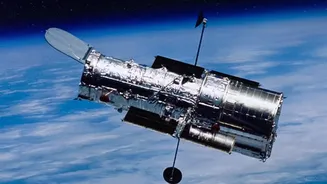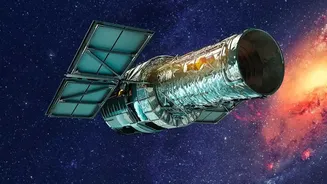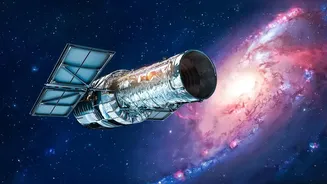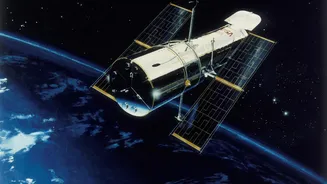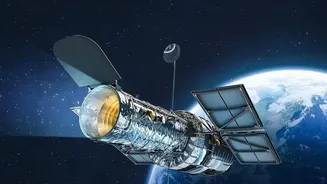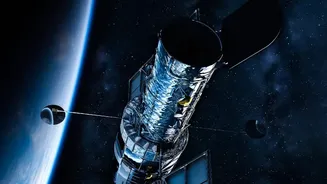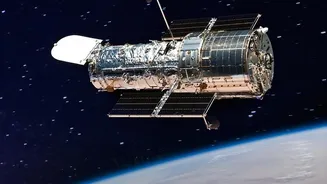



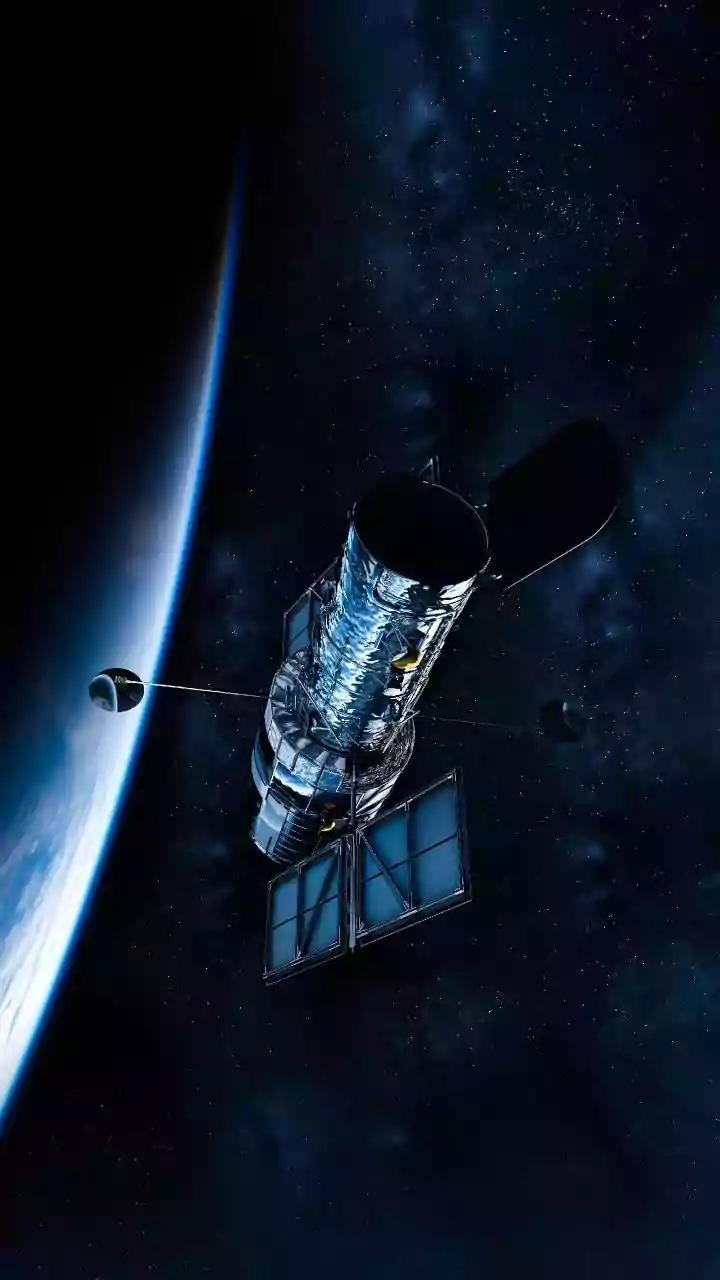
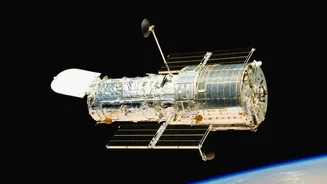
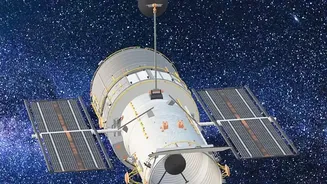
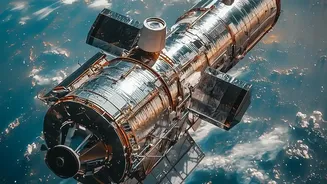
For over 35 years, the Hubble Space Telescope has been humanity's window to the cosmos, but its time is running out. Now, NASA is turning to the commercial space industry for clever ideas to prolong its life, opening a new chapter for the iconic observatory.
An Icon's Slow Descent
Since its launch in 1990, the Hubble Space Telescope has fundamentally changed our understanding of the universe, delivering breathtaking images and groundbreaking science. But the legendary observatory has no engine of its own to maintain its altitude. It travels through the upper reaches of Earth's atmosphere, where microscopic particles create a tiny amount of drag. Over decades, this constant, gentle pull has caused its orbit to slowly decay. Without intervention, NASA projects the telescope could make an uncontrolled reentry into the atmosphere sometime between 2033 and 2034. To prevent this, any potential mission would need to take place by 2032.
A Call for Ideas, Not a Rescue Mission
In late October 2026, NASA issued what is known as a 'Request for Information' (RFI). This is not a formal contract for a rescue mission but rather a form of market research. The agency is asking commercial companies to propose concepts for how they might help Hubble. The RFI outlines three main possibilities: boosting the telescope to a higher, more stable orbit; servicing it with new components to enhance its capabilities; or guiding it to a safe, controlled deorbit at the end of its life. This step allows NASA to gauge industry capabilities, potential costs, and technical challenges without committing any government funding at this stage.
Who Could Answer the Call?
The commercial space sector has evolved dramatically since Hubble's last servicing mission by space shuttle astronauts in 2009. Several companies are expected to show interest. SpaceX, in partnership with the Polaris Program led by billionaire Jared Isaacman, had previously entered an unfunded agreement with NASA in 2022 to study the feasibility of using a Dragon spacecraft for a reboost mission. While NASA did not move forward with that specific proposal at the time, the new RFI reopens the door for such concepts. Other firms, like Northrop Grumman, have also developed robotic servicing technology that could potentially be adapted for a mission to Hubble.
The Challenges of a Commercial Visit
Visiting Hubble is a complex and high-stakes endeavor. The telescope was designed to be serviced by astronauts using the space shuttle, not by modern commercial spacecraft. Any vehicle would need to safely rendezvous and dock with the 11ndonne observatory without causing any damage to its sensitive optics or solar arrays. A key goal of a reboost mission would be to lift Hubble to an orbit of at least 600 kilometers, which could add another 15 to 25 years to its life. The mission would need to be funded and developed within a tight timeframe, launching by 2032 to be effective. Ultimately, the commercial provider would be responsible for the launch vehicle, the spacecraft, and all mission operations.
Pioneering a New Model for Space
Beyond saving a priceless scientific asset, a successful commercial mission to Hubble would set a powerful precedent. It would demonstrate a viable market for inspace servicing, not just for government satellites but for commercial ones as well. Such a capability could extend the lives of valuable spacecraft, reduce orbital debris, and create new economic opportunities in low Earth orbit. As Nicky Fox, an associate administrator at NASA, noted, the commercial industry has evolved rapidly, and the agency is eager to explore the breadth of possibilities. This RFI is the first step in determining whether a new public–private partnership can give our most famous eye on the universe a new lease on life.