





Embrace the Deluge in Sohra (Cherrapunji)
For generations, Cherrapunji—now officially known as Sohra—held the title of the wettest place on Earth. While a nearby village now claims that record, Sohra remains the heart of Meghalaya’s monsoon magic. This is where the rain is a lifestyle and the clouds
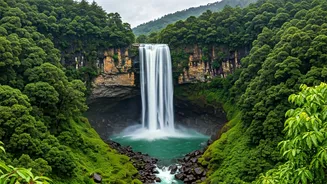
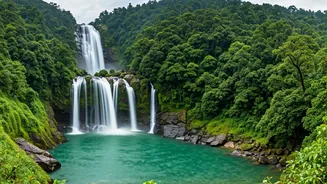
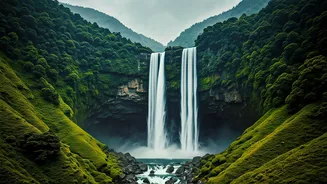
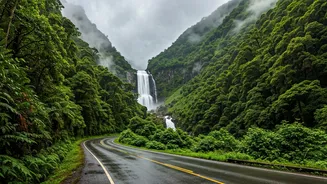
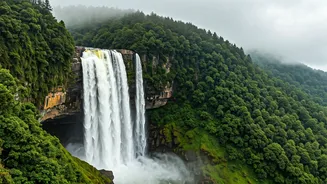
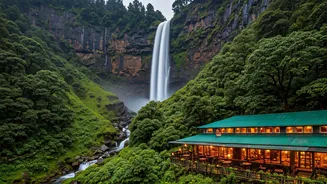
roll through the valleys like a slow-moving river. The season, from June to September, transforms the region into a spectacle of nature's power and beauty. The main attractions here are the waterfalls, which are at their most ferocious and magnificent during the rains. The iconic Nohkalikai Falls, India's tallest plunge waterfall, roars down a dramatic cliff into a turquoise pool below. Equally stunning is the Seven Sisters Falls (Nohsngithiang Falls), a series of cascades that flow side-by-side down a limestone cliff, best viewed from the nearby Eco Park. Beyond the major sites, smaller, unnamed waterfalls spring to life on every hillside, turning any drive through the area into a mesmerising journey.
Experience the Record Rains of Mawsynram
Just a short drive from Sohra is Mawsynram, the village that officially holds the Guinness World Record for the highest annual rainfall. Visiting Mawsynram during the monsoon is an experience in itself—a chance to witness the sheer force of nature. Life here is uniquely adapted to the constant downpours; villagers use 'knups', traditional turtle-shell-shaped umbrellas made of bamboo and leaves, to shield themselves from the rain. The sound of rain on tin roofs is a constant rhythm. While in Mawsynram, you can explore the Mawjymbuin Cave, a limestone cave featuring a stalagmite that resembles a Shivalinga. The entire region is a canvas of rolling green hills and misty trails, offering a raw, unfiltered connection with nature that feels a world away from bustling cities.
Walk Across Living Root Bridges
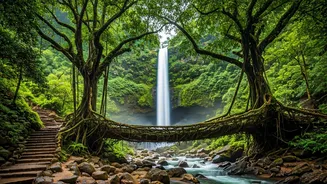
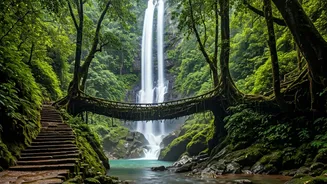
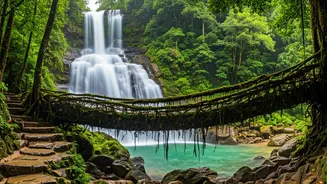
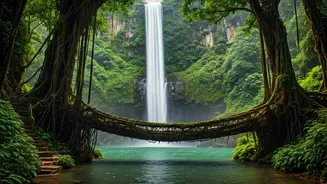
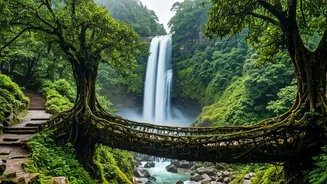
Meghalaya's most incredible wonders are the living root bridges, a testament to the symbiotic relationship between the local Khasi and Jaintia tribes and their environment. For centuries, they have guided the aerial roots of the Ficus elastica tree across rivers and streams, patiently training them to grow into sturdy, living structures that can withstand the powerful monsoon floods. The most famous of these is the Umshiang Double-Decker Root Bridge in Nongriat village, near Sohra. Reaching it requires a significant trek down approximately 3,500 steps, but the sight of two bridges stacked on top of each other is an unforgettable reward. The monsoon makes the trek more challenging with slippery steps but also more magical, as the surrounding jungle is intensely green and waterfalls line the trail. For an easier-to-access option, the Riwai Root Bridge near Mawlynnong village is another beautiful example.
Shillong: Your Base for Exploration
The charming capital city of Shillong often serves as the gateway for travellers exploring Meghalaya. With its colonial-era architecture, vibrant café culture, and bustling markets like Police Bazaar, it offers a comfortable base with modern amenities. From here, many of the state’s key attractions are accessible as day trips. Just outside the city, Umiam Lake, a vast man-made reservoir, is a serene spot for a stroll, especially when the mist hangs low over the water. Elephant Falls, a popular three-tiered waterfall, is particularly powerful during the monsoon. Shillong’s cosy cafes provide the perfect refuge on a rainy afternoon, where you can sip on hot ginger tea and enjoy local Khasi snacks while watching the world go by.
Essential Monsoon Travel Tips
Traveling in Meghalaya during the monsoon requires some preparation. Roads can be slippery and visibility low due to fog, so it's wise to start your days early and allow for potential delays. Waterproofing is non-negotiable. Pack a high-quality rain jacket or poncho, waterproof footwear with excellent grip, and dry bags for your electronics. Quick-dry clothing is far more practical than heavy fabrics like denim. While the rain is heavy, the temperatures are generally cool and pleasant, ranging from 18°C to 24°C. Most travel is done by car, so hiring a local driver who is experienced with the monsoon road conditions is highly recommended. Lastly, book your accommodations in advance, as the region’s unique monsoon beauty draws many adventurous travellers.