







A Gateway Reimagined
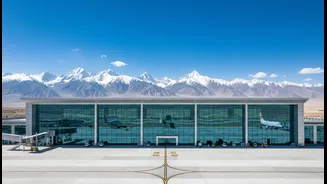
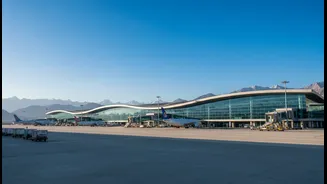
The new terminal at Lokpriya Gopinath Bordoloi International Airport (LGBIA) isn't just an upgrade; it's a complete transformation. Inaugurated in December 2025 and becoming fully operational in February 2026, the facility is a game-changer. Constructed
at a cost of approximately ₹4,000 crore, it dramatically increases the airport's capacity to handle 13.1 million passengers annually. The design itself tells a story, with a roof inspired by the ‘kopou phool’ (foxtail orchid) and extensive use of locally sourced bamboo, blending modern infrastructure with the region's rich ecological and cultural heritage. This massive expansion, equipped with DigiYatra-enabled processing and smart systems, turns Guwahati’s airport from a functional transit point into a world-class gateway.
The Linchpin of a Broader Strategy
The new terminal is the most visible part of a much larger story: the concerted push to connect the Northeast. It serves as a critical hub in India's 'Act East Policy,' a strategy aimed at strengthening economic and strategic ties with Southeast Asia. For this policy to succeed, the Northeast cannot be a periphery; it must be a corridor. This vision is being realized through a massive, multi-modal infrastructure overhaul. The length of National Highways in the region has significantly increased, and the railway budget has seen a more than five-fold surge in recent years, funding projects to connect state capitals and enhance cross-border links. The Guwahati terminal, therefore, isn't an isolated project but the aviation anchor for a web of new roads and rail lines designed to end the region's historic isolation.
Fueling an Economic Takeoff
For decades, difficult terrain and limited access have constrained the Northeast's economic potential. Better connectivity is changing that calculus. A modern airport like Guwahati's acts as a powerful economic engine. It directly boosts tourism, making it easier for travellers to explore the region's unique landscapes and cultures. It also provides a vital outlet for local commerce. High-value, perishable goods from the region—from Assam tea to exotic fruits and handicrafts—can now reach national and international markets faster. This enhances supply chains and creates new opportunities for farmers and artisans. Furthermore, such large-scale infrastructure development generates significant direct and indirect employment, attracting investment in ancillary sectors like hospitality, logistics, and retail.
Bridging More Than Just Distances
The impact of enhanced connectivity transcends economics. By reducing travel times and making the region more accessible, projects like the new terminal help foster greater national integration. They facilitate cultural exchange, allowing more Indians to experience the diversity of the Northeast firsthand and helping to break down long-standing stereotypes. For residents of the Northeast, easier mobility means better access to education, healthcare, and opportunities in other parts of the country. An airport is never just a building; it becomes a symbol of confidence and a bridge connecting people, ideas, and cultures. This psychological shift, from perceived isolation to active connection, is perhaps the most profound transformation underway.
The Journey Ahead
Despite the momentum, the road ahead is not without its challenges. The new terminal is a significant achievement, but it is just one piece of the puzzle. The success of the broader connectivity drive depends on the timely completion of other projects, including last-mile road and rail links to remote areas. Moreover, true development requires more than just physical infrastructure. It requires creating a business-friendly environment, investing in human capital, and ensuring that the benefits of growth are inclusive and sustainable. Environmental sensitivities and regional security complexities also remain critical factors that need careful management as development accelerates.