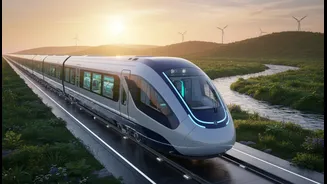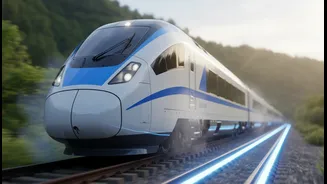



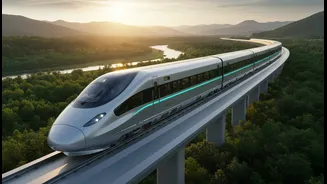
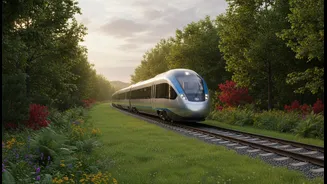
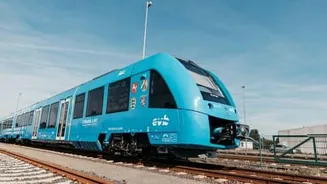


What Exactly Is a Hydrogen Train?
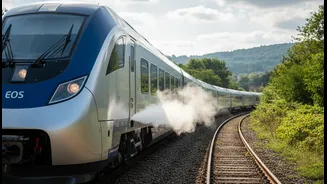
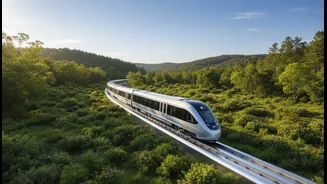
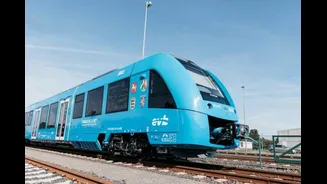
Imagine a train that runs on electricity but carries its own power plant, one that emits only water vapour and steam instead of diesel smoke. That’s the basic idea behind a hydrogen train. These trains use hydrogen fuel cells to generate electricity.
Inside the fuel cell, hydrogen stored in tanks on the train reacts with oxygen from the air. This chemical reaction produces electricity to power the motors, with the only by-products being water and heat. It’s a zero-emission solution at the point of use, making it a powerful alternative to the diesel locomotives that currently operate on nearly 30% of India's non-electrified rail network.
Why This Is a Big Deal for India
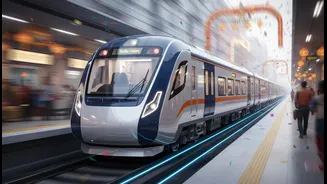
For Indian Railways, this is more than just a new type of train; it's a major step towards its goal of becoming a net-zero carbon emitter. By replacing diesel-powered trains, especially on routes where electrification is difficult or not cost-effective, hydrogen trains can significantly reduce air pollution and the country's carbon footprint. This initiative aligns with India's broader climate goals and its 'Make in India' mission, showcasing homegrown technological capability. Recent reports claim the new 10-coach train is the world's longest and most powerful hydrogen train on a broad-gauge platform, a significant achievement in indigenous engineering.
From Blueprint to the First Journey
The excitement is building as India's first hydrogen train is expected to be flagged off by Prime Minister Narendra Modi on July 17, 2026. This follows extensive and successful trial runs over the past few months. The inaugural route for this pioneering service will be the 89-kilometre Jind-Sonipat section in Haryana. After the inauguration, the train is slated to begin commercial operations, making two round trips daily and covering a distance of about 356 kilometres each day. While designed for a maximum speed of 110 kmph and tested at up to 120 kmph, its operational speed on this route will be 75 kmph.
Inside the New Green Machine
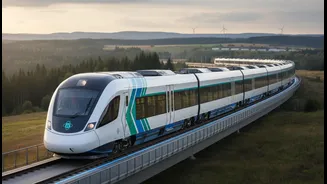
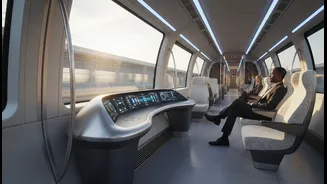
This isn't just a small prototype. The train is a full 10-coach formation, comprising eight passenger coaches and two driving power cars. It has a seating capacity of 682 and can carry a total of around 2,600 passengers. To support its operation, a dedicated indigenous hydrogen storage and refuelling facility has been established in Jind. The train's propulsion system is a hybrid model that combines hydrogen fuel cells with lithium-ion batteries, and it has been rigorously tested to meet international safety standards. Surprisingly, fares are expected to be highly affordable, with initial reports suggesting prices as low as Rs 5 to Rs 25 for the journey.
The Road Ahead: Heritage Routes and Hurdles
While the Jind-Sonipat route is the first, it's not the only one in the plans. Indian Railways has a broader 'Hydrogen for Heritage' vision, aiming to deploy similar trains on iconic routes like the Kalka-Shimla line to preserve their charm without the pollution of diesel engines. However, progress on some of these heritage projects has been slow, indicating the challenges that lie ahead. The main hurdles include the high initial cost of the trains and the significant investment needed to build a nationwide hydrogen production and refuelling infrastructure. The cost of producing 'green' hydrogen (using renewable energy) is still high, but it is expected to decrease as the technology becomes more widespread, which will be crucial for the long-term viability and expansion of this green rail network.