



Not Your Average Household Dust
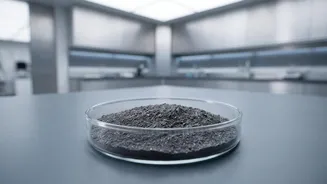
Lunar dust, or regolith, is fundamentally different from the dust we find on Earth. Here, particles are weathered by wind and water, making them relatively smooth and rounded. The Moon, however, has no atmosphere and no liquid water. For billions of years,
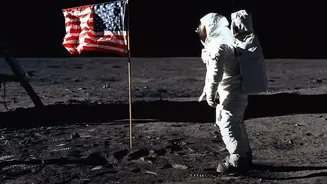
its surface has been relentlessly bombarded by micrometeorites and charged solar particles. This process, called comminution, shatters rock into microscopic, glass-like shards with jagged edges. These particles are also electrostatically charged by solar radiation, which makes them incredibly sticky and adhesive. This combination of sharpness and static cling is what makes lunar dust so uniquely problematic. Apollo astronauts discovered this firsthand, describing its abrasive nature and its smell of spent gunpowder once it got inside their lander.
The Physics of a Plume
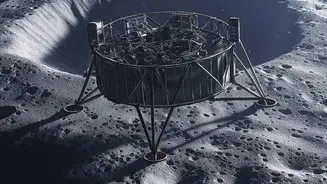
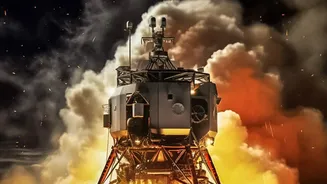
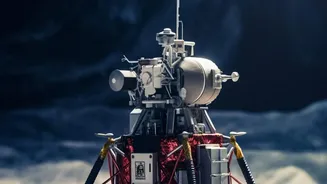
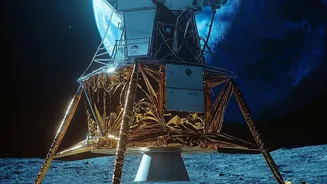
When a lander's rocket engine fires near the lunar surface, its exhaust plume doesn't behave like it does on Earth. In the vacuum of space, the hot gases expand rapidly and hit the powdery regolith with immense force. Because there's no air to slow them down, the gases can blast lunar dust particles away at supersonic speeds. This creates a sheet of fast-moving ejecta that can travel for kilometres, sandblasting everything in its path. During the Apollo landings, commanders reported their visibility being almost completely obscured by this dust cloud in the final moments before touchdown. The low lunar gravity, just one-sixth of Earth's, allows these fine particles to stay suspended for much longer, creating a lingering hazard.
A Problem Since the Apollo Era
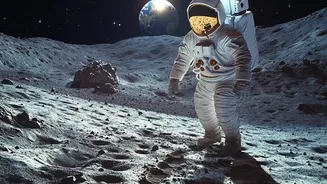
The challenges posed by lunar dust are not new. From 1969 to 1972, all twelve astronauts who walked on the Moon reported issues. The abrasive dust clung to their spacesuits, wearing through layers of the boots and clogging seals and joints. Brushing it off was nearly impossible and often made it stick even more due to static buildup. Once inside the lunar module, the dust became airborne, causing what the astronauts dubbed "lunar hay fever"—sneezing, watery eyes, and sore throats. Apollo 17's Harrison Schmitt, the only geologist to walk on the Moon, experienced a notable reaction to the dust. These short missions highlighted a critical problem: if a few days of exposure caused this much trouble, what would happen during weeks or months-long stays?
High Stakes for Health and Hardware
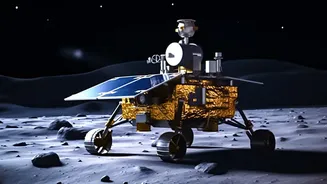
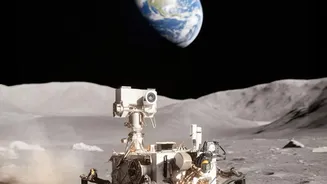
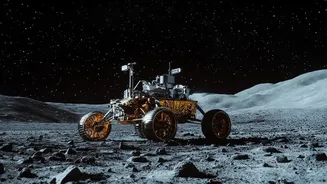
As NASA plans for a sustained human presence on the Moon with its Artemis program, mitigating dust has become a top priority. The risks are twofold. For hardware, the abrasive dust can degrade solar panels, scratch camera lenses, and jam mechanisms. Its conductive properties, due to embedded iron particles, can short out electronics. For astronauts, the health risks are more concerning. The fine, sharp particles can be inhaled and lodge deep within the lungs, potentially causing long-term respiratory issues similar to silicosis seen in miners on Earth. The dust's chemically reactive surfaces, which haven't been weathered by air or water, could also prove toxic.
NASA's Plan to Fight Back
To prepare for future missions, NASA is aggressively studying lunar dust and developing new technologies to combat it. This involves using lunar soil simulants on Earth to test mitigation strategies, since actual Moon rock is a scarce resource. One of the most promising innovations is the Electrodynamic Dust Shield (EDS), which uses an electric field to actively repel and clear dust from surfaces like spacesuits, visors, and solar panels. Researchers are also designing new landing pads made from sintered regolith to prevent the plume from kicking up dust in the first place. Recent experiments, like the Electrostatic Regolith Interaction Experiment (ERIE), have been launched on suborbital rockets to study how dust behaves in microgravity, providing crucial data to protect the Gateway lunar space station and other future assets from contamination.