






The ISRO Legacy: A Foundation of Deep Expertise
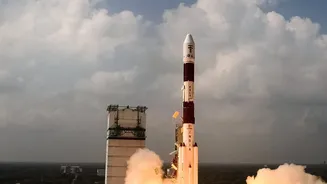
For over six decades, a career in India's space sector was synonymous with a career at ISRO. The organisation built a workforce renowned for its scientific rigour, precision engineering, and ability to execute complex, long-term national missions with remarkable
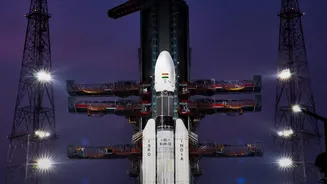
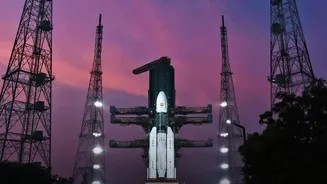
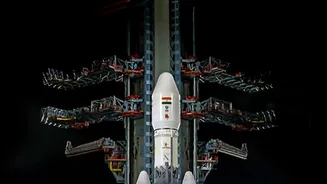
cost-effectiveness. The skills ISRO nurtured were deep and specialised: aerospace engineering, physics, mathematics, and mechanical engineering formed the bedrock of its talent pool. The focus was on research and development, with career paths that were often linear and mission-centric. This model produced the scientists and engineers behind historic achievements like Chandrayaan and Mangalyaan, building a formidable foundation of sovereign capability. ISRO's role was to be the nation's sole space innovator, handling everything from rocket design to satellite operations.
The Startup Surge: A New Commercial Frontier
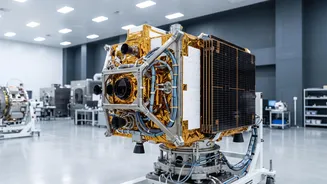
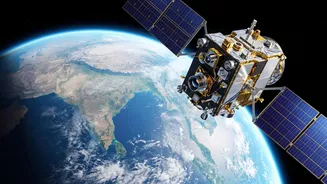
The landscape began to shift dramatically with policy reforms in 2020 and the Indian Space Policy of 2023, which opened the sector to private enterprise. Today, India is home to hundreds of space startups, from launch vehicle builders like Skyroot Aerospace and Agnikul Cosmos to satellite makers like Pixxel and Dhruva Space. This has created a parallel ecosystem with fundamentally different goals. While ISRO focuses on strategic exploration and advanced research, private companies are driven by commercial viability, speed to market, and downstream applications. Their business is not just exploration, but providing services in satellite communications, Earth observation, and data analytics that impact agriculture, logistics, and telecommunications. This commercial drive is reshaping what a 'space job' looks like.
New Skills in High Demand
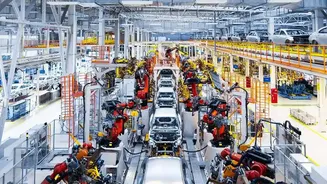
The skillsets required by these agile startups are broader and more interdisciplinary than those traditionally sought by government agencies. While a foundation in aerospace engineering remains vital, the most sought-after expertise now lies at the intersection of technology and business. Startups are increasingly hiring professionals with skills in AI and machine learning to analyse vast amounts of satellite data, as up to 90% of data from space missions often goes underutilised. There is a growing demand for software developers, robotics experts, and cybersecurity specialists to build and protect space assets. Furthermore, as these companies need to build products and find customers, roles in product management, business development, and data analytics are becoming just as critical as rocket science. This reflects a global trend where talent from automotive, electronics, and data analytics industries is being drawn into the space sector.
From Mission-Driven to Market-Driven
This evolution represents a crucial mindset shift. ISRO's culture is built around long-duration, mission-critical projects where the primary goal is scientific success and national prestige. Private companies, on the other hand, operate on venture capital timelines, prioritising rapid prototyping, scalable manufacturing, and revenue generation. The engineer of the future needs to be able to move between computational simulation, hardware validation, and AI-driven design to speed up development cycles. This hybrid approach, combining deep physics with data science, is essential for commercial competitiveness. As a result, the industry is seeing a rise in hybrid employment models, with a core team supported by project-based specialists, mirroring practices in the global aerospace industry.
Building the Workforce of Tomorrow
The emergence of this dual-track space economy presents both a challenge and an opportunity for India's workforce development. The country's space economy is projected to grow to US$44 billion by 2033, creating hundreds of thousands of new jobs. To fill these roles, educational institutions and government bodies are adapting. IN-SPACe, the agency set up to regulate and promote private space activities, is working to incorporate new curricula in universities. The goal is not to replace ISRO's foundational expertise but to augment it, creating a talent pipeline that can serve both the public and private pillars of India's space ambitions. This involves fostering a workforce that is not only technically proficient but also commercially aware and adaptable.