






Your Night Sky Time Machine
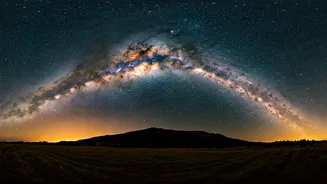
The most mind-bending fact about stargazing is that you are always looking into the past. Light, while incredibly fast, takes time to travel across the vastness of space. The distance light travels in one year is called a light-year. So, when you look at a star that is 100
light-years away, you are seeing light that left that star 100 years ago. The faint, beautiful glow reaching your eyes tonight started its journey long before you were born. Some starlight began its cosmic voyage during the Mughal empire, others when the pyramids were being built. Your eyes are the final destination for these ancient photons. You don’t need a fancy telescope to be a time traveller; you just need to look up.
What to Look For From India
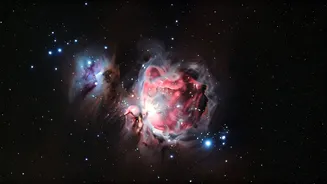
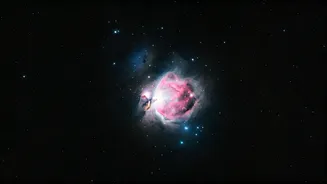
The night sky is a dynamic map that changes with the seasons. But some celestial celebrities are almost always putting on a show. A great starting point for any beginner in India is the Orion constellation, the Hunter. Look for three bright stars in a straight line—that's Orion's Belt. The bright, reddish star at Orion’s shoulder is Betelgeuse. The light you see from it tonight left the star over 640 years ago, around the time the Tughlaq dynasty ruled Delhi. Now, follow the belt downwards to find Sirius, the brightest star in our night sky, also known as the 'Dog Star'. Sirius is much closer, only 8.6 light-years away. Its light is from this decade! Seeing these two—one ancient, one relatively recent—in the same glance shows the incredible depth of the cosmos.
Your Simple Stargazing Toolkit
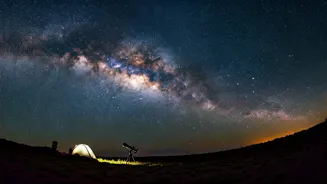
The best tool for stargazing is your own vision, but it needs about 20-30 minutes to fully adapt to the dark. Avoid looking at your bright phone screen during this time. If you need to use your phone, turn the brightness all the way down or use a red-light filter mode, which is less disruptive to your night vision. You don't need a telescope, but a pair of simple binoculars can dramatically enhance the view, revealing faint star clusters and details on the Moon. For guidance, smartphone apps like Stellarium, SkyView Lite, or Star Walk 2 can help you identify constellations and planets by simply pointing your phone at the sky. They are your digital map to the universe.
Beating the Bright City Lights
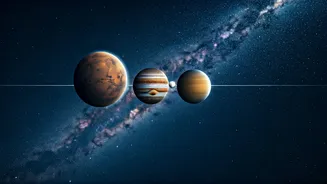
For many of us in India, the biggest obstacle to stargazing is light pollution from our bustling cities. While a trip to a remote, dark-sky location is ideal, it’s not always practical. But you can still enjoy the cosmos from an urban setting. Find the darkest spot available to you—a rooftop, a balcony that faces away from streetlights, or a nearby park. Let your building block the direct glare from street lamps. Even with significant light pollution, the Moon, bright planets like Jupiter and Saturn, and the most prominent constellations like Orion will still be visible. The key is to find a spot where your eyes aren't fighting direct, harsh light.
Stargazing Safely and Comfortably
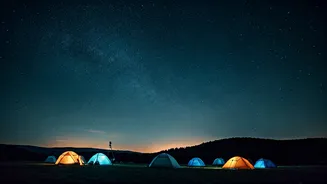
The 'safely' in stargazing is mostly about common sense and comfort. Never look directly at the Sun—this guide is for the night sky only. If you are heading to a park or a darker, unfamiliar spot, let a friend or family member know where you are going. Dress in layers; nights can get chilly, even in warmer months, when you’re sitting still for a long time. A comfortable chair or a blanket to lie on will make the experience far more enjoyable than craning your neck. Pack some warm tea or coffee and allow yourself to simply sit back, relax, and let the ancient light of the universe wash over you. Patience is your best friend.