


The Land of Living Water
Mawsynram holds a Guinness World Record for the highest average annual rainfall, a staggering 11,872 millimetres. This isn't just a statistic; it's the life force of the region. During the monsoon months, from June to September, the entire landscape awakens.
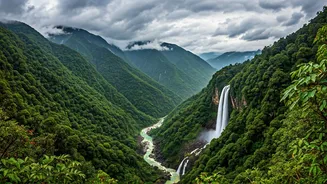
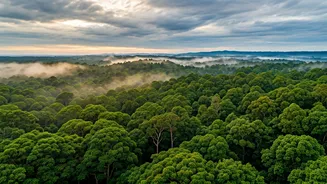
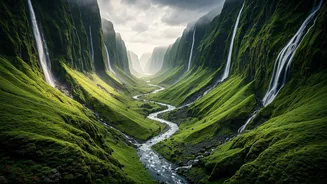
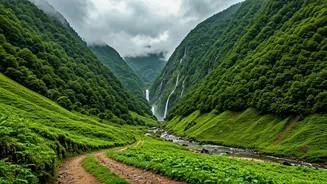
Every cliff face weeps, every hillside trickles, and the very air becomes thick with moisture. This constant deluge carves deep gorges and feeds an explosion of greenery, creating valleys so lush they almost seem unreal. The sound of water is a constant companion—a gentle hum in the distance that can swell to a deafening roar in an instant. This is not a place you simply visit; it's an environment you become a part of.
A Symphony of Cascades
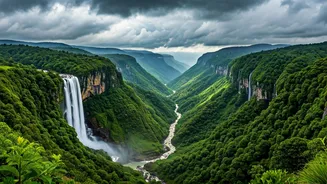
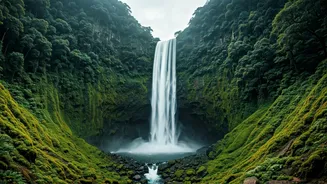
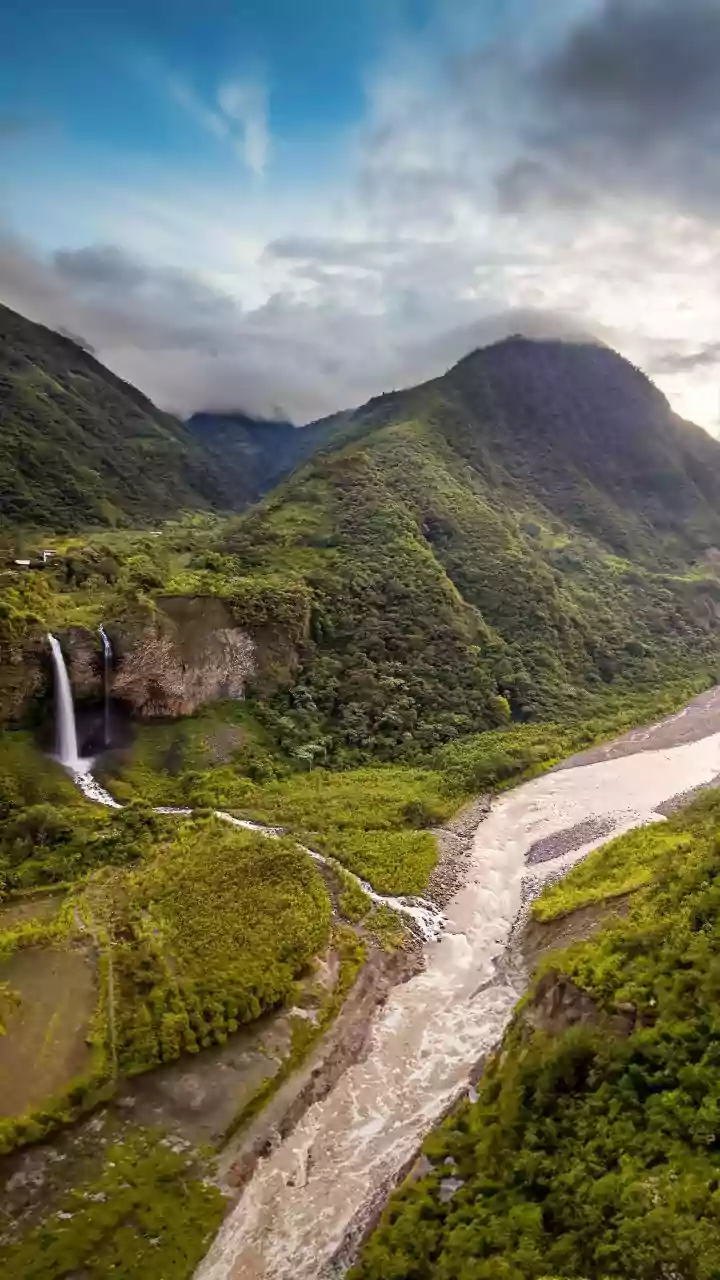
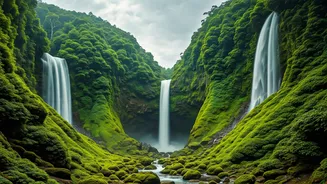
The waterfalls are the true stars of Mawsynram and its surrounding areas. While smaller, unnamed falls appear at every turn, the major cascades are forces of nature. Nearby, the Nohsngithiang Falls, also known as the Seven Sisters Waterfalls, present a majestic sight as seven distinct streams plunge over the limestone cliffs of the Khasi Hills. A little further afield, Kynrem Falls, cascading in three tiers, is another giant that thunders down into the valley below. To stand near one of these is to feel the power of the monsoon firsthand. The ground trembles slightly, and a fine, cool mist, carried on the wind, soaks you in seconds. It’s a baptism by nature, a reminder of the raw, untameable beauty of the planet.
The Promise of Cool Air
The headline's promise of cool mountain air is not an exaggeration. While much of India battles the heat and humidity of the monsoon, Mawsynram offers a different experience. The air, chilled by the relentless rain and the high altitude, is crisp and invigorating. As powerful waterfalls plummet hundreds of feet, they displace enormous volumes of air, creating strong, misty gusts that blast across the valleys. This natural air-conditioning is a welcome reprieve. It carries the scent of wet earth, dense foliage, and blooming wildflowers, creating a sensory experience that is both refreshing and profoundly calming. It’s the kind of pure, clean air that feels like a luxury.
Life in the Lush Valleys
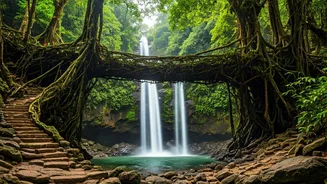
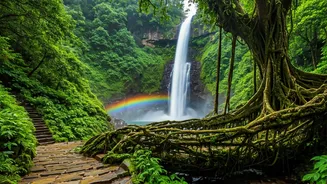
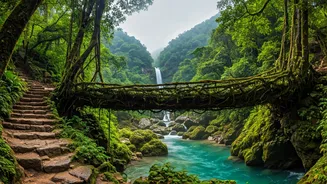
Life here has adapted to the water in ingenious ways. The Khasi people, indigenous to these hills, have mastered a unique form of bio-engineering: the living root bridges. By guiding the aerial roots of the Ficus elastica tree across rivers and streams, they create natural, sturdy bridges that grow stronger over time, unlike wooden or steel structures that would rot and rust in the constant dampness. Walking across one of these ancient, moss-covered bridges, with a river rushing below, is a humbling experience. It's a testament to a way of life that works in harmony with nature rather than fighting against it. The valleys are not just a scenic backdrop; they are a living, breathing ecosystem where human ingenuity and natural wonder are deeply intertwined.
Chasing the Monsoon
To truly experience the spectacle of Mawsynram, you must embrace the rain. The peak monsoon season, from June to late September, is when the waterfalls are at their most ferocious and the valleys at their most vibrant. This is not a trip for those seeking constant sunshine. It’s for the traveller who finds beauty in dramatic, cloud-covered skies and the thunderous music of falling water. Pack a reliable raincoat, waterproof boots, and a camera protected from the elements. Be prepared for plans to change, as landslides can occasionally block roads. But the reward is a front-row seat to one of Earth's greatest natural performances, an unforgettable journey into the heart of the clouds.