





The Paradox of a Parched Desert
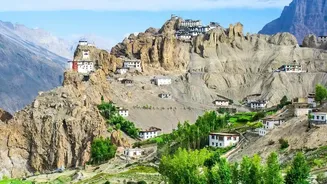
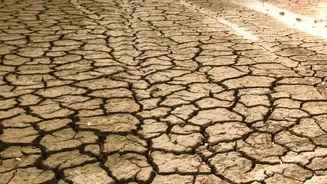
Ladakh, a high-altitude region cradled in the Himalayas, is a cold desert that receives less than 100 mm of rain annually. For centuries, its communities have relied on a predictable natural cycle: winter snows would feed glaciers, which would then melt
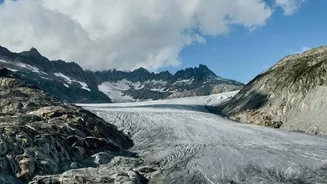
in the late spring and summer, providing water for their barley and wheat fields. But climate change has broken this ancient clock. Glaciers are shrinking at an alarming rate, and winter snowfall has become increasingly erratic. This creates a devastating seasonal gap. Snowmelt now often occurs too early, while the larger glaciers, having retreated to higher altitudes, don't release their water until much later in the season. The result is an acute water shortage in April and May, the crucial sowing months, leaving farmers with dry fields when they need water the most.
An Idea Frozen in Time
The solution came from local engineer and innovator Sonam Wangchuk. Inspired by the work of fellow Ladakhi engineer Chewang Norphel, who had previously created flat artificial glaciers, Wangchuk sought to improve the design's longevity. The key insight was geometry. He realised that a conical shape, resembling the Buddhist stupas that dot the Ladakhi landscape, would offer the minimum surface area to the intense high-altitude sun for the maximum volume of water stored. This vertical design means the ice melts much more slowly than a flat sheet of ice would. In 2013, his team at the Students' Educational and Cultural Movement of Ladakh (SECMOL) built a prototype that successfully stored 150,000 litres of water and lasted well into the warmer months, proving the concept worked.
How to Build a Glacier
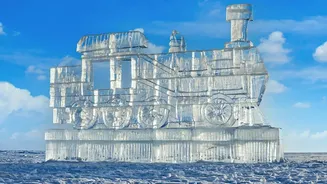
The genius of the ice stupa lies in its simplicity. The system uses no electricity or pumps, relying instead on gravity. A pipeline is laid from a stream at a higher altitude during the winter, when stream water would otherwise flow away unused. This pipe carries the water down to a lower-altitude village. Due to the elevation difference, the water pressure is enough to push it up a vertical pipe and out through a sprinkler. In the sub-zero winter air, the sprayed water droplets freeze as they fall, gradually forming a massive cone of ice. These structures can grow to be over 30 metres high and store millions of litres of water, which then melts slowly in the spring, providing a steady supply for irrigation just when it is needed.
From a Single Stupa to a Regional Movement
What began as a single prototype has grown into a widespread movement. The success of the initial projects, boosted by international recognition like the Rolex Award for Enterprise, allowed for expansion. This isn't just about building more stupas; it's about empowering communities. To encourage adoption and local ownership, an annual Ice Stupa Competition was launched, engaging numerous villages in building their own artificial glaciers. This initiative has been a resounding success, fostering a spirit of friendly competition while directly addressing the water crisis. The project, now largely spearheaded by the Himalayan Institute of Alternatives, Ladakh (HIAL), has seen the construction of over 50 ice stupas in Ladakh and has even inspired similar projects in other mountain regions globally, including Switzerland and Chile.
Challenges and the Path Forward
Despite their success, ice stupas are not a silver bullet for climate change. They are a powerful adaptation strategy, but they address the symptom—water scarcity—not the root cause of melting natural glaciers. Building and maintaining the pipelines can be costly and labour-intensive, and there have been challenges such as pipes freezing and disputes over water rights. However, the project represents a crucial shift in mindset, transforming unused winter water into a vital resource. It demonstrates how local, low-cost innovations can build resilience in the face of a global crisis. The scaling up of ice stupas across Ladakh is a testament to the ingenuity and determination of its people to secure their future in a rapidly changing world.