




For years, they were the stuff of science fiction. Now, humanoid robots are clocking in for shifts at major companies, promising to solve labour shortages and boost efficiency. But as firms explore this new frontier, the central question is a practical
one.
The New Workforce Arrives
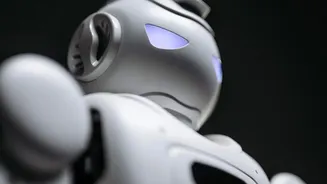
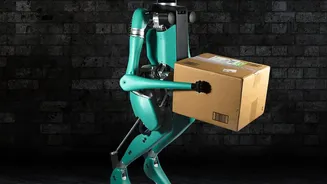
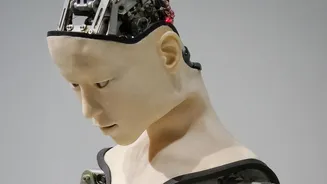
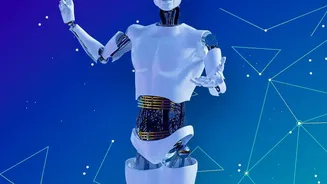
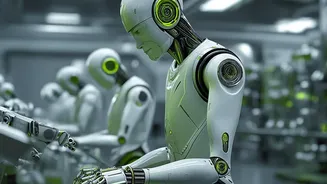
Humanoid robots are stepping out of research labs and onto factory floors. Companies like Tesla, BMW, and Mercedes-Benz are actively testing bipedal, two-armed robots to perform tasks traditionally done by humans. These are not the caged robotic arms we are used to seeing in manufacturing plants; these are machines designed to navigate human spaces and work alongside people. The driving force is a combination of persistent labour shortages in manufacturing and logistics, coupled with significant advances in artificial intelligence and robotics hardware. Firms like Figure AI, Apptronik, and Agility Robotics are developing robots that can handle tasks from moving boxes in a warehouse to performing complex assembly procedures. The goal is to create a flexible workforce that can be deployed without completely re-engineering a facility, a concept known as 'physical AI'.
The Billion-Rupee Question: What is the Cost?
The price of this new workforce is the single biggest hurdle to mass adoption. Costs for industrial-grade humanoids can be steep, with some models like the Agility Digit costing around $200,000 to purchase, plus significant annual fees for software and maintenance. However, prices are falling rapidly. Some analysts noted a 40% drop in manufacturing costs between 2023 and 2024 alone, thanks to maturing supply chains, particularly in China. Tesla aims to eventually produce its Optimus robot for between $20,000 and $30,000. To make the initial investment more palatable, many robotics companies are offering a 'Robots-as-a-Service' (RaaS) model. Instead of a large capital expenditure, companies can lease a robot for a monthly fee, which might be around $8,500 per month for a machine like the Digit, making it an operational expense comparable to an employee's salary.
Pilots, Partnerships, and Progress
Major industry players are not just talking; they are actively running pilot programs to see what these robots can do. BMW has been a notable early adopter, deploying Figure AI's robots at its Spartanburg plant in the US. An 11-month pilot saw the Figure 02 robot assist in the production of over 30,000 vehicles by handling sheet metal parts, a physically demanding task. The success led to the deployment of the next-generation Figure 03 for more complex logistics tasks. Similarly, Mercedes-Benz is piloting Apptronik's Apollo robot, which is also being tested by logistics giant GXO. Meanwhile, Tesla has started early production of its Optimus robot at its Fremont factory, with plans to first use them internally to solve its own manufacturing challenges before selling them to other companies, potentially by the end of 2027.
Calculating the True Return on Investment
The justification for the high cost lies in the return on investment (ROI). A robot that can operate 20 hours a day doesn't need breaks, doesn't get sick, and doesn't take holidays. The basic calculation compares the total cost of a robot against the cost of the human labour it replaces. One estimate suggests that a $50,000 robot working two shifts could pay for itself in 12 to 18 months in a US warehouse setting. At an hourly operational cost estimated to be as low as $3 to $5, a humanoid robot becomes significantly cheaper than a human worker in many Western countries. However, the ROI isn't just about replacing labour. Companies also see value in reducing workplace injuries from repetitive and strenuous tasks and in achieving more consistent quality. The argument is that robots can take on the 'dull, dirty, and dangerous' jobs, freeing up human workers for more complex, value-added roles.
The Hurdles Beyond the Hype
Despite the promising pilots and falling costs, widespread adoption is not imminent. The technology is still in its early stages. Battery life is a key limitation, with most current models running for only about four hours before needing a recharge or a battery swap. Maintenance is another major question; who fixes the robot when it breaks down, and how quickly? Furthermore, the AI controlling these robots, while impressive, is still learning. Training them to handle the endless variability of a realworld factory or warehouse is a massive undertaking. Companies like Tesla are building entire 'Optimus Academies' where thousands of robots will practice tasks to generate the data needed to improve their AI. Safety and integration with existing enterprise software are also significant challenges that need to be solved before fleets of humanoids become a common sight.