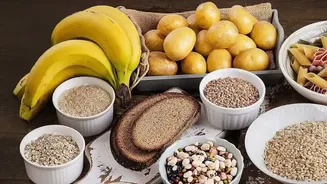



It’s a kitchen counter conundrum known to all: are the bananas you bought too green to eat, or have they become too brown for anything but baking? This guide breaks down the real differences between raw and ripe bananas, helping you choose wisely.
The Great Starch and Sugar Swap
The
most significant difference between a green and yellow banana lies in their carbohydrate composition. A green, or raw, banana is packed with resistant starch. This type of starch 'resists' digestion in the small intestine, behaving more like a dietary fiber. As the banana ripens, a natural plant hormone called ethylene triggers enzymes that convert this resistant starch into simple sugars like sucrose, glucose, and fructose. This is why a firm, green banana tastes starchy and less sweet, while a soft, yellow banana has that familiar sugary flavor. In fact, a ripe banana can contain over 16% sugar, while its starch content drops to less than 1%.
Impact on Digestion and Gut Health
Because of their high resistant starch content, green bananas are considered a prebiotic food. This means they pass through to your large intestine to feed the beneficial bacteria in your gut. This fermentation process can increase the production of short-chain fatty acids, which are vital for digestive health. However, for some people, this same process can lead to gas or bloating, especially if they are not used to high-fiber foods. Ripe bananas, on the other hand, are often easier to digest precisely because their starch has already broken down into simple sugars, making them a good option for a quick and easily absorbed energy source.
Blood Sugar and The Glycemic Index
The shift from starch to sugar also changes how bananas affect your blood sugar. Green bananas have a low glycemic index (GI), typically around 30 to 42. Their resistant starch slows down the absorption of carbohydrates, preventing sharp spikes in blood glucose levels. This makes them a more suitable choice for individuals managing blood sugar. As a banana ripens and its sugar content increases, its GI value climbs, reaching around 51 for a just-ripe banana and potentially over 62 for one with brown spots. While still considered a low-to-medium GI food, the impact of a very ripe banana on blood sugar is more immediate.
A Shift in Antioxidant Power
While green bananas have the edge with resistant starch, ripe bananas pull ahead when it comes to certain antioxidants. Research indicates that as a banana ripens and develops brown spots, its levels of antioxidants, such as flavonoids and other phenolic compounds, increase. These compounds help protect the body's cells from oxidative stress and inflammation. Though both green and yellow bananas contain valuable nutrients like potassium, vitamin B6, and vitamin C, the antioxidant profile becomes more potent in the later stages of ripening.
Best Uses in the Kitchen
In the culinary world, the stage of ripeness is everything. Green bananas, being firm, starchy, and not sweet, cannot be eaten raw but are fantastic when cooked. They can be boiled, fried, or roasted and are often used as a starchy vegetable, similar to a potato, in many savoury dishes across Caribbean, African, and Asian cuisines. You can find them in everything from stews and curries to fried chips. Ripe, yellow bananas are perfect for eating fresh, slicing over cereal, or blending into smoothies. Once they become overripe and heavily spotted, their high sugar content and soft, mashable texture make them the undisputed champion for baking things like banana bread, muffins, and cakes.