


An Ambitious Road Ahead
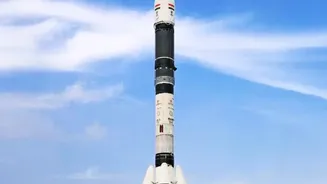
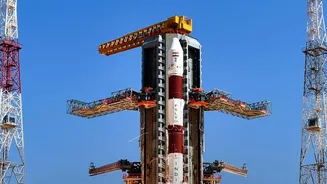
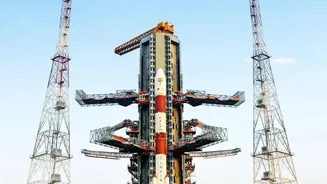
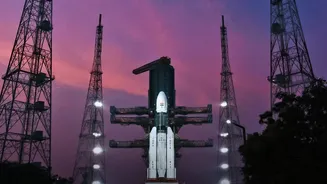
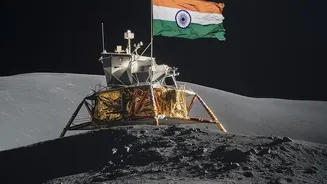
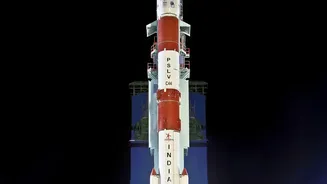
After a series of historic successes, including the triumphant Chandrayaan-3 lunar landing, ISRO is not resting on its laurels. The space agency has charted an aggressive course for the remainder of 2026, with plans for at least seven major launches.
This packed calendar reflects a strategic push to accelerate India's capabilities in space exploration, satellite technology, and human spaceflight. According to ISRO Chairman V Narayanan, this increased tempo is part of a larger vision for the nation's role in the global space economy, with several key missions in the final stages of preparation. This year is poised to be one of the busiest and most consequential in the organisation's history, showcasing a diverse portfolio of missions that will push the boundaries of Indian science and engineering.
The Gaganyaan Programme's Crucial Tests
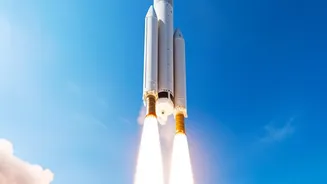
A significant portion of this year's focus is on the Gaganyaan programme, India’s flagship human spaceflight mission. Before sending Indian astronauts, or 'Gaganyatris', into orbit, ISRO must conduct a series of rigorous uncrewed test flights. In 2026, ISRO plans for at least one, if not two, of these crucial missions. The first uncrewed flight, G1, will be a full-scale test of the human-rated LVM3 rocket, the orbital module, and the critical re-entry and recovery procedures. These flights will carry Vyommitra, a sophisticated humanoid robot, to simulate human functions and gather vital data on the cabin environment, ensuring every system is ready for the eventual crewed launch.
Mastering the Art of Docking with SPADEX
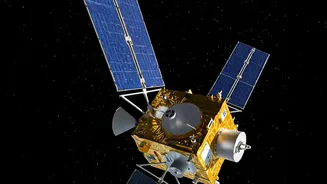
Another critical technology on ISRO's agenda is space docking. The Space Docking Experiment (SPADEX) is a pioneering mission designed to demonstrate the autonomous rendezvous and docking of two small satellites in orbit. This capability is a fundamental building block for future, more complex endeavours, such as building the Bharatiya Antariksh Station (Indian Space Station), undertaking satellite servicing missions, and planning long-duration human spaceflights. The mission involves a 'chaser' and a 'target' spacecraft that will approach and join together in orbit, a feat that would place India in an elite club of nations with proven docking technology.
Pushing the Envelope with Reusable Technology
In the global race to make space access cheaper and more sustainable, reusable launch vehicle (RLV) technology is paramount. ISRO is making significant strides with its 'Pushpak' RLV demonstrator. Following a series of successful autonomous landing experiments (LEX), the next phase of tests in 2026 will push the vehicle to more challenging conditions, evaluating its hypersonic flight characteristics, autonomous navigation, and control systems. Each successful test brings ISRO closer to developing a fully reusable two-stage orbital launch vehicle, which promises to dramatically reduce the cost of launching satellites and other payloads into space.
New Eyes on Earth and Beyond
ISRO's 2026 manifest also includes several vital satellite launches for Earth observation, communication, and navigation. Following the landmark launch of the NASA-ISRO Synthetic Aperture Radar (NISAR) satellite in 2025, which is now providing unprecedented data on our planet's changing ecosystems, ISRO continues to build its observational capacity. Planned launches include advanced Earth Observation Satellites (EOS) that provide high-resolution imagery for applications ranging from disaster management and urban planning to agricultural monitoring. Also in the pipeline are technology demonstration satellites like TDS-01, designed to test new, indigenous components for future communication and navigation missions.
A Collaborative Future in Space
Many of ISRO's upcoming projects highlight a growing emphasis on international collaboration. The TRISHNA mission, developed in partnership with the French space agency CNES and scheduled for 2026, will monitor Earth's surface temperature and water with high precision, aiding climate studies and resource management. These joint missions, alongside partnerships with NASA on the NISAR project and ongoing discussions with agencies like the German Aerospace Centre (DLR), demonstrate India's position as a sought-after and reliable partner in global space exploration efforts. This collaborative approach pools resources and expertise, allowing for more ambitious scientific goals.