







The Challenge of Weightlessness
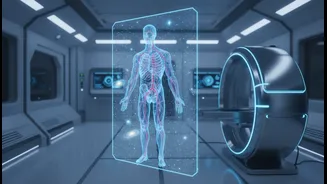
When we think of space, we often picture astronauts floating effortlessly. This state, known as microgravity, is more than just a novelty; it's a harsh environment for the human body. Without the constant pull of Earth's gravity, our bodies undergo significant
changes. Astronauts can experience muscle atrophy, a decrease in bone density, and shifts in cardiovascular function. The immune system can also be suppressed, and vision may be affected. These physiological challenges are manageable for short trips, like the three-day mission planned for Gaganyaan. However, for longer journeys, such as staying on a space station or traveling to the Moon or Mars, these effects pose a serious risk to crew health and mission success.
Gaganyaan: A Laboratory in Orbit
The Gaganyaan mission is not just about demonstrating India's capability to send humans to space; it's a crucial stepping stone. The orbital module will serve as a platform for a variety of scientific experiments, many focused on understanding the effects of microgravity. ISRO plans to conduct experiments in biology, material science, and medicine. For instance, studies on how cells and organisms behave in space will provide vital data. Early experiments planned for the program include research into kidney stone formation and the behavior of fluids. This research is foundational. By understanding the problems, scientists can begin to develop countermeasures, from new exercise regimens and nutritional plans to advanced life support systems.
Building for the Future: Bharatiya Antariksha Station
The knowledge gained from microgravity research on Gaganyaan and other precursor missions is essential for India’s next giant leap: the Bharatiya Antariksha Station (BAS). ISRO plans to have the first module of this modular space station in orbit by 2028, with the full station expected to be operational by 2035. The BAS is designed to host 3-4 astronauts for months at a time, making it a permanent laboratory in low-Earth orbit. Operating this station requires mastering technologies for long-duration human habitation, which is precisely what current microgravity research is investigating. It will be the primary hub for advanced scientific research that can only be conducted in space.
The Gateway to the Moon and Beyond
The ultimate goal extends far beyond Earth's orbit. The experience and technology developed for Gaganyaan and the Bharatiya Antariksha Station will directly feed into India’s ambition to send an astronaut to the Moon by 2040 and eventually undertake interplanetary missions. A lunar mission would expose astronauts to the harsh space environment for much longer than a short orbital flight. The lessons learned from microgravity studies on bone density, muscle loss, radiation exposure, and life support systems will be non-negotiable for ensuring astronaut safety on such a perilous journey. Essentially, every experiment conducted today, no matter how small, is a piece of the puzzle for enabling a sustained human presence in deep space.
Benefits on Earth
The push for advanced space missions does more than just expand our cosmic horizons; it brings tangible benefits back to Earth. Microgravity research can lead to breakthroughs in medicine and material science. For example, studying protein crystallization in space can help in designing new drugs. Understanding muscle atrophy in astronauts could lead to new treatments for age-related muscle loss on Earth. Furthermore, the technological challenges of human spaceflight spur innovation across sectors, creating jobs, and inspiring a new generation of scientists and engineers to pursue careers in science and technology. This creates a powerful cycle of knowledge and national development.