





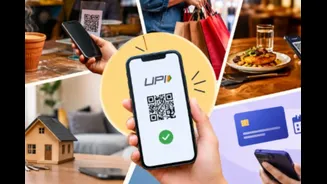
The Two Faces of UPI: P2P vs. P2M
First, it's crucial to understand that not all UPI transactions are the same. They fall into two main categories. The first is Person-to-Person (P2P), which is when you send money to your friends, family, or any other individual. The second is Person-to-Merchant
(P2M), which covers payments you make to a business, from your local kirana store to a large online retailer. The headline question—why are payments free?—primarily concerns P2P transactions. The rules and economics for P2M payments can be quite different.
A Public Good, Not a Commercial Product
The fundamental reason your P2P transfers are free is because the government and the National Payments Corporation of India (NPCI), the body that operates UPI, treat it as essential public infrastructure. Much like a public road, the goal is to encourage widespread use to benefit the entire economy. By making it free for individuals to transact, UPI promotes financial inclusion, brings more people into the formal economy, and reduces the country's reliance on physical cash. The government has repeatedly stated that consumers will not be charged for using UPI for personal payments.
So, Who Bears the Cost?
Running a massive, real-time network like UPI isn't free. It requires significant investment in technology, servers, and cybersecurity. Since you aren't paying, who is? For years, the cost has been shouldered by the government and the banks. The government has offered incentive schemes to compensate banks and payment service providers for the costs they incur in processing these free transactions. This subsidy was a strategic move to ensure rapid adoption. The thinking was that the long-term economic benefits of a cashless society would far outweigh the short-term costs of subsidising the system.
The Merchant Side of the Story
This is where the picture gets more complex and where revenue generation starts to appear. While the government has mandated that P2P transactions remain free, it has allowed for a fee structure on the merchant side called the Merchant Discount Rate (MDR). As of late 2026, recent guidelines from NPCI state that P2P and most small-value merchant transactions remain free. However, a nominal MDR of 0.4% can be applied to certain P2M transactions over ₹2,000. This fee is paid by the merchant, not the customer, and is distributed among the payment ecosystem participants to maintain the infrastructure. Importantly, small merchants are largely exempt, and consumers are protected from having this cost passed on to them.
How Do Apps Like PhonePe and Google Pay Profit?
If P2P transfers are free and merchant fees are nominal or non-existent for small players, how do payment giants like PhonePe, Google Pay, and Paytm stay in business? Free UPI is their customer acquisition tool. They use it to attract millions of users to their platforms. Once you're on the app, they make money by cross-selling other financial products. This includes earning commissions on mobile recharges, utility bill payments, ticket bookings, insurance sales, and loan disbursals. They have become financial marketplaces where the free UPI transfer is just the entry point.
Will P2P Payments Remain Free Forever?
This is the million-rupee question. The government and the Finance Ministry have consistently and firmly stated that P2P UPI transactions will remain free for consumers. The recent introduction of a structured MDR for some merchant transactions is seen as a move toward making the ecosystem financially self-sustaining without burdening individuals. While payment companies continue to lobby for more viable revenue models, the official stance is clear: your personal UPI payments are safe from charges for the foreseeable future. The system is designed to keep it that way to support the continued growth of India's digital economy.