



The Search for Lost Stars
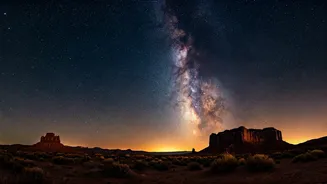
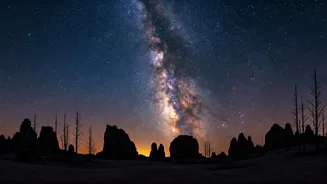
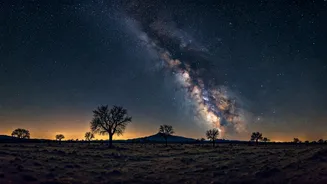
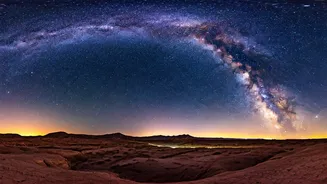
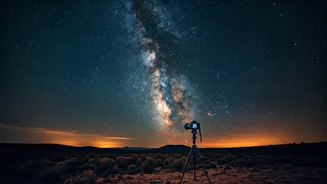
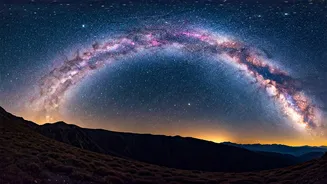
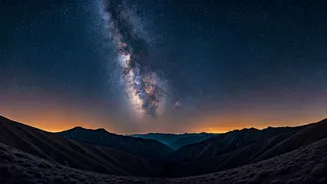
They call it astrotourism, or dark-sky tourism: the act of travelling to remote areas specifically for the purpose of stargazing. It’s a movement born from a modern paradox. As our cities have become brighter, our skies have grown dimmer. The pervasive
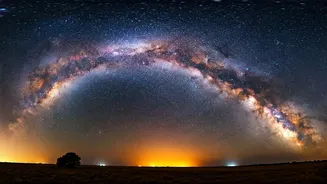
glow of streetlights, buildings, and advertising—known as light pollution—has erased the majestic sprawl of the Milky Way from the daily lives of millions. For a growing number of Indian travellers, tired of the usual beach holidays and mountain treks, the ultimate luxury is no longer a five-star hotel but a five-billion-star sky. This isn't just about spotting constellations; it’s a form of experiential travel that combines science, nature, and a profound sense of wonder. It’s about finding a quiet place, looking up, and feeling connected to the vastness of the cosmos—an experience increasingly rare in our hyper-illuminated world.
India's Celestial Crown Jewel
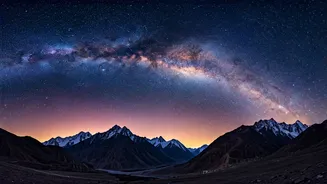
The epicentre of this movement in India is Hanle, a remote village in Ladakh. In 2022, it was officially designated as India's first Dark Sky Reserve by the Indian Institute of Astrophysics and the UT Ladakh administration. Situated at an altitude of 4,500 metres, Hanle’s cold, dry desert landscape and minimal cloud cover create near-perfect conditions for observing the night sky. The reserve is home to the Indian Astronomical Observatory, one of the world's highest-sited observatories. The designation isn’t just a title; it’s a commitment. Local communities have agreed to adopt responsible lighting practices—using shielded, low-impact lights—to preserve the pristine darkness. For visitors, a trip to Hanle offers more than just a view; it’s an immersive experience, with homestays offering trained guides and telescopes to help tourists navigate the celestial wonders above.
A Nationwide Constellation of Destinations
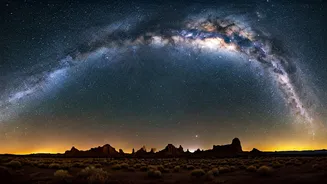
While Hanle may be the crown jewel, the quest for dark skies is spreading across the country. Stargazing hotspots are emerging in diverse landscapes, proving that you don’t need to travel to the Himalayas to find cosmic clarity. The salt flats of the Rann of Kutch in Gujarat offer a surreal, expansive canvas for the night sky during the winter months. In Rajasthan, the desert camps around Jaisalmer and Jodhpur provide a stunning backdrop of dunes and stars. Further south, spots in the Western Ghats, like Coorg in Karnataka, and remote areas in the Spiti Valley in Himachal Pradesh are also gaining popularity. Several private operators and local enthusiasts are setting up observatories and organising 'star parties', equipping travellers with telescopes and the knowledge to appreciate what they’re seeing, from distant galaxies to the craters of the moon.
More Than Just a Pretty View
The rise of dark-sky tourism speaks to a deeper shift in our travel priorities. It taps into a post-pandemic desire for meaningful, mindful experiences that connect us to the natural world. For many, it’s a form of digital detox, an opportunity to disconnect from screens and reconnect with something fundamental. The profound silence of a remote location, punctuated only by the crisp night air, is a powerful antidote to urban noise. This trend also aligns with a growing interest in science and sustainability. Travellers are not just passive observers; they are learning about astronomy, light pollution, and the importance of preserving natural environments. It's a form of travel that educates as much as it entertains, leaving visitors with a renewed sense of perspective about our place in the universe.