




The Hostile World Next Door
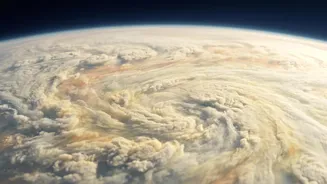
Venus may be similar to Earth in size, but it's a vastly different world. Its atmosphere is over 90 times denser than ours and is composed of 96.5% carbon dioxide, creating a runaway greenhouse effect. This traps immense heat, pushing surface temperatures
to a scorching 467°C, hot enough to melt lead. The planet is permanently shrouded in thick clouds of sulphuric acid, making it impossible to observe the surface with conventional telescopes. This extreme environment is precisely why scientists are so interested; it serves as a natural laboratory for understanding how a planet so like our own could have become so inhospitable.
Shukrayaan's Core Scientific Quest
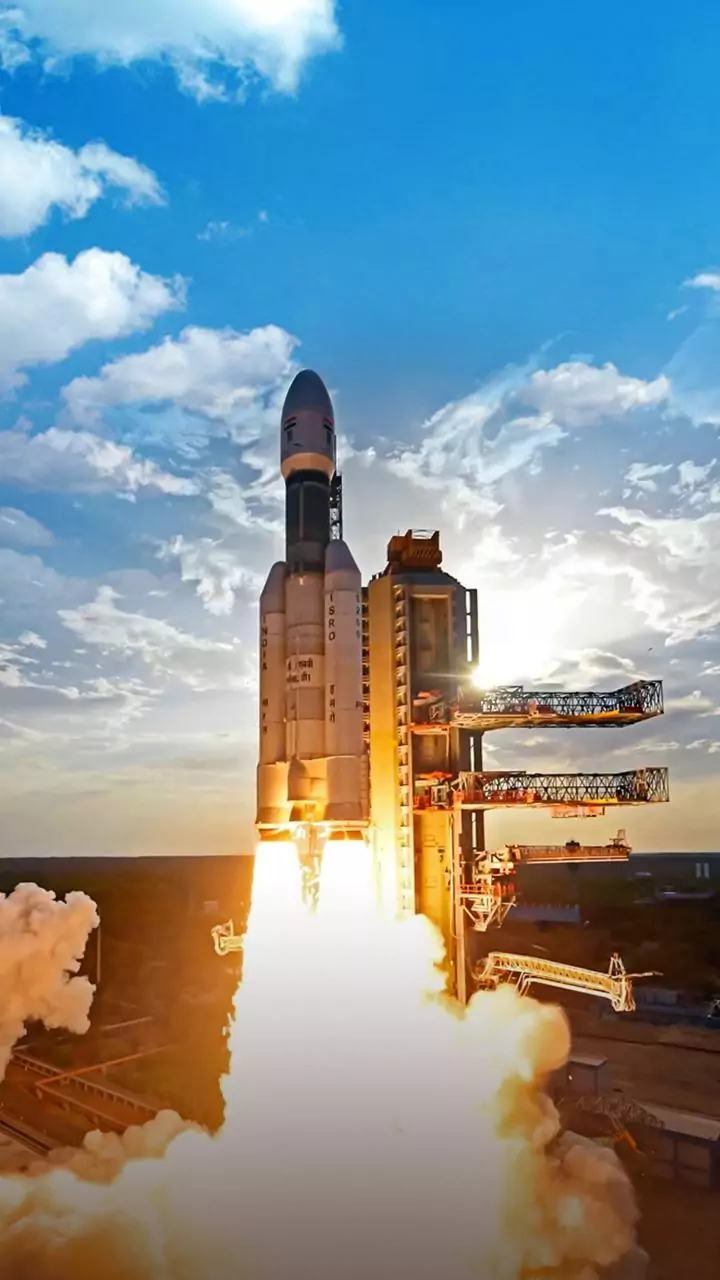
The primary goal of ISRO's Shukrayaan mission, scheduled for a 2028 launch, is to investigate Venus's evolution. Why did Earth's twin have such a different fate? To answer this, scientists need to understand its surface, subsurface, and, most critically, its atmosphere. Key objectives include mapping the planet's surface and subsurface geology, studying its volcanic activity, and analyzing the structure, composition, and dynamics of its dense atmosphere. The mission will also investigate how the solar wind interacts with the Venusian ionosphere, a process that may explain how the planet lost most of its water over billions of years.
A Toolkit for a Toxic Atmosphere
To achieve these goals, Shukrayaan will carry around 100 kg of scientific instruments, many of which are designed to probe the atmosphere. One of the key international payloads is VIRAL (Venus Infrared Atmospheric Gases Linker), co-developed with Russia and France. This instrument is a spectrometer, which essentially 'sniffs' the atmosphere to identify the chemical composition by analyzing light. Other atmospheric instruments will measure cloud structure, wind speeds, and temperature from orbit. These sensors work across different wavelengths, from infrared to ultraviolet, to build a complete, multi-layered picture of the atmospheric chemistry and dynamics, including the mysterious 'super-rotation' where the atmosphere circles the planet 60 times faster than the planet itself spins.
Hunting for Clues in the Clouds
Measuring atmospheric compounds is like planetary forensics. The presence and concentration of gases like sulphur dioxide, carbon monoxide, and water vapour can reveal ongoing volcanic activity and explain chemical cycles in the clouds. For instance, sulphur dioxide is a key component of the sulphuric acid clouds and is likely supplied by volcanoes. The mission's sensors are also crucial for another reason: the tantalizing, though debated, possibility of life. Following the contested 2020 detection of phosphine gas—a compound produced by some anaerobic microbes on Earth—in Venus's upper atmosphere, Shukrayaan's VIRAL instrument has been tasked with trying to confirm or deny its presence. Finding phosphine would not be definitive proof of life, but it would be a monumental discovery demanding further investigation.
Beyond Venus: What the Mission Means for India
The sensors on Shukrayaan are not just about studying a distant planet; they represent a significant leap in India's technological and scientific capabilities. Following the successes of Chandrayaan and Mangalyaan, Shukrayaan cements ISRO's status as a major player in interplanetary exploration. Collaborating with international space agencies from Sweden, Germany, and Russia on key payloads demonstrates India's role as a trusted partner in global science. Furthermore, understanding the runaway greenhouse effect on Venus provides invaluable data for refining our own climate models on Earth, serving as a cautionary tale of how dramatically a planet's climate can change.