


Saturn Nears Its Brightest
While Saturn will officially reach its opposition—the point where Earth passes directly between it and the sun—on October 4, 2026, the planet is already putting on a magnificent show. Throughout late August, the ringed planet will be a prominent, golden-hued
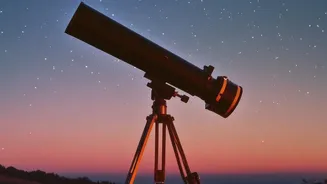
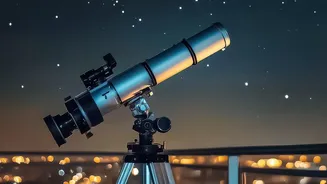
object in the night sky. Rising in the east around sunset, it remains visible for most of the night, making it an easy and rewarding target. By late August, it will be exceptionally bright and well-placed for observation. You don’t need a professional observatory; even a basic telescope can reveal its famous rings, and a good pair of binoculars will show it as more than just a pinprick of light. Look for it in the constellation Cetus. It’s the perfect time to introduce family and friends to one of the solar system's most iconic sights.
A Faint Farewell to a Meteor Shower
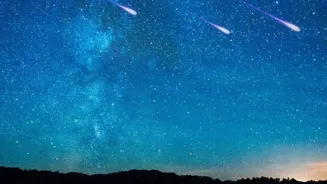
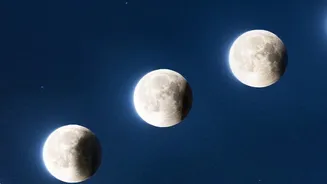
The Perseids might get all the headlines, but they aren't the only meteor shower active this month. The Kappa Cygnid meteor shower continues until August 28th, though its peak was around August 17th. This is a minor shower, producing only about three meteors per hour under ideal conditions. However, what it lacks in numbers, it makes up for in style. The Kappa Cygnids are known for producing occasional bright, slow-moving fireballs. Since the Moon will be in its waxing crescent phase and set early, the sky will be dark for most of the night, improving your chances. Find a spot away from city lights, let your eyes adjust for about 20 minutes, and look towards the constellation Cygnus. Patience is key, but spotting one of these dramatic meteors can be a memorable experience.
The Dazzling Summer Triangle
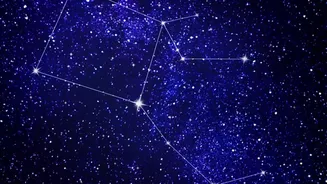
High overhead in the August night sky is an asterism so bright it can be seen even from light-polluted urban areas: the Summer Triangle. This celestial landmark is not a constellation itself but is formed by three brilliant stars from three different constellations. These are Vega in the constellation Lyra (the Harp), Deneb in Cygnus (the Swan), and Altair in Aquila (the Eagle). Vega is typically the brightest of the three and will be almost directly overhead in the evenings. Altair is easily identified by the two fainter stars that flank it. The Summer Triangle serves as a perfect starting point for navigating the star-dusted lane of the Milky Way, which runs right through it, particularly through Cygnus.
Journey to the Heart of the Milky Way
Speaking of the Milky Way, August offers Indian observers a prime view of its densest and most dramatic region. Look towards the southern horizon to find the constellations Sagittarius and Scorpius. This area is home to the galactic center, the core of our galaxy. While the monsoon clouds can be a challenge for much of India, any clear night provides a breathtaking opportunity. From a dark location, you won't need a telescope to see the Milky Way as a hazy, luminous band stretching across the sky. With binoculars, this region explodes into a glittering field of countless stars, star clusters, and faint nebulae. Key objects to look for include the Lagoon Nebula (Messier 8) and the Trifid Nebula (Messier 20) in Sagittarius, which appear as small, glowing patches of gas and dust.