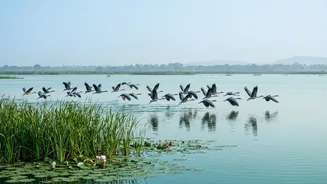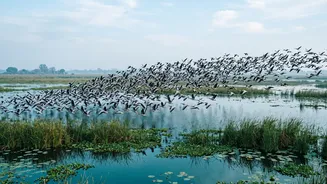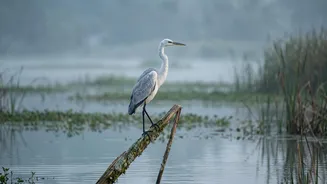






Every year, millions of birds travel thousands of kilometres from the Arctic and Central Asia to winter in India. Their survival hinges on a network of wetlands, which are now facing unprecedented threats from human activity and climate change.
India: A Crossroads on an Avian Superhighway
India holds
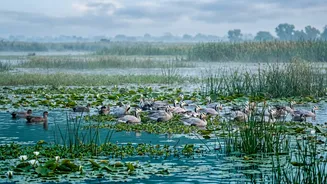
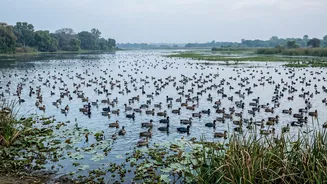
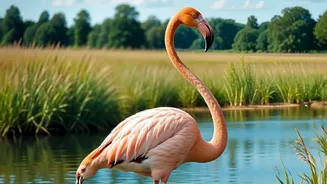
a unique and critical position in the natural world. It sits at the heart of the Central Asian Flyway (CAF), one of the nine major migratory routes for birds globally. This aerial superhighway connects breeding grounds in Siberia, Russia, and the Arctic with wintering areas in South Asia and the Indian Ocean. For over 90% of the bird species using this flyway, India's wetlands are not just an optional stop but an essential destination for feeding, resting, and surviving the harsh northern winter. From the bar-headed geese that fly over the Himalayas to the flamingos that paint Sambhar Lake pink, these travellers depend on sites like Chilika Lake in Odisha and Keoladeo National Park in Rajasthan. Losing any of these crucial stopover sites could break a chain that has existed for millennia.
More Than Just Bird Sanctuaries
Wetlands are among the most productive ecosystems on Earth, but their importance goes far beyond providing a haven for birds. They act as natural sponges, absorbing floodwaters during heavy monsoons and protecting human settlements. They also function as giant water purifiers, filtering pollutants and recharging groundwater aquifers, which are critical for drinking water and agriculture. Furthermore, wetlands are powerful carbon sinks, storing vast amounts of carbon and helping to mitigate climate change. When migratory birds flock to a wetland, it's a sign that the ecosystem is healthy and functioning. Their decline, therefore, is an early warning system for environmental stress that affects water security and community resilience.
A Habitat Under Siege
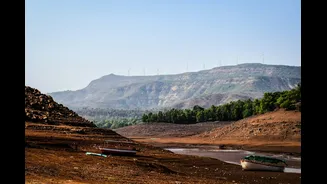
Despite their importance, India's wetlands are disappearing at an alarming rate. Urban expansion is a primary culprit, with cities encroaching on and 'reclaiming' these vital habitats. Marshes like Pallikaranai in Chennai and wetlands near Delhi have shrunk dramatically due to construction and waste dumping. Pollution is another severe threat. Industrial effluents, untreated sewage, and agricultural runoff contaminate the water, killing off the fish, insects, and aquatic plants that birds feed on. Invasive species like the water hyacinth can choke entire lakes, blocking sunlight and reducing oxygen levels. Compounding these issues is climate change, which causes erratic rainfall, rising sea levels, and altered temperatures, disrupting the delicate seasonal cycles that birds have followed for centuries.
The Ripple Effects of Neglect
The disappearance of migratory birds is not just an aesthetic loss for birdwatchers. It has tangible ecological and economic consequences. These birds are vital pest controllers, consuming huge quantities of insects that could otherwise damage crops. As they travel, they act as long-distance seed dispersers and pollinators, maintaining biodiversity across continents. Their droppings, rich in nutrients, fertilise the ecosystems they visit. The decline in bird populations signals a collapse in the food chain and points to severe environmental degradation that ultimately harms human interests. Moreover, a thriving bird population supports local economies through ecotourism, as seen in places like Khichan in Rajasthan, where villagers protect thousands of visiting cranes.
A Path Towards Restoration and Hope
Recognising the urgency, India has stepped up its conservation efforts. The country now has over 100 Ramsar sites—wetlands designated as internationally important—a significant increase in recent years. In February 2024, the Initiative for the Central Asian Flyway was formally established, with a coordinating unit hosted by India, marking a major commitment to protecting migratory birds across 30 countries. Initiatives like the 'Amrit Dharohar' and 'Mission Sahbhagita' are promoting community participation in wetland conservation and restoration. These efforts show a growing understanding that protecting wetlands is not a choice but a necessity. From grassroots movements led by local women in Kashmir to national policies, there is a building momentum to safeguard these critical habitats.