







The Foundation: Dramatically Lower Launch Costs
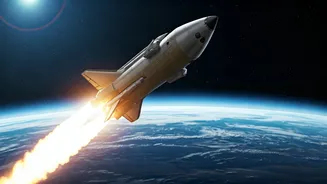
For decades, space was the exclusive domain of national governments due to astronomical costs. The game changed with the advent of reusable rockets, pioneered by companies like SpaceX. By refurbishing and reusing rocket boosters that were previously discarded
in the ocean, the cost to send a kilogram of payload into orbit has plummeted. [23, 27] This is not just an incremental improvement; it's a fundamental economic shift. A launch that once cost over $100 million can now be done for significantly less, with prices from some providers being highly competitive. [14, 29] This reduction in cost is the primary enabler for everything that follows, making frequent and commercially viable access to space a reality for the first time in history. [10, 27]
Factories in Orbit: The Rise of In-Space Manufacturing
Imagine creating materials that are physically impossible to make on Earth. The microgravity environment of space offers unique advantages for manufacturing. Without gravity, it's possible to create purer crystals for semiconductors, produce flawless fiber-optic cables with much lower signal loss, and even experiment with 3D-printing complex human organs. [6, 13] Companies like Varda Space Industries and Redwire Space are already launching orbital manufacturing facilities to produce high-value pharmaceuticals and advanced materials. [6, 13, 20] The goal is to manufacture these valuable products in space and return them to Earth, creating an entirely new industrial sector. Additive manufacturing, or 3D printing, is also being used on orbit to create spare parts and tools on demand, reducing the reliance on costly resupply missions from Earth. [8, 22]
A New Golden Age for Science and Research
With the International Space Station (ISS) nearing its planned retirement around 2030, a new generation of privately owned and operated space stations is set to take its place. [2, 5, 17] Companies like Axiom Space, Blue Origin, and Vast are developing commercial outposts designed to be versatile platforms for research, tourism, and industry. [2, 19] For scientists, this means more opportunities and lower costs to conduct experiments in microgravity, accelerating research in fields from medicine to materials science. [10, 24] NASA itself plans to be a customer of these private stations, transitioning from being an owner-operator to a renter, which frees up its resources to focus on deeper space exploration missions like Artemis. [17, 25]
India's Moment: The Boom in Domestic Spacetech
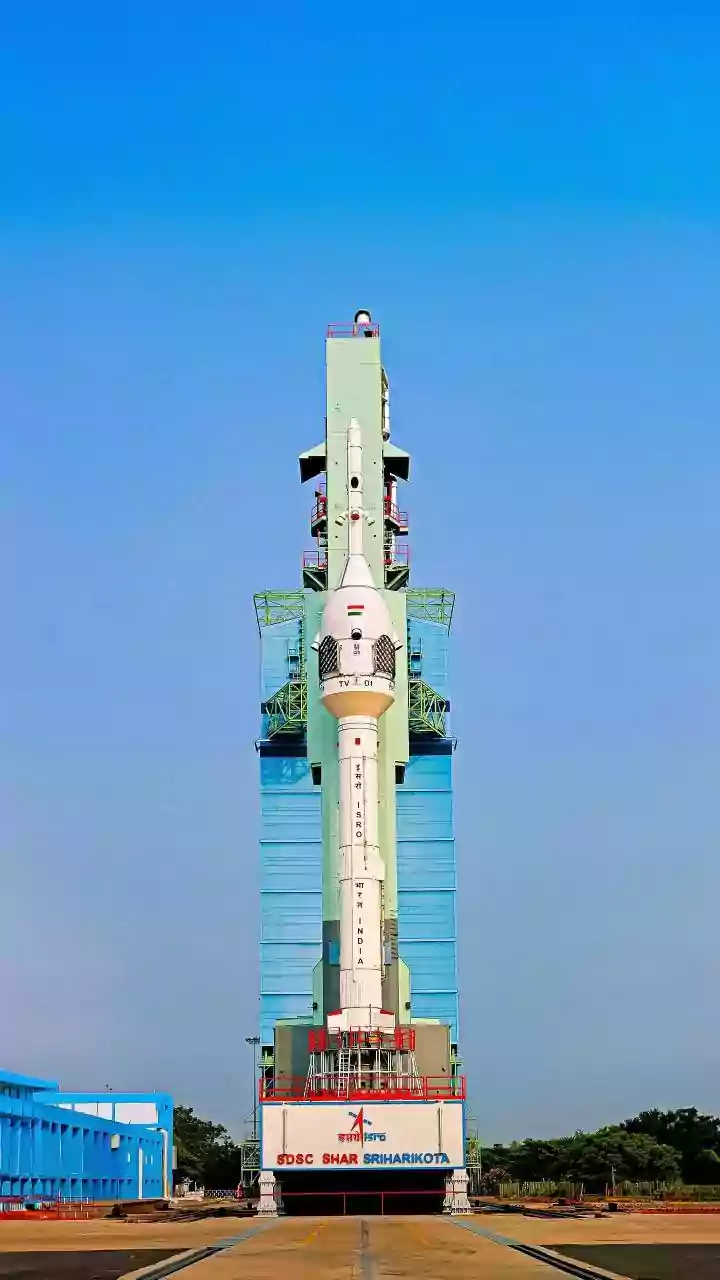
This global shift is creating a massive opportunity for India. The Indian government's decision in 2020 to open the space sector to private enterprise has unleashed a wave of innovation. [7, 9] Today, India has hundreds of spacetech startups working on everything from building rockets to designing satellites. [11, 18] Companies like Skyroot Aerospace, which launched India's first private rocket, and Agnikul Cosmos, known for its 3D-printed engines, are at the forefront of this movement. [7] The establishment of IN-SPACe, a government body to facilitate private participation, has been crucial. [7, 16] India’s space economy, valued at around $8.4 billion in 2022, is projected to grow significantly, potentially reaching $44 billion by 2033 as these startups compete for a larger share of the global market. [7]