
The Dawn of Private Outposts
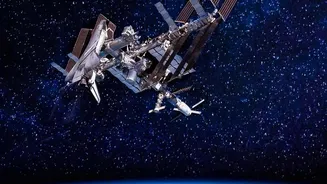
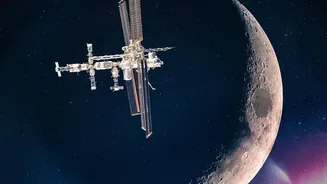
The transition from a single, government-funded space station to multiple commercial destinations represents a fundamental shift in how we approach living and working in low-Earth orbit. NASA is actively encouraging this transition, providing funding
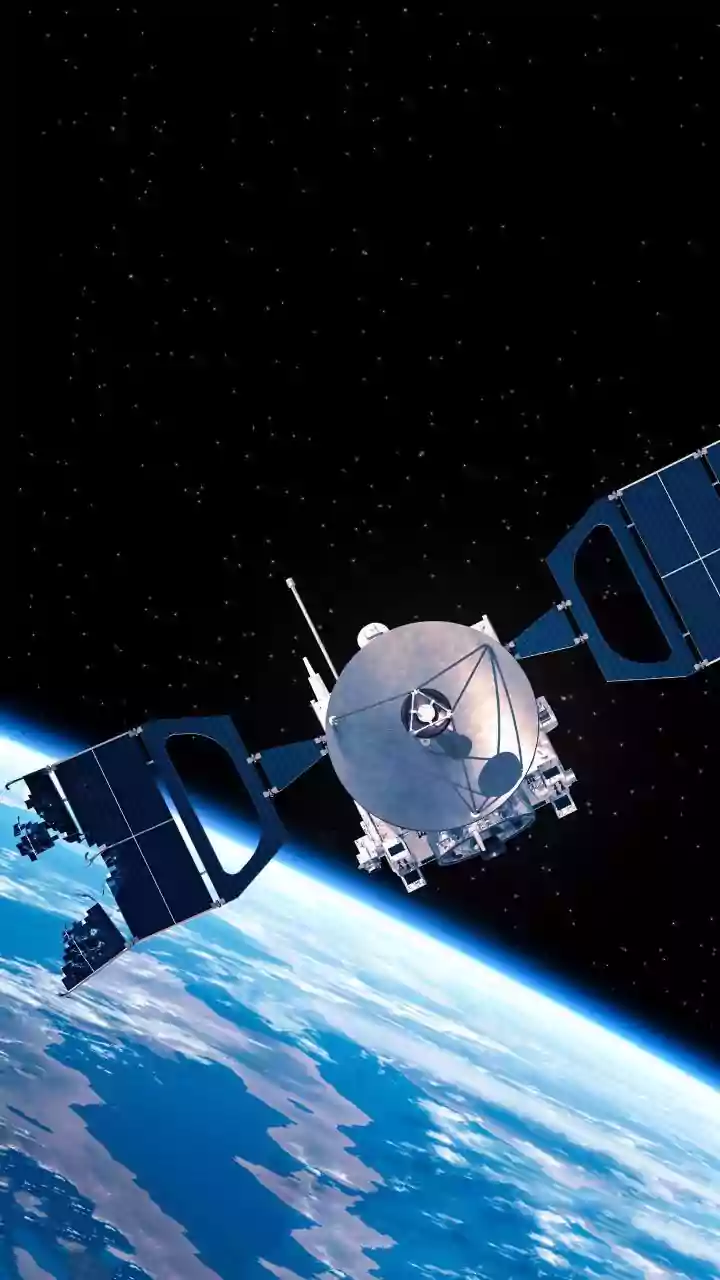
and technical support to several American companies to ensure there is no gap in US presence in space. The goal is to become just one of many customers in a thriving orbital economy. This new model aims to lower costs, increase access for more countries and companies, and free up NASA's resources to focus on deep-space missions to the Moon and Mars. These next-generation stations are not just replicas of the ISS; they are purpose-built commercial platforms designed for a mix of research, manufacturing, and even tourism.
Meet the New Architects of Orbit
Several key players are racing to build this new orbital real estate. Axiom Space is taking a unique approach by first attaching its modules to the ISS. The first module, Hab-1, is already under construction and will eventually be joined by others before detaching to become a free-flying station. Another major venture is Orbital Reef, a collaboration between Blue Origin and Sierra Space, envisioned as a 'mixed-use business park' in space. A key feature of Orbital Reef is Sierra Space's Large Integrated Flexible Environment (LIFE) habitat, an inflatable module that launches in a compact state and expands in orbit to the size of a three-story apartment building, offering unprecedented volume for living and working. Meanwhile, the company Vast is developing Haven-1, a smaller, single-module station planned for launch as early as 2027, with the goal of being the first commercial station in orbit.
A Laboratory Like No Other
So, how exactly will these new habitats 'revolutionise' science? The answer lies in their design and capabilities. Unlike the ISS, where science experiments often have to compete for space with crew life support systems, these new stations will feature dedicated research and manufacturing facilities. Axiom Station, for example, plans a specific module for this purpose, offering state-of-the-art capabilities for industries like biotechnology and semiconductors. The absence of gravity allows for processes impossible on Earth, such as creating purer crystals for electronics or 3D-printing human organs without the need for scaffolding. Sierra Space’s LIFE habitats will provide enormous pressurized volume, allowing for larger and more complex experiments. Vast’s Haven-1 will feature a dedicated lab with 10 slots for payloads, each with its own power and data, plus high-speed Starlink internet connectivity—a significant upgrade for researchers needing real-time data.
The Economics of Orbit
The business model for these stations is fundamentally different from the government-funded ISS. These companies are building platforms to serve a diverse client base. This includes not only NASA but also foreign space agencies, private companies wanting to conduct microgravity research, and even tourists. France, for instance, has already signed an agreement with Vast to send astronauts to Haven-1. This multi-customer model is crucial for creating a sustainable market. By selling services like payload hosting, crew time, and data downlink, these companies aim to create a virtuous cycle: increased demand drives down launch costs and station access fees, which in turn attracts even more customers. The long-term vision is an entire industrial ecosystem in low-Earth orbit, a crucial stepping stone for humanity's expansion into the solar system.