



The Challenge with Traditional Models
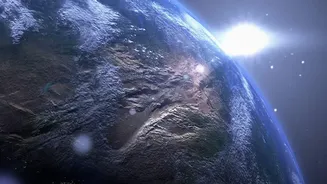
Climate and weather forecasting are sciences of immense complexity. Traditional models simulate the Earth's atmosphere and oceans using fundamental laws of physics. While incredibly powerful, these numerical weather prediction models require enormous
computational resources, often running on some of the world's most powerful and energy-intensive supercomputers. This makes them slow and costly. A significant challenge has been resolution; running simulations detailed enough to capture small-scale but high-impact events like localised storms or sudden heatwaves is computationally prohibitive. This has created a gap between the big-picture global projections and the local, actionable insights needed for disaster preparedness and infrastructure planning.
How AI Changes the Game
Instead of starting from raw physics equations for every forecast, AI models—particularly those using machine learning and deep learning—are trained on decades of historical weather data. By analyzing these vast datasets, they learn to recognize intricate patterns and relationships in the climate system that might not be easily visible with traditional methods. The result is a dramatic acceleration. Companies like NVIDIA and Google DeepMind have developed AI models that can produce detailed weather forecasts in minutes, a task that could take hours on a traditional supercomputer. For example, Google's GraphCast can deliver a 10-day forecast in under a minute. This speed allows for running a much larger number of simulations, known as ensembles, which is crucial for assessing the probability of rare but catastrophic weather events.
From Blurry Forecasts to High Definition
This new AI-driven approach is leading to tangible improvements in forecasting accuracy and detail. NVIDIA's Earth-2 platform, for example, includes open-source models that can accelerate simulations by a factor of 1000x while using 10,000x less power. It uses generative AI to create high-resolution predictions of how storms will develop and what rainfall patterns will look like. Google's models, such as WeatherNext 2 and GenCast, have demonstrated superior accuracy in predicting extreme heat, high winds, and the tracks of tropical cyclones compared to leading conventional systems. This process, known as downscaling, allows scientists to take coarse global projections and add fine-grained local detail, revealing risks like hurricanes that might be missed in the raw data.
Real-World Impact and Applications
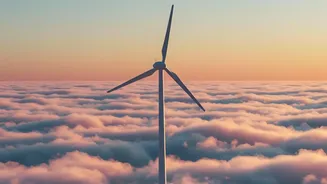
The benefits of faster, more accurate climate modeling extend far beyond the research lab. More precise and timely warnings for extreme weather events like floods, droughts, and heatwaves can save lives and reduce economic damage. These advanced forecasts also have significant economic implications. They help optimize the energy grid by better predicting when the sun will shine and the wind will blow, making renewable energy sources more reliable. Furthermore, they inform critical decisions in agriculture, water resource management, and the design of climate-resilient urban infrastructure. By providing better risk assessments, AI is helping governments and businesses prepare for the realities of a changing climate.
A Powerful Tool, Not a Silver Bullet
Despite its immense potential, AI is not a magic solution. A significant concern is the energy consumption of the powerful data centers required to train these complex models. There's also the "black box" problem; some deep learning models are so complex that it's difficult for scientists to understand precisely how they arrived at a prediction, which can affect trust in the results. Researchers also note that while AI excels at forecasting based on historical patterns, some studies suggest traditional physics-based models may still perform better when predicting unprecedented, record-breaking weather events. Ensuring that the training data is high-quality and free from bias is another critical challenge to ensure the models are fair and reliable across different regions of the world.