
A Frozen Scientific Prize
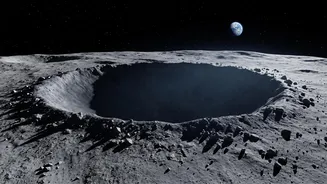
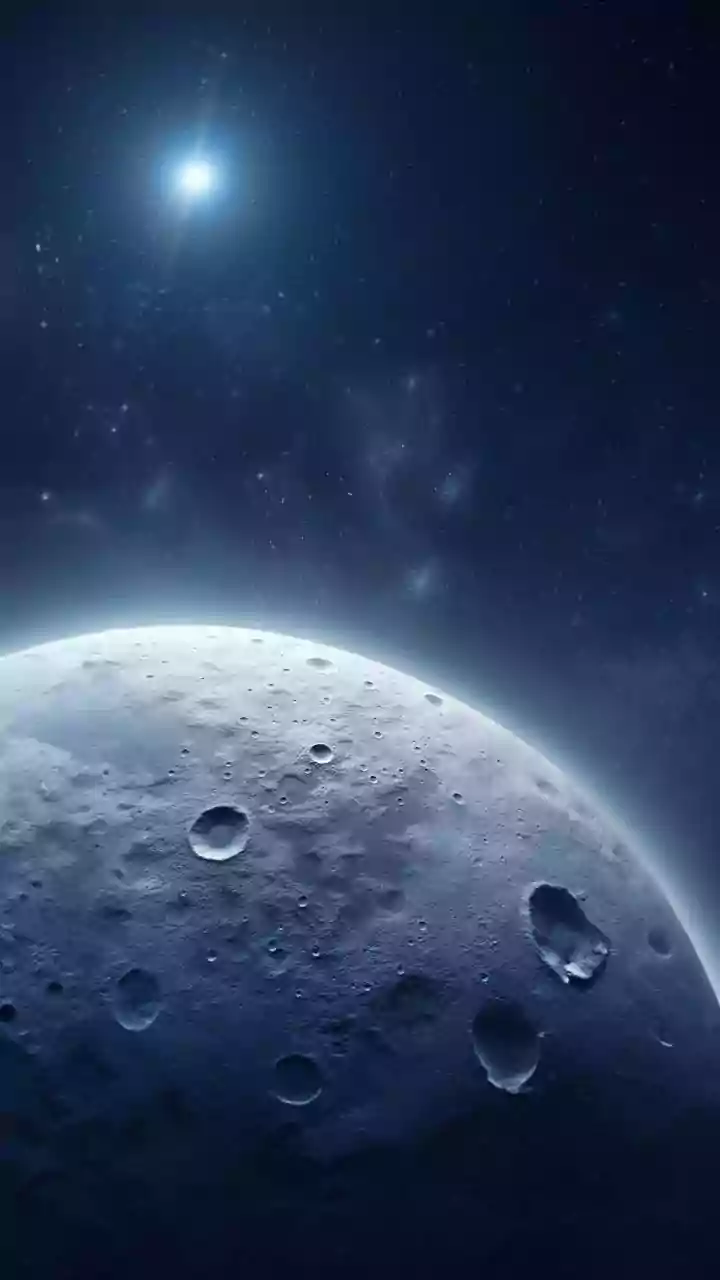
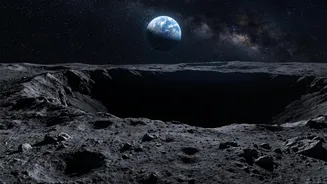
For decades, the Moon was largely considered a dead, dry world. But a series of modern missions have transformed our understanding, revealing a far more complex and intriguing place. The biggest prize lies hidden at the lunar poles, inside craters that
have been cloaked in darkness for billions of years. Because the Moon’s axis is only slightly tilted, the floors of these permanently shadowed regions (PSRs) never see sunlight. Temperatures within them can plummet to levels colder than the surface of Pluto, creating “cold traps” where water ice can remain frozen and stable for eons. These ice deposits are a tremendous scientific treasure. They could contain a pristine record of the early solar system, offering clues about the origin of water and life itself. Furthermore, this ice represents a vital resource for future astronauts, capable of providing drinking water, breathable air, and even rocket fuel for missions deeper into the cosmos. NASA's Artemis program is specifically targeting these polar regions to explore this potential.
The Problem of Forward Contamination
Every time we send a spacecraft or an astronaut to another world, we risk sending unwelcome guests. This is known as “forward contamination”—the unintentional transfer of life, mostly in the form of hardy microbes, from Earth to another celestial body. Humans are natural carriers of a vast microbial ecosystem; every person carries millions of bacteria on their skin alone. Despite rigorous sterilization procedures, some of these tiny organisms can survive the journey to space. For a long time, the Moon's harsh environment—with its lack of atmosphere, extreme temperature swings, and intense ultraviolet (UV) radiation—was thought to be a sufficient sterilizer. However, recent NASA-led studies have challenged this assumption. Research published in August 2026 suggests that some of Earth's toughest microbes could survive for days, or even longer, in the unique microclimates of the Moon's polar regions. Spore-forming bacteria and fungi like Aspergillus niger (a common black mold) have shown surprising resilience in simulated lunar conditions.
Why Our Germs Are a Scientific Hazard
The primary danger of introducing Earth microbes is that they could fundamentally corrupt our scientific understanding of the Moon. If scientists were to detect organic molecules or even dormant microbes in a lunar sample, they would face a critical question: is this a groundbreaking discovery of native lunar biology, or is it just contamination from a previous mission? This ambiguity could lead to a monumental false positive, derailing decades of careful scientific inquiry. Beyond the search for life, these microbes could also alter the delicate chemistry of the lunar soil and ice they encounter. Their metabolic processes, however slow, might change the very materials scientists are trying to study in their pristine state. As the pace of lunar exploration accelerates, with more nations and private companies planning missions, the risk of widespread contamination grows, threatening to turn the Moon into a confusing mosaic of terrestrial and potentially lunar signatures before we have a chance to establish a baseline.
The Rules of Planetary Protection
To combat this threat, space agencies operate under a framework known as Planetary Protection. Governed by international agreements like the Outer Space Treaty of 1967, these protocols are designed to prevent the harmful contamination of other worlds and to protect Earth from any potential extraterrestrial life brought back. The guidelines, overseen by the Committee on Space Research (COSPAR), classify missions based on their destination and scientific goals. For years, the Moon was considered a low-risk body, requiring minimal sterilization. However, with the discovery of water ice, the rules have been updated. Missions targeting the scientifically sensitive polar regions and their permanently shadowed craters now face stricter requirements, including the need to document their full organic inventory to track any potential contaminants. Spacecraft components are assembled in ultra-clean rooms and undergo sterilization processes to reduce their bioburden before launch. These measures are a crucial defense in keeping the Moon scientifically pristine.
A New Era Demands New Vigilance
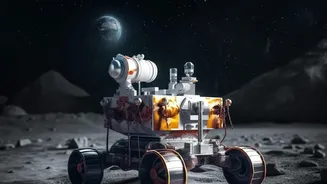
The Artemis era promises a sustained human presence on the Moon, with a base camp and regular missions. This new level of activity presents an unprecedented challenge for planetary protection. Recent NASA research has shown that even small, shadowed areas, no larger than a footprint, could act as temporary refuges for microbes, shielding them from the harshest radiation. While survival doesn't mean growth—there's no evidence microbes can reproduce on the Moon—their persistence is enough to complicate science. The concern is that microbes from astronauts' suits or rovers could get buried in the lunar soil, protecting them from radiation and preserving them for long periods. This underscores the urgent need to meticulously document native lunar conditions before extensive human activity begins. As we take our next giant leap, ensuring we explore responsibly will be paramount. The quest for knowledge about other worlds must begin with a promise to protect them from our own.