







The Race Against Time
For the thousands of small-scale farmers in the rural belts surrounding Bengaluru, floriculture is a crucial source of income. Karnataka is a powerhouse in flower production, but this success story has a thorny problem: perishability. Once a rose is cut,
a clock starts ticking. Without proper storage, flowers can wilt and become unsellable in a matter of hours, not days. Post-harvest losses in India's floriculture sector are estimated to be as high as 30-40%. This forces growers into a desperate daily race to sell their produce immediately, leaving them at the mercy of market agents and whatever price is offered on that day. This daily gamble often means selling at rock-bottom prices just to avoid a total loss, especially during gluts in the market when supply heavily outweighs demand.
The Power Problem
The obvious solution to perishability is cold storage. By lowering the temperature, farmers can significantly extend the life of their flowers, giving them the power to hold their stock and wait for more favourable market prices. However, traditional cold storage solutions present their own set of obstacles. For one, they are expensive to build and operate. More critically, they rely on a stable and affordable supply of electricity—a luxury not always available in rural areas. Erratic power grids and frequent outages force a reliance on expensive and polluting diesel generators, driving up operational costs and eating into already thin profit margins. For most small farmers, the cost and logistical challenges have kept effective cold storage well out of reach.
Harnessing the Sun
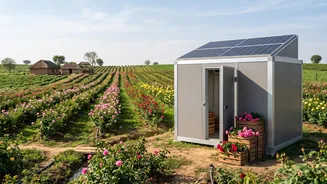
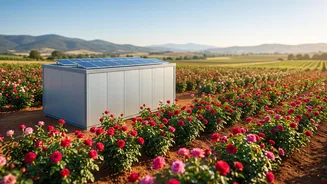
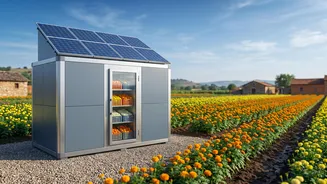
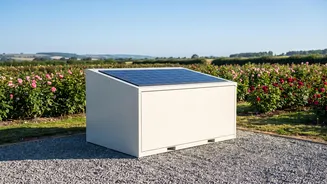
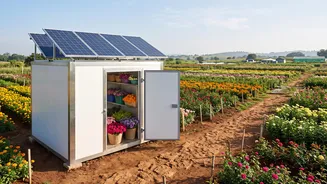
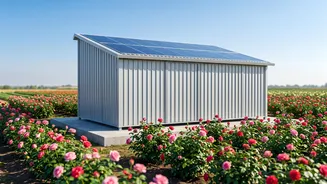
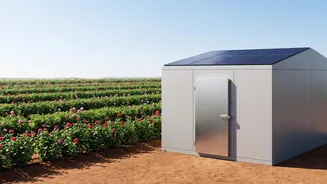
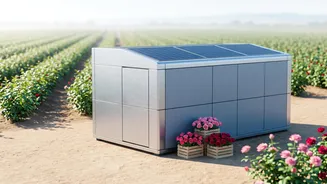
This is where solar-powered storage enters the picture. These modern, often portable cold rooms use photovoltaic panels to generate their own clean electricity, storing it in batteries to ensure uninterrupted cooling, even overnight or on cloudy days. By untethering cold storage from the unreliable grid and costly diesel, this technology provides a sustainable and economically viable solution perfectly suited to the needs of rural agricultural communities. A case study in Sadali village, near Bengaluru, illustrates the impact. A local Farmer Producer Organisation (FPO) installed a solar-powered cold room, offering storage to local farmers for horticultural produce, including roses, at half the cost of conventional facilities. This local, affordable access is a game-changer.
From Surviving to Thriving
By empowering farmers to store their flowers safely for several days, solar-powered cold storage fundamentally changes their relationship with the market. They are no longer forced to sell in a panic. Instead, they can analyse price trends and choose to sell when demand is high, such as during festivals or wedding seasons, thereby capturing significantly more value from their harvest. This newfound control transforms their business model from one of mere survival to one of strategic selling. The ability to preserve quality reduces waste, increases their bargaining power with middlemen, and ultimately leads to higher, more stable incomes. The technology gives them a buffer against market volatility, providing a level of financial security that was previously unimaginable.
A Blueprint for Indian Agriculture
The success of solar storage in Bengaluru's rose farms is more than just a local story; it is a powerful blueprint for the future of Indian agriculture. The challenges faced by these floriculturists—post-harvest loss, energy insecurity, and price vulnerability—are common across the country for growers of fruits, vegetables, and other perishable goods. Government initiatives like the PM-KUSUM scheme are actively promoting solar energy in agriculture to boost farmer incomes and build rural resilience. As the cost of solar technology continues to fall and innovative business models like community-owned storage facilities gain traction, this solution has the potential to empower millions of farmers, reduce food waste, and create a more sustainable and profitable agricultural sector for all.