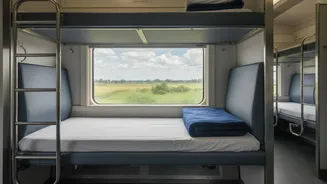







The Primary Advantage: Unmatched Accessibility
The most significant benefit of a lower berth is its accessibility. For senior citizens, pregnant women, passengers with disabilities, or those with mobility issues, the thought of climbing to a middle or upper berth can be daunting, if not impossible.
The lower berth eliminates this struggle entirely. There are no ladders to navigate in a moving train, which reduces the risk of falls and makes the journey significantly safer and less stressful. Passengers can sit, lie down, and get up without any physical strain, making it easier to access luggage stored under the seat or use the washroom, especially at night.
Beyond Accessibility: The Other Perks
While ease of access is the main draw, the lower berth offers several other comforts. It serves as the default window seat during the day, providing passengers with uninterrupted views of the passing landscape. This also means better ventilation and natural light. Furthermore, lower berths generally feel more spacious and are closer to charging points for electronic devices. They also double as a communal seating area during the day, fostering conversations with fellow travellers. For those ordering food to their seat, being on the lower berth often makes receiving the delivery much simpler.
How Indian Railways Allocates Lower Berths
Recognizing the need, Indian Railways has a specific quota system in place. A set number of lower berths are earmarked in each coach for specific categories of passengers. This includes a combined quota for senior citizens (men aged 60 and above, women aged 58 and above), female passengers aged 45 and above travelling alone, and pregnant women. In Sleeper class, this is typically six to seven lower berths per coach, while AC-3 Tier and AC-2 Tier coaches have about four to five and three to four reserved lower berths, respectively. A separate quota also exists for persons with disabilities. The system is designed to automatically allot these berths to eligible passengers upon booking, subject to availability.
Tips to Increase Your Chances of Getting One
While the quota system helps, getting a lower berth is not always guaranteed. The most effective strategy is to book your tickets as early as possible, as lower berths are the first to be filled. When booking online via the IRCTC portal, always select "Lower" as your berth preference. For eligible passengers, ensuring your age is entered correctly is crucial for the automatic allocation system to work. IRCTC also offers a specific booking option: "Book, only if at least one lower berth is allotted." Selecting this tells the system to only confirm your ticket if a lower berth is available, though it may mean your booking fails if the quota is already full. If a lower berth becomes vacant during the journey, staff are instructed to give preference to any senior citizens, pregnant women, or disabled passengers who were assigned other berths.
Are There Any Downsides?
Despite its advantages, the lower berth isn't without its drawbacks. Since it functions as a shared seating space for all passengers in the bay during the daytime (typically until 10 PM), it offers very little privacy. This can be disruptive if you wish to rest during the day. The constant movement of co-passengers and vendors in the aisle can also lead to disturbances. Compared to the relative seclusion of an upper berth, the lower berth is more exposed, which can be a concern for light sleepers or those who value personal space. Ultimately, the choice between the privacy of an upper berth and the convenience of a lower one depends on individual travel needs.